

Introduction
A conditional access module is a small but important piece of technology used in modern digital television systems. Even though smart TVs and streaming platforms are now common, many people still search for conditional access module information because traditional broadcast TV—especially satellite and cable—continues to rely on controlled access. Broadcasters need a secure way to deliver paid or restricted channels only to authorized viewers, and the conditional access module makes that possible without forcing everyone to use a separate set-top box.
In simple terms, a conditional access module allows a TV or receiver to unlock encrypted channels safely. It exists to protect content, manage subscriptions, and give viewers a cleaner, more integrated TV experience. That combination of security and convenience is why the conditional access module remains relevant today.
Understanding the Purpose of a Conditional Access Module
A conditional access module is a removable device that fits into a compatible TV or digital receiver. Its main job is to control who can watch certain channels. Instead of broadcasting signals openly to everyone, broadcasters encrypt their content. Only viewers with the correct authorization can see the channels clearly.
Broadcasters use access control because paid television depends on it. Movies, sports, and premium channels are valuable content. If signals were open, providers would lose revenue and content rights. A conditional access module allows broadcasters to protect their content while still delivering it directly to a TV without extra hardware. This balance between protection and user convenience explains why access control remains standard practice.
How a Conditional Access Module Works Inside a TV or Receiver
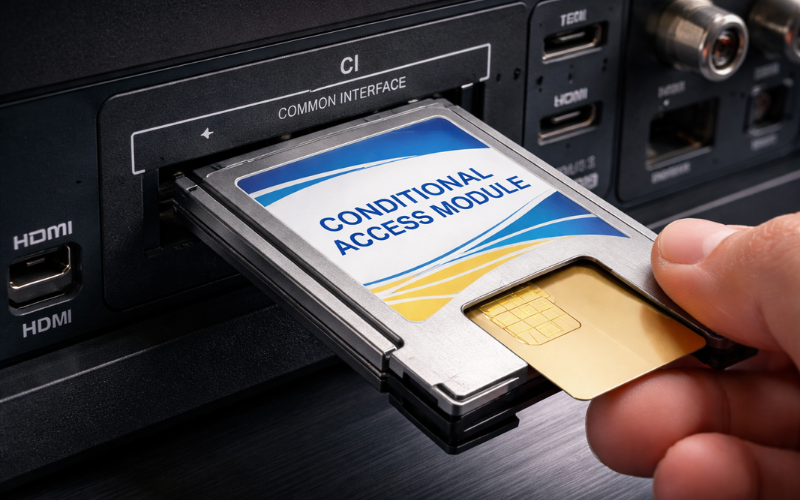
Inside a modern TV or receiver, the conditional access module works through a dedicated slot called a CI or CI+ interface. When the TV receives an encrypted signal, it cannot display the content on its own. The signal is sent to the conditional access module, which checks whether the viewer is authorized.
If access is approved, the module securely decodes the signal and sends it back to the TV for display. This process happens almost instantly and remains invisible to the viewer. The CI+ standard adds extra security features, making it harder for content to be copied or misused. This secure decoding process is the core reason why conditional access modules are trusted by broadcasters worldwide.
Smart Cards and Access Verification
Many conditional access modules work together with smart cards. A smart card stores subscription information and access rights linked to a specific user account. When a channel is selected, the conditional access module reads the smart card and checks whether the viewer is allowed to watch that channel.
Smart cards are used because they are reliable, portable, and easy for providers to manage. Subscription updates, renewals, or cancellations can be handled by changing the permissions stored on the card. This system allows broadcasters to control access without replacing hardware, making it efficient for both providers and users.
Common Types of Conditional Access Modules Available Today
Conditional access modules generally fall into two broad categories: consumer modules and professional modules. Consumer modules are designed for home TVs and personal use. They focus on ease of installation and compatibility with common television brands.
Professional modules are used in commercial environments such as hotels or broadcast facilities. These are built to handle multiple channels, continuous operation, and higher security demands. While both types perform the same basic function, professional modules are optimized for scale and reliability rather than simplicity.
Card-Based vs Cardless Conditional Access Modules
Traditional conditional access modules rely on smart cards, but newer systems are moving toward cardless designs. Card-based modules store access rights on a physical card inserted into the module. This approach is well understood and widely used.
Cardless conditional access modules work differently. Instead of a physical card, access rights are stored securely inside the module or delivered through encrypted updates. Some providers prefer this method because it reduces the risk of card sharing or loss. Built-in security also allows providers to update access rules remotely, which is why cardless systems are becoming more common.
Encryption Systems Used with Conditional Access Modules
Encryption is the foundation of every conditional access module system. Each broadcaster uses a specific encryption method, and compatibility is essential. A module must support the same encryption system as the TV provider, or it will not work.
This is why viewers cannot use a single conditional access module with every provider. Encryption systems are carefully chosen to meet security requirements and regional regulations. Understanding compatibility before purchase helps avoid setup issues and service interruptions.
Popular Conditional Access Systems in Use
Several well-known conditional access systems are widely used across the world. These include Irdeto, Nagravision, Conax, and Viaccess. Each system offers its own approach to encryption and access management.
The CI+ and CI+ 2.0 standards provide a common interface that allows these systems to work securely inside compatible TVs. CI+ 2.0 adds stronger security and supports advanced features, helping conditional access modules remain useful even as content protection standards evolve.
Where Conditional Access Modules Are Commonly Used
Conditional access modules are most commonly found in home television setups where users want to avoid external set-top boxes. By inserting a module directly into the TV, viewers enjoy fewer cables and a simpler setup.
They are also widely used in hotels, hospitals, and commercial TV networks. In these environments, centralized control of channel access is essential. Conditional access modules allow operators to manage subscriptions efficiently while delivering consistent service across many screens.
Both satellite and cable environments rely on conditional access modules. While satellite systems often use them for premium channels, cable providers also use modules to deliver encrypted digital content securely.
Benefits and Limitations of Using a Conditional Access Module
One major benefit of a conditional access module is convenience. It removes the need for an external set-top box, reducing clutter and power consumption. Channel switching is often faster, and remote control use is simpler because everything runs through the TV.
However, conditional access modules are not always supported by every provider or TV model. Some services require proprietary hardware or advanced features that only set-top boxes can provide. In such cases, a conditional access module may not be an option, even if the TV has a CI+ slot.
Choosing the Right Conditional Access Module for Your Setup
Choosing the correct conditional access module depends on matching it with both your TV and your service provider. The TV must support the correct CI or CI+ standard, and the module must be approved by the provider.
Regional rules also matter. Providers in different countries use different encryption systems and standards. Checking official compatibility lists before purchasing ensures the conditional access module will work smoothly and deliver the expected viewing experience.
Conclusion
The conditional access module remains a vital part of modern digital TV systems. Even in an era dominated by smart TVs and streaming platforms, broadcasters still rely on secure access control to protect content and manage subscriptions. By decoding encrypted signals directly inside the TV, the conditional access module offers a clean, efficient, and trusted solution.
Understanding how conditional access modules work, where they are used, and how to choose the right one helps viewers make informed decisions. As encryption standards and security technologies continue to evolve, the conditional access module will remain an important bridge between broadcasters and authorized audiences.
FAQ
1. What does a conditional access module do?
A conditional access module controls access to encrypted TV channels. It checks whether a viewer is authorized and securely decodes the signal so the channel can be watched.
2. Is a conditional access module better than a set-top box?
It can be better for simplicity and convenience because it reduces extra hardware. However, set-top boxes may offer more features, depending on the provider.
3. Can one conditional access module work with any TV provider?
No. A conditional access module must match the encryption system and standards used by the TV provider.
4. Are cardless conditional access modules more secure?
They can be more secure because they reduce the risk of physical card misuse and allow providers to manage access remotely.