

Introduction
A chifferobe is a tall, freestanding piece of furniture that combines hanging space for clothes with built-in drawers. People still search for the term chifferobe today because it represents more than just storage—it reflects a practical solution from the past that continues to feel relevant in modern homes. From small apartments to traditional houses, the chifferobe fits into both historical and contemporary living spaces as a smart, space-saving design.
What a Chifferobe Is and How It’s Commonly Defined
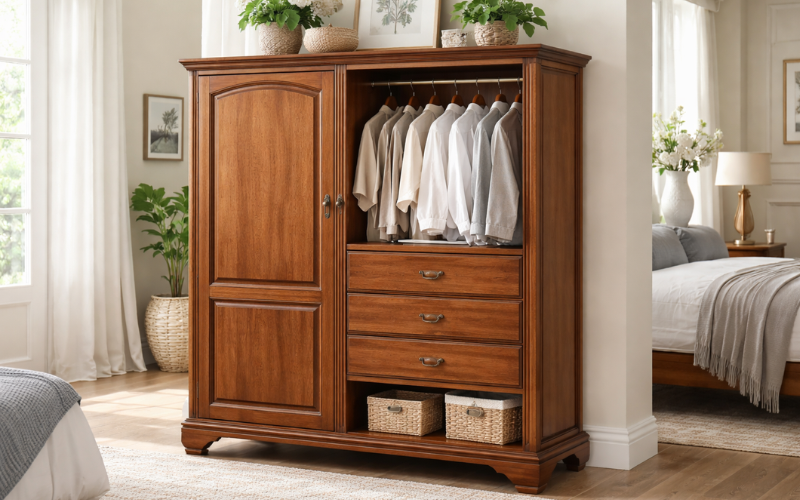
In simple terms, a chifferobe is a single furniture unit that merges the functions of a wardrobe and a chest of drawers. One section is designed for hanging clothes, while another provides drawer storage for folded items and personal belongings. Unlike built-in closets, a chifferobe stands on its own, making it movable and adaptable to different rooms.
Today, the definition of a chifferobe remains consistent with its original purpose, but people often describe it in broader terms. Some see it as a vintage storage cabinet, while others view it as a practical alternative to modern wardrobes. Regardless of the wording, the core idea remains the same: a chifferobe offers complete clothing storage in one vertical unit.
The Practical Design Behind a Chifferobe
The design of a chifferobe is centered on efficiency. By combining two essential storage needs into one piece, it allows users to organize clothing without needing multiple furniture items. This makes it especially useful in bedrooms where space is limited.
The hanging section is typically tall enough for coats, dresses, and longer garments, while the drawers handle everyday clothing and accessories. This balance of open hanging space and closed storage helps keep rooms tidy and visually simple. Even in modern interiors, this practical layout still makes sense, which explains why interest in chifferobes continues.
Why the Chifferobe Became Popular in American Homes
The chifferobe became popular in the United States during the early 20th century, a time when many homes did not include built-in closets. Families needed a way to store clothing efficiently without remodeling their homes, and the chifferobe offered a ready-made solution.
Its popularity also grew because it suited urban living. Smaller homes and apartments benefited from furniture that served more than one purpose. Over time, the chifferobe became a common sight in bedrooms across America, especially in regions where traditional home layouts remained unchanged for decades.
Materials, Craftsmanship, and Build Quality of a Chifferobe
Traditional chifferobes were usually made from solid wood, such as oak, maple, cherry, or poplar. These materials were chosen for their strength and long-lasting quality. Many older chifferobes still exist today, which speaks to the durability of their construction.
Craftsmanship played a major role in their appeal. Drawers were often carefully fitted, and doors were built to withstand regular use. Modern chifferobes may use a mix of solid wood and engineered materials, but the focus on stability and function remains. Whether old or new, a well-built chifferobe is designed to handle daily use over many years.
Chifferobe Styles: From Early 20th Century to Modern Interiors
Early chifferobes often featured decorative details, such as carved panels, classic hardware, and rich wood finishes. These designs reflected the style preferences of their time and were meant to be both useful and visually pleasing.
In contrast, modern chifferobes tend to favor clean lines and simple shapes. Contemporary versions may use lighter colors, smooth surfaces, and minimal decoration to match modern interiors. This evolution in style allows the chifferobe to fit comfortably into a wide range of home designs, from traditional to modern.
How a Chifferobe Is Used in Homes Today
Today, a chifferobe is no longer limited to storing clothes in a bedroom. Many people use it in guest rooms, rental homes, or even hallways where extra storage is needed. Its freestanding nature makes it flexible, allowing homeowners to move it as needs change.
Some households also use chifferobes for mixed storage, combining clothing with household items like linens or personal documents. This adaptability keeps the chifferobe relevant in modern living, where furniture often needs to serve more than one role.
Cultural and Language Significance of the Word Chifferobe
The word chifferobe itself has cultural importance, especially in the United States. It is a blend of two older terms that describe storage furniture, reflecting how language evolves alongside everyday objects. While the term is understood nationwide, it is most commonly used in the Southern United States.
The chifferobe has also appeared in literature and storytelling, helping preserve the word in popular culture. These references keep the term alive even as furniture trends change, making chifferobe both a functional object and a linguistic marker of a specific time and place.
Conclusion
The chifferobe remains a practical and meaningful piece of furniture that bridges the past and present. Its smart design, durable construction, and cultural significance explain why people continue to search for and use chifferobes today. Whether viewed as a vintage classic or a modern storage solution, the chifferobe continues to prove that thoughtful design never goes out of style.
FAQs
1. What is the difference between a chifferobe and a wardrobe?
A wardrobe usually focuses only on hanging clothes, while a chifferobe combines hanging space with drawers in one unit.
2. Is a chifferobe considered antique furniture?
Some chifferobes are antiques, especially those made in the early 1900s, but modern versions are still produced today.
3. Why is the word chifferobe mostly used in the Southern United States?
The term became part of everyday language in the South and has remained popular through regional speech and cultural references.
4. Are chifferobes still made today?
Yes, many furniture makers still produce chifferobes, often adapting the design to modern styles and materials.