

Introduction
When people search for salt lake city elevation, they usually want to understand how high the city sits above sea level and what that means for everyday life, health, weather, and travel. Elevation plays a quiet but important role in how Salt Lake City feels, functions, and attracts visitors throughout the year.
Salt Lake City Elevation Explained in Simple Terms
Salt Lake City sits at an average elevation of about 4,226 feet (1,288 meters) above sea level. This places it well above many U.S. cities but lower than high-mountain towns found deeper in the Rockies. At this elevation, the air contains slightly less oxygen than at sea level, which can influence breathing, hydration, and physical comfort, especially for newcomers.
The city’s elevation is not extreme, but it is high enough to shape daily conditions. Most residents adjust naturally over time, while visitors may notice subtle differences during their first days. Understanding this baseline elevation helps explain many aspects of life in Salt Lake City, from climate to outdoor recreation.
How Salt Lake City Elevation Compares to Other U.S. Cities
Compared to coastal cities like Los Angeles, New York, or Miami, Salt Lake City sits much higher above sea level. Those cities are close to sea level, while Salt Lake City rises more than four thousand feet above it. This difference explains why visitors often notice drier air and cooler evenings, even during warmer months.
When compared to other inland cities, Salt Lake City falls into a middle range. Denver, for example, is known as the “Mile High City” at around 5,280 feet, making it notably higher. Park City, located nearby in the mountains, averages around 7,000 feet and feels more intense in terms of altitude. Salt Lake City offers a balance, providing the benefits of elevation without the stronger physical effects found at higher mountain elevations.
Elevation Differences Within Salt Lake City Itself
Although Salt Lake City is often described with a single elevation number, the reality is more varied. The city stretches from flatter valley areas near the Jordan River to foothills that rise sharply toward the mountains. As a result, elevation can change by hundreds and even thousands of feet depending on location.
Lower parts of the city sit close to 4,200 feet, while areas near the eastern edge climb steadily upward. Within official city limits, the highest points reach well above 9,000 feet. This variation influences views, weather patterns, and even how certain neighborhoods feel throughout the year.
The Role of Surrounding Mountains in Salt Lake City Elevation
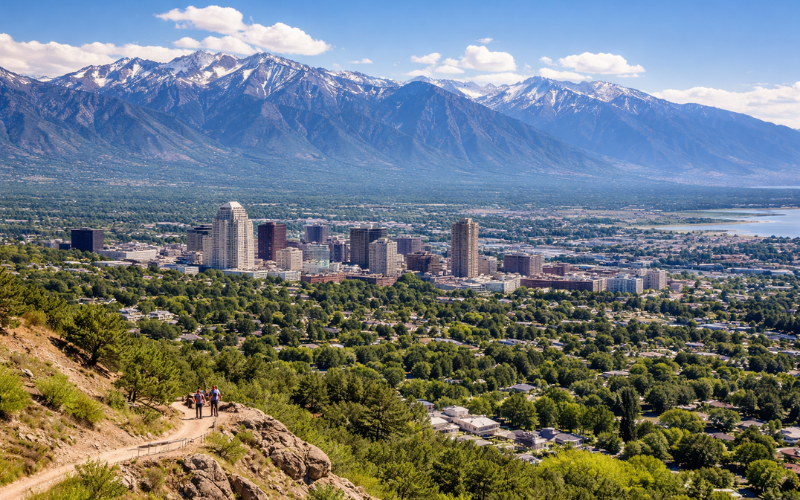
Salt Lake City’s elevation cannot be fully understood without considering the mountains that surround it. The Wasatch Range rises immediately to the east, forming a dramatic wall of peaks that tower above the city. These mountains not only define the skyline but also shape elevation-related conditions.
The nearby peaks reach elevations far higher than the city itself, with some climbing above 11,000 feet. This close proximity to high terrain affects temperature, snowfall, and air movement. Cold air can settle in the valley during winter, while mountain breezes help regulate summer heat. The city’s elevation works together with the mountains to create a unique environment that feels distinct from flatter regions.
How Salt Lake City Elevation Affects Weather and Climate
Elevation plays a key role in Salt Lake City’s climate. At over 4,000 feet above sea level, temperatures tend to be slightly cooler than in lower-elevation desert areas. Summer days can still be warm, but evenings often cool down quickly, providing relief from daytime heat.
Winter weather is strongly influenced by elevation and nearby mountains. Snowfall is common, especially as storms move across the Wasatch Range. While the city itself receives moderate snow, higher elevations just outside the city see much heavier accumulation. This contrast helps explain why world-class ski resorts are located so close to an urban center.
The city’s elevation also contributes to relatively low humidity. The drier air can feel comfortable but may require residents and visitors to pay more attention to hydration, particularly during physical activity.
Health and Altitude Effects at Salt Lake City Elevation
For most people, salt lake city elevation does not cause serious health issues. However, visitors arriving from sea level may notice mild effects during the first day or two. Shortness of breath during exertion, dry skin, or light fatigue are common but usually temporary.
The thinner air means the body works slightly harder to deliver oxygen, especially during exercise. Over time, most people adapt naturally. Residents often do not notice any ongoing effects because their bodies have adjusted to the elevation.
Hydration becomes more important at this elevation. The dry air and increased breathing rate can lead to fluid loss without obvious signs. Drinking enough water and pacing physical activity helps reduce discomfort for both visitors and new residents.
What Salt Lake City Elevation Means for Travel and Outdoor Activities
Salt Lake City’s elevation is a major reason it attracts outdoor enthusiasts. Sitting high enough to support winter snow but low enough to remain accessible year-round, the city serves as a gateway to hiking, skiing, cycling, and other activities.
Hikers and runners often appreciate the moderate elevation, which adds a slight challenge without being overwhelming. Skiers benefit from quick access to higher elevations where snow conditions are ideal. Travelers interested in sightseeing enjoy clear views, dramatic landscapes, and seasonal variety influenced by the city’s height above sea level.
The elevation also supports an active lifestyle culture. Many residents incorporate outdoor exercise into daily routines, taking advantage of the natural environment shaped by altitude and terrain.
Conclusion
Understanding salt lake city elevation helps explain many aspects of the city’s character, from its climate and outdoor lifestyle to how visitors feel when they arrive. Sitting at just over 4,200 feet above sea level, Salt Lake City offers a comfortable balance between accessibility and mountain influence. Whether you are planning a visit, considering a move, or simply curious about how elevation shapes daily life, this moderate altitude plays a central role in what makes the city unique.
FAQs
1. What is the exact elevation of Salt Lake City above sea level?
Salt Lake City has an average elevation of approximately 4,226 feet above sea level, though this can vary depending on location within the city.
2. Is Salt Lake City elevation high enough to cause altitude sickness?
Most people do not experience serious altitude sickness at this elevation. Mild symptoms can occur for some visitors, but they usually fade within a day or two.
3. How does Salt Lake City elevation compare to Denver or Park City?
Salt Lake City is lower than Denver, which sits at about 5,280 feet, and significantly lower than Park City, which averages around 7,000 feet.
4. Does elevation vary across different parts of Salt Lake City?
Yes, elevation changes across the city, ranging from lower valley areas near rivers to much higher foothills and mountain areas within city limits.