

Introduction
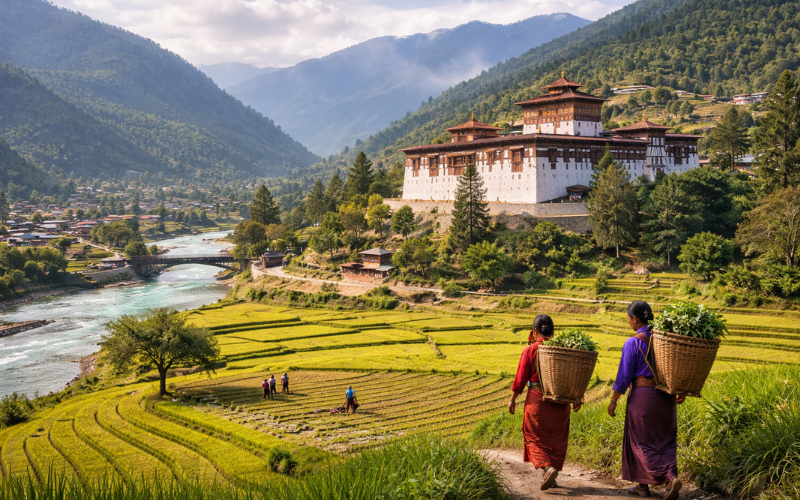
Bhutan south is a region that feels very different from the snow-covered mountains most people associate with Bhutan. Known for its warm climate, fertile land, and cultural diversity, this part of the country plays a major role in Bhutan’s economy, environment, and connection with neighboring India. From busy border towns to quiet farming villages, Bhutan south offers a unique view of how geography and history shape daily life.
Bhutan South and Its Geographic Identity
Bhutan south lies along the country’s southern border with India and forms the lowest elevation zone of Bhutan. Unlike the steep Himalayan mountains in the north, this region opens into gentle hills and flat plains that gradually merge with the Indian landscape. Its location makes it Bhutan’s main gateway for trade, travel, and cultural exchange.
The southern plains have long influenced how people live and work in this area. Roads are easier to build here, towns are more spread out, and farming is more productive than in the highlands. Because of this, Bhutan south has developed as a region focused on agriculture, commerce, and transport, while still remaining closely connected to Bhutan’s national identity and governance.
The Duars Plain and the Himalayan Foothills
A defining feature of Bhutan south is the Duars Plain, a narrow but fertile stretch of land running along the base of the Himalayan foothills. This plain acts as a natural transition zone between the Indian lowlands and Bhutan’s interior valleys. Rivers flowing down from the mountains spread rich soil across the plains, making the land ideal for farming.
The foothills rise gently behind the plains, covered in dense forests and grasslands. These foothills are not only important for biodiversity but also act as a buffer zone that protects inland Bhutan from floods and extreme weather. Together, the plains and foothills give Bhutan south its distinct landscape and ecological value.
Climate Patterns That Define Daily Life in Bhutan South
The climate of Bhutan south is warm, humid, and strongly influenced by the monsoon. Summers can be hot, with high humidity from June to September when heavy rainfall dominates the region. This seasonal rain supports agriculture but can also cause landslides and temporary road closures.
Winters are mild compared to northern Bhutan, making the south comfortable year-round for farming and settlement. The climate shapes daily routines, crop cycles, and even building styles, with homes designed to handle heat and moisture. For travelers, the best time to visit Bhutan south is usually from October to March, when the weather is drier and more pleasant.
Forests, Wildlife, and Natural Riches of Bhutan South
Bhutan south is one of the country’s richest regions in terms of natural biodiversity. Dense subtropical forests cover large areas, providing habitat for a wide range of plant and animal species. These forests are home to elephants, Bengal tigers, clouded leopards, deer, and countless bird species.
The region also plays a key role in Bhutan’s conservation efforts. Forest corridors in the south allow wildlife to move safely between protected areas and across borders, supporting genetic diversity. Bhutan’s strong environmental policies apply fully in the south, balancing development with long-term protection of natural resources.
Protected Areas and Cross-Border Wildlife Movement
Several protected zones in Bhutan south connect directly with conservation areas in India, forming international wildlife corridors. These corridors are especially important for large animals like elephants and tigers, which naturally roam across political boundaries.
By maintaining forest cover and limiting harmful development, Bhutan south helps preserve these migration routes. This cooperation strengthens regional conservation and highlights Bhutan’s commitment to environmental responsibility beyond its own borders.
Agriculture and Rural Economy in Bhutan South
Bhutan south is often described as the country’s agricultural heartland. The fertile soil and favorable climate allow farmers to grow rice, maize, vegetables, citrus fruits, cardamom, and other cash crops. These products support both local communities and national food supply chains.
Most rural households depend on farming for their income, and many communities still follow traditional agricultural practices combined with modern support programs. Agriculture in Bhutan south not only feeds the nation but also provides export goods that strengthen Bhutan’s economy and rural stability.
Cities, Border Towns, and Transport Hubs in Bhutan South
Urban life in Bhutan south centers around a few key towns that connect the country with India and the outside world. Phuentsholing, located on the western border, is Bhutan’s main commercial hub and the busiest entry point for goods and travelers. It plays a crucial role in trade, customs, and logistics.
Gelephu, in central southern Bhutan, is growing as a regional transport and development center, supported by a domestic airport and expanding infrastructure. Samdrup Jongkhar serves as the main gateway to eastern Bhutan and links the region with India’s Assam state. Together, these towns make Bhutan south the backbone of national transport and trade networks.
Why Southern Border Towns Matter for Trade
Most of Bhutan’s imports and exports pass through southern border towns. Goods such as food items, construction materials, and industrial supplies enter Bhutan here, while electricity, agricultural products, and manufactured goods are exported outward. This makes Bhutan south essential for economic stability and regional cooperation.
The smooth functioning of these border towns directly affects prices, employment, and development across the country. As Bhutan continues to modernize, investment in southern infrastructure remains a national priority.
People, Traditions, and Social Life in Bhutan South
Bhutan south is culturally diverse and socially vibrant. A large part of the population consists of Lhotshampa communities, people of Nepali origin who have lived in the region for generations. Languages such as Nepali are widely spoken, alongside Dzongkha and other local languages.
Religious life in Bhutan south includes a strong Hindu presence, alongside Buddhist traditions found throughout the country. Festivals, family customs, and daily social life reflect this cultural blend, giving the region a unique identity within Bhutan while still sharing national values of harmony and community.
Historical Changes and Political Context of Bhutan South
The modern history of Bhutan south includes periods of social and political tension, particularly during the late 1980s and early 1990s. Changes in citizenship laws and ethnic relations led to unrest and a refugee crisis that affected many families.
Since then, Bhutan has worked toward social stability, legal reforms, and national unity. Today, Bhutan south continues to evolve, shaped by lessons from the past and focused on inclusive development and peaceful coexistence.
Conclusion
Bhutan south is a region where nature, culture, and economy come together in powerful ways. Its fertile plains, rich forests, and diverse communities make it essential to Bhutan’s present and future. While it may not have towering snow peaks, Bhutan south offers something equally valuable: a living example of balance between tradition, development, and environmental care. Understanding this region provides a deeper and more complete picture of Bhutan as a whole.
FAQs
1. What is Bhutan south known for today?
Bhutan south is known for its fertile farmland, warm climate, rich biodiversity, and major border towns that support trade and transport. It is also recognized for its cultural diversity and economic importance.
2. Is Bhutan south culturally different from northern Bhutan?
Yes, Bhutan south has a more diverse cultural and religious mix, with a significant Hindu population and Nepali-speaking communities, while northern Bhutan is mainly Buddhist with highland traditions.
3. When is the best time to visit Bhutan south?
The best time to visit Bhutan south is from October to March, when the weather is cooler, drier, and more comfortable for travel and outdoor activities.
4. How important is Bhutan south to the country’s economy?
Bhutan south is vital to the economy due to agriculture, hydropower access, and cross-border trade. Most imports and exports move through southern towns, making the region economically strategic.