

Introduction
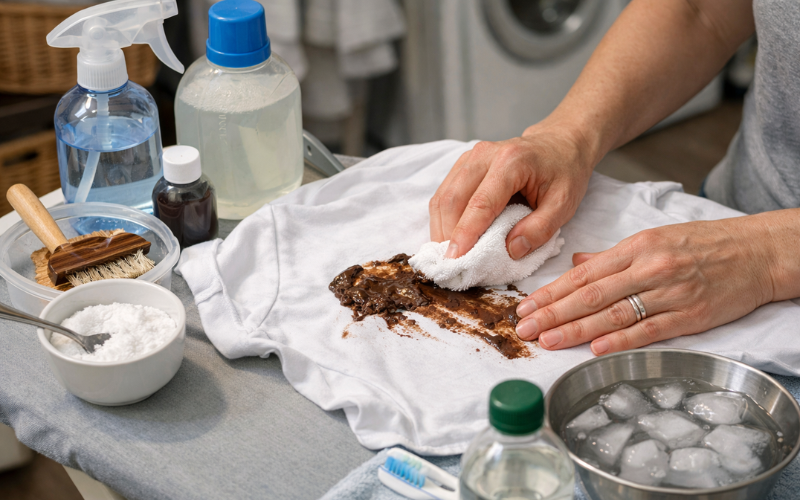
Chocolate on clothes is one of those stains that looks worse than it needs to be. The good news is that most chocolate stains can come out completely if you treat them the right way and, most importantly, avoid heat until the stain is gone. In this guide on how to get chocolate out of clothes, you’ll learn a simple, reliable method that works on fresh spills and dried stains, plus fabric-specific tips so you don’t damage anything while cleaning it.
Why Chocolate Stains Are Tricky to Remove
Chocolate is not just “brown.” It’s a mix of ingredients that behave differently once they hit fabric. That’s why a quick rinse sometimes helps, but other times the mark hangs on even after a wash.
Brief explanation of oils, proteins, and tannins in chocolate
Most chocolate contains fats (cocoa butter and sometimes milk fat), which cling to fibers like any greasy stain. It also contains proteins, especially if it’s milk chocolate, and proteins can bond with fabric if they aren’t handled gently. On top of that, chocolate has natural dark pigments and tannins that can leave behind a shadowy brown tint even after the greasy part is gone. When people struggle with how to get chocolate out of clothes, it’s often because they removed one part of the stain but not all of it.
Why heat makes stains permanent
Heat is the main reason chocolate stains become stubborn. Hot water, a hot wash cycle, and especially a dryer can “cook” the oils and pigments deeper into the fabric. Once that happens, the stain can set and become much harder to remove. Think of heat as the lock that seals the stain in place. If you remember one rule about how to get chocolate out of clothes, it’s this: keep everything cool until you’re sure the stain is completely gone.
Act Fast: What to Do Immediately After a Chocolate Spill
Speed matters, but panic doesn’t help. The goal is to remove as much chocolate as possible without rubbing it deeper into the fabric.
Remove Excess Without Spreading It
Start by lifting off the extra chocolate gently. Use a spoon, a dull butter knife, or even the edge of a plastic card. Work from the outside of the stain toward the center so you don’t spread it. If you try to wipe or rub, you’ll push chocolate into the fibers and make the stain larger. If the stain is thick, take off a little at a time. This simple step sets you up for success because less chocolate left in the fabric means less work later.
Should You Freeze Melted Chocolate First?
Yes, freezing can be a smart move when chocolate is soft, melted, or smeared. Put the garment in the freezer for about 10 to 15 minutes, just long enough for the chocolate to harden. Once it firms up, it becomes much easier to scrape away cleanly. This is especially helpful for thicker fabrics like denim and for sticky chocolate with fillings. Freezing doesn’t remove the stain by itself, but it prevents you from smearing the mess while you’re trying to clean it.
The Correct Way to Rinse Chocolate Out of Fabric
Rinsing sounds simple, but doing it the wrong way can turn a manageable stain into a set-in one.
Why rinsing from the back matters
When you rinse from the front, you can force chocolate deeper into the fabric. Instead, turn the item inside out and rinse from the back of the stain. This pushes the chocolate out the way it came in. It’s a small detail that makes a big difference, especially on tighter weaves and synthetic blends that hold onto residue.
Why cold water is critical
Cold water protects you from setting the stain. It helps flush out loose particles without melting the fats into the fabric. If you’ve ever wondered why a chocolate stain seemed “baked in” after washing, the water may have been too warm too soon. For the best results, run cold water through the stain for a minute or two, then gently squeeze the fabric (don’t twist hard on delicate materials). At this stage, you’re not trying to finish the job—you’re making the next steps more effective.
Pre-Treating the Stain the Right Way
This is where most of the stain removal happens. A good pre-treatment breaks down oil, lifts leftover color, and loosens what’s stuck in the fibers.
Using Dish Soap to Break Down Oils
Dish soap is often the best first move because it’s designed to cut grease. Apply a small amount directly to the stained area and gently work it in with your fingers. You don’t need to scrub aggressively; a gentle massage is enough. Let it sit for about 5 to 10 minutes, then rinse with cold water. If you’re learning how to get chocolate out of clothes for the first time, dish soap is a great starting point because it’s easy, effective, and widely available.
When to Use Enzyme Laundry Detergent
Enzyme detergents are helpful because they target protein-based stains and food residue. If your regular detergent is an enzyme liquid, apply a small amount to the stain after the dish soap step (or instead of it if the stain is mild). Rub it in gently and let it sit for 10 minutes before rinsing. This is especially useful for milk chocolate, hot chocolate, and any stain that has cream or dairy involved. If you’re working with a mixed stain—greasy plus brown color—using dish soap and enzyme detergent in a calm, layered way often works better than using one strong product in a rush.
Hydrogen Peroxide for Light-Colored Clothes
For light-colored fabrics, hydrogen peroxide can help lift the remaining brown tint. It’s commonly used as a mild stain lifter, but it should be used carefully. A safe approach is to test it on an inside seam first, especially on colored fabrics, because it can lighten dye. If the fabric is color-safe and the stain is stubborn, you can mix a small amount of hydrogen peroxide with dish soap, apply it to the stain, and let it sit for about 10 minutes. Rinse thoroughly with cold water afterward. Avoid using hydrogen peroxide on wool, silk, leather, or fabrics labeled “dry clean only,” unless a professional cleaner confirms it’s safe.
Soaking Methods That Actually Work
If pre-treatment helps but the stain is still visible, soaking is often the step that finishes the job. Soaking gives time for cleaners to loosen what’s stuck in the fabric.
Cold water soak for fresh stains
For a fresh stain that’s already been scraped and rinsed, a cold water soak can be enough. Fill a basin with cold water and let the garment soak for 15 to 30 minutes. After soaking, rinse and check the stain in good light. If you still see a faint mark, don’t move to heat or drying—repeat a gentle pre-treatment first.
When to use an oxygen-based stain remover
If the stain is older, darker, or still obvious after basic soaking, an oxygen-based stain remover can help. These products are commonly used for food stains and general brightening. Follow the product directions carefully and use cool to warm water only if the label allows it for your fabric. Oxygen-based soaks are often a helpful middle ground: stronger than plain water, but usually safer than harsh bleaching agents for many washable items. For readers focused on how to get chocolate out of clothes without damaging them, this is a solid option for stubborn stains.
How long to soak depending on stain severity
A light stain may only need 30 minutes. A heavier stain, especially one that dried or went through a quick wash already, may need a longer soak—sometimes a few hours or even overnight when the product label supports it. The key is to check progress and avoid soaking delicate fabrics too long. If the garment is fragile or the dye is unstable, shorter soaks with repeated gentle treatment can be safer than one long soak.
Washing and Checking Before Drying
Once you’ve loosened and lifted the stain, washing finishes the cleaning. But this is also the stage where many stains become permanent if you rush.
Choosing the right water temperature
When you’re dealing with chocolate, cooler is safer. Many people prefer a cold wash to avoid any risk of setting oils. If your fabric label allows warm water and the stain is already mostly gone, a warm wash may help remove leftover residue—but only after effective pre-treatment. When in doubt, stay with cold or cool water and let your stain remover do the heavy lifting. The best method for how to get chocolate out of clothes is usually the one that protects the fabric first, then removes the stain steadily.
Why you must inspect before using the dryer
The dryer is the point of no return for many chocolate stains. After washing, look at the stained area under bright light. If you can still see a shadow, even a faint one, don’t dry it. Drying can lock that final bit of stain into place. Instead, repeat pre-treatment and wash again. This one habit—checking before drying—solves a huge number of “I can’t get this stain out” situations.
What to do if the stain is still visible
If the stain remains, go back to the earlier steps. Rinse from the back again, apply dish soap and/or enzyme detergent, and consider another soak if needed. Sometimes stains that look faint while wet become more visible as they dry, so it’s worth being patient. For very stubborn stains, especially on white or light clothing, a second round of gentle peroxide treatment (only if fabric-safe) can help.
How to Get Chocolate Out of Different Fabrics
Fabric matters. The safest approach for cotton might be too harsh for silk, and what works on denim may not be right for upholstery.
Delicate Fabrics Like Silk and Wool
With silk and wool, keep everything gentle and cool. Avoid heavy rubbing, harsh stain removers, and strong chemicals. Use a mild detergent or a cleaner made for delicates, and lightly press the soapy water through the stained area rather than scrubbing. Rinse with cool water and blot with a clean towel. If the item is labeled dry clean only, it’s best to avoid home stain experiments—remove excess chocolate carefully, blot with cool water if safe, and take it to a professional cleaner as soon as possible. When people search how to get chocolate out of clothes for delicate items, the best answer is often “slow and gentle.”
Denim and Heavy Cotton
Denim and thick cotton can handle more hands-on cleaning. Freezing and scraping often works well, followed by a strong dish soap pre-treatment. Because these fabrics are sturdy, you can work the cleaner in more firmly, but still avoid aggressive scrubbing that can spread the stain. A longer soak can be helpful if chocolate has dried into the fibers. After washing, inspect carefully—dark fabrics can hide leftover discoloration until the garment dries.
Upholstery and Carpet
For upholstery and carpet, you can’t rinse under running water, so blotting becomes important. Start by scraping off solids. Then use a clean cloth dampened with cool water to blot—press and lift rather than rubbing. A simple mixture of water and vinegar can help with residue, and a dedicated fabric spot cleaner can work well too. Always test in a hidden spot first, especially on colored upholstery. Let the area air dry and check again before repeating. Chocolate on upholstery is still the same problem—oil plus pigment—so the same idea applies: remove excess, treat gently, and avoid heat.
Common Mistakes That Make Chocolate Stains Worse
Most stain problems aren’t caused by the chocolate itself—they come from the cleaning choices made in the first few minutes.
Using hot water too soon
Hot water can melt fats and make the stain spread or set. Even if it looks like the stain is fading, heat can be locking in what you can’t see yet. Cool water first is the safer, more consistent approach.
Rubbing aggressively
Rubbing grinds chocolate into fibers and enlarges the stain. It can also damage delicate fabric surfaces and make the area look worn. Blotting, scraping, gentle rubbing with soap, and rinsing from the back are more effective than force.
Drying before the stain is gone
The dryer is the most common reason a stain becomes permanent. If there’s any shadow left, skip the dryer and repeat treatment. Air drying is your friend while you’re still working on removal.
Final Thoughts
If you’re trying to figure out how to get chocolate out of clothes, the most important idea is simple: avoid heat until the stain is completely gone. Chocolate is a mix of greasy and dark components, so it often needs a little strategy—scrape, rinse from the back with cold water, pre-treat for oil and food residue, soak when needed, and always check before drying. With a calm, step-by-step approach, most chocolate stains can be removed without ruining your clothes or turning a small spill into a permanent mark.
FAQs
1. Can you remove dried chocolate stains from clothes?
Yes, dried chocolate stains can still come out. The best approach is to scrape off what you can, rinse from the back with cold water, and use a dish soap or enzyme detergent pre-treatment. A longer soak with an oxygen-based stain remover can help if the stain has been there for a while.
2. Does hot water help remove chocolate stains?
Hot water usually makes chocolate stains harder to remove because it can set the oils and pigments into the fabric. Cold water is safer in the early stages, and warm water should only be used if the fabric label allows it and the stain has already been well pre-treated.
3. What is the fastest way to get chocolate out of clothes?
The fastest reliable method is to scrape off excess chocolate, rinse from the back with cold water, apply dish soap to break down grease, then wash and check before drying. Acting quickly often prevents the stain from bonding to the fibers.
4. Can baking soda remove chocolate stains?
Baking soda can help with odor and can sometimes assist as a gentle booster, but it usually isn’t strong enough on its own to break down chocolate’s oils. For best results, use dish soap and an enzyme detergent first, and consider an oxygen-based soak if needed.