

Introduction
A contact stuck in eye can feel scary in the moment—especially if you can’t find it right away or your eye feels scratchy. The good news is that most stuck-lens situations can be handled safely at home if you stay calm, keep things clean, and use gentle techniques that protect your cornea (the clear front surface of the eye). If anything feels painful, your vision changes, or you can’t remove the lens after a few careful attempts, it’s time to get professional help.
Why a Contact Stuck in Eye Feels Worse Than It Actually Is
When a lens feels “lost,” it’s usually because it slid up under the upper eyelid or folded slightly, making it hard to see or grab. Your eye’s anatomy helps protect you here: the thin membrane around the eyeball (called the conjunctiva) forms a barrier so a contact lens cannot travel “behind” your eye. That’s why eye doctors often reassure people that a contact lens can’t disappear into the back of the head—it can only move around the front of the eye and under the lids.
A contact stuck in eye can also feel worse because the eye becomes irritated quickly. The more you blink while worried, the drier the lens may become and the more it can cling to the eye’s surface. That irritation can make you feel like something is seriously wrong even when the lens is simply stuck in a spot you can’t reach easily.
Common Reasons a Contact Gets Stuck in the Eye
Dryness is one of the biggest reasons a lens sticks. If your eyes are dry, the lens can lose moisture, grip the cornea, or fold slightly. This is common in air-conditioned rooms, during long screen time, or when you haven’t slept well.
Sleeping in lenses can also lead to a contact stuck in eye because your eyes get less oxygen, your tear film changes overnight, and the lens may dry out or adhere more tightly by morning. Some lenses are approved for extended wear, but many people sleep in lenses that aren’t meant for it, increasing irritation and infection risk.
A torn or damaged lens is another common cause. Soft lenses can rip, fold, or split, especially if they’re old, handled roughly, or allowed to dry out. When that happens, the lens may not come out in one smooth piece and can feel “stuck” even after you remove part of it.
Poor fit also matters. If a lens doesn’t fit well, it may shift too much, ride up under the lid, or suction onto the eye. If you’ve had repeated episodes of a contact stuck in eye, it’s worth asking your optometrist or ophthalmologist to check the fit and your lens type.
First Things to Do Immediately
The first step is simple: pause and breathe. Panic leads to rubbing, and rubbing can scratch the cornea or tear the lens into pieces that are harder to remove. Many medical sources emphasize avoiding rubbing when your eye is irritated or injured.
Next, wash your hands thoroughly with soap and water and dry them with a lint-free towel. Clean, dry hands reduce the chance of pushing germs into your eye.
After that, resist the urge to use tools. Do not use tweezers, fingernails, cotton swabs, or anything sharp near your eye. If you have long nails, be extra cautious and use the soft pads of your fingers only.
How to Remove a Soft Contact Stuck in Eye Safely
Start by adding sterile lubricating drops (artificial tears) or sterile saline that is safe for contact lenses. These drops can help “float” the lens away from the surface so it moves more easily. Eye doctors commonly recommend using saline or artificial tears for this step.
Then blink normally several times. Blinking helps the lens re-center. If you suspect it’s under your upper lid, close your eye and gently massage the eyelid. Think of this as a soft, slow motion—more like smoothing the lid than pressing down. Some NHS patient guidance also describes gently massaging a closed eyelid after accidentally sleeping in lenses to help loosen a lens that may have stuck.
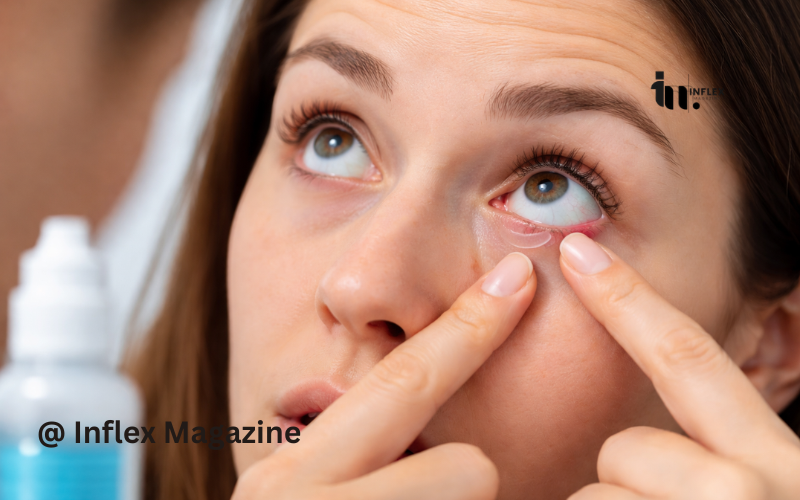
Once the lens feels more mobile, try guiding it toward the white part of your eye. A common approach is to look in a mirror, look upward, and use the pad of your finger to slide the lens down onto the sclera (the white area). When it’s on the white of the eye, it’s often easier to remove because that area is less sensitive than the cornea. An NHS patient leaflet describes sliding the lens onto the white of the eye and then gently pinching it off.
If you can see the lens but it keeps slipping away, add another drop or two, blink again, and try once more. The key is patience, moisture, and gentle movements. If you try several times and nothing changes, don’t keep going for a long time—overhandling can irritate the eye and make things worse.
Removing a Rigid Gas-Permeable (Hard) Lens Without Causing Damage
Rigid gas-permeable (RGP) lenses behave differently than soft lenses. If an RGP lens feels like a contact stuck in eye, it may be lightly suctioned onto the eye’s surface, and a hard edge can scratch if you press or massage too firmly.
Instead of rubbing the lid, focus on breaking the suction gently. One method is to blink firmly a few times while looking straight ahead, then look toward the lens’s position and use a clean fingertip on the white of the eye near the lens edge to help “pop” the seal. The idea is not to press on the cornea, but to apply gentle pressure on the sclera beside the lens so air can get under the edge.
If you use a dedicated lens removal tool (a small suction cup designed specifically for RGP lenses), follow the instructions carefully. The tool tip is typically dampened with sterile solution and placed gently on the center of the lens to lift it away. If you’ve never used one before and you feel unsure, it’s safer to stop and get help from an eye care professional rather than risk scratching your eye.
What to Do If the Contact Lens Is Torn or Missing Pieces
A torn lens can make a contact stuck in eye feel more complicated, but the plan is still gentle and step-by-step. First, add sterile saline or artificial tears and blink normally. Moisture helps lens fragments move.
If you’ve removed part of the lens, do not assume the rest is gone. A small fragment can stay tucked under the upper lid and cause ongoing irritation. Try looking up while gently lifting the upper lid (without touching the eye) to see if a piece is visible. If your eye is watering a lot, that can actually help by flushing small fragments forward.
You can also rinse the eye with sterile saline to encourage fragments to slide out. Avoid tap water for rinsing contact lenses or anything related to lens care because water exposure is linked to a higher infection risk, including rare but serious infections. The CDC and FDA both warn against letting water touch contact lenses, and NHS guidance also advises that lenses should not come into contact with tap water due to infection risk.
If you retrieve pieces, keep them and compare them to a full lens shape if possible. This isn’t about being dramatic—it’s a practical way to check whether you likely removed the whole lens. If you’re not sure, or if your eye still feels like something is stuck after a reasonable attempt, it’s safer to be examined.
Signs You Should Stop Trying and See an Eye Doctor
If you’ve tried gentle removal steps and the contact stuck in eye won’t move, it’s time to stop. Repeated attempts can irritate the eye and increase the chance of a scratch. An eye doctor can safely flip the eyelid, numb the surface if needed, and remove the lens quickly.
You should also seek medical help if you have persistent redness, pain, or a sharp “something’s scratching” feeling after the lens is out. That can be a sign of a corneal abrasion or inflammation. If your vision is blurred, you feel strong light sensitivity, or your eye is very watery and uncomfortable, treat that as urgent—especially if symptoms are worsening.
Also be cautious if the lens was exposed to water (shower, swimming pool, hot tub) or if you slept in lenses and wake up with significant pain and redness. Public health guidance emphasizes that water and contact lenses are a risky mix because lenses can trap germs against the eye.
How to Prevent Getting a Contact Stuck in Eye Again
If a contact stuck in eye happened once, it can happen again—especially if dryness or hygiene issues are involved. Prevention usually comes down to comfort, clean habits, and following your wear schedule.
For dryness, use contact-safe rewetting drops if your eye care provider says they’re appropriate for your lens type. Dry environments and long screen time reduce blinking, so building in breaks can help your eyes stay comfortable. If dryness is frequent, ask your provider whether a different lens material, daily disposables, or a different fit would help.
For hygiene, keep it strict and simple. Wash hands before handling lenses, use fresh solution (never “top off” old solution), and don’t let lenses touch water. The CDC and FDA both emphasize avoiding water exposure and following safe cleaning and storage habits to reduce infection risk.
Avoid overnight wear unless your lenses are specifically prescribed for it and your provider has told you it’s safe for your eyes. Even then, many eye care sources note that sleeping in lenses increases infection risk compared with daily removal.
Finally, keep regular eye checkups. A lens that frequently shifts or sticks may not be the best match for your eyes anymore, and a small change in prescription, curve, or material can make a big difference.
Conclusion
Having a contact stuck in eye is uncomfortable and stressful, but it’s usually solvable with calm, clean, gentle steps—especially for soft lenses that have dried out. Rewetting drops or sterile saline, blinking, and careful guiding toward the white of the eye often do the job. If the lens is torn, if you’re not sure all pieces are out, or if you notice pain, redness, blurred vision, or light sensitivity, don’t keep trying at home. Getting checked quickly is the safest way to protect your eye and get relief.
FAQ
1. Can a contact stuck in eye move behind the eyeball?
No. It can slide under your eyelids and feel “lost,” but it cannot travel behind the eye because of the membranes around the eyeball.
2. How long can a contact lens stay stuck in the eye safely?
There isn’t a perfect “safe number of hours,” because irritation and infection risk vary by person and situation. If you cannot remove it after several gentle attempts, or if you develop pain, redness, blurred vision, or light sensitivity, you should be checked the same day.
3. What happens if I sleep with a contact stuck in eye?
Sleeping in lenses often makes dryness and sticking worse by morning and can increase the risk of irritation and infection. If you accidentally sleep in contacts, use lubricating drops and remove them as soon as you can safely do so, and seek help if your eye is red, painful, or your vision is blurred.
4. Should I go to urgent care for a contact stuck in eye?
If you can’t remove the lens, or you have significant pain, redness, vision changes, or strong light sensitivity, urgent care or an eye doctor is appropriate. If an eye clinic is available, that’s often the best option because they have the right tools and training.