

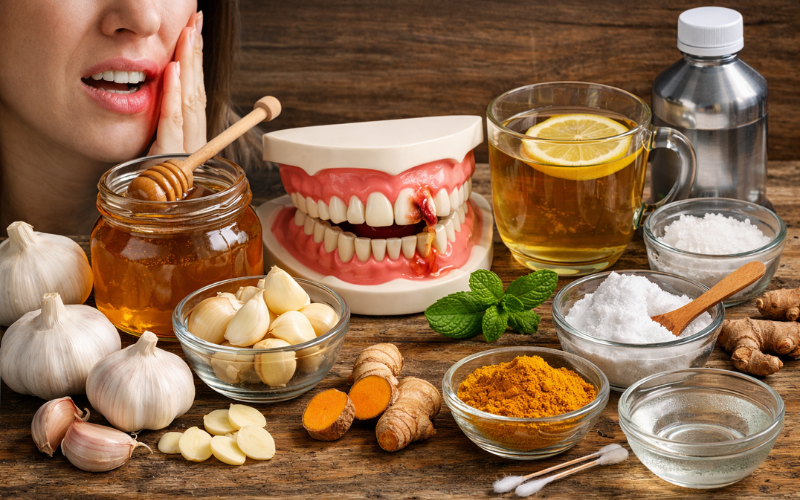
Introduction
Teeth infection home remedies can help reduce pain and swelling for a short time, but they do not cure the infection itself. If symptoms become severe or spread, urgent dental or medical care is necessary to prevent serious complications.
Understanding a Tooth Infection and Why It Happens
A tooth infection, often called a dental abscess, is a pocket of pus caused by bacteria. It usually forms inside the tooth, in the gums, or around the root. This happens when bacteria enter through a cavity, a crack in the tooth, or inflamed gums. Once inside, the bacteria multiply and cause swelling, pain, and sometimes a bad taste in the mouth.
Untreated cavities are one of the most common causes of tooth infections. When decay reaches the inner part of the tooth, called the pulp, bacteria can infect the nerve and surrounding tissue. Cracked or chipped teeth also allow bacteria to enter. Gum disease, which causes the gums to pull away from the teeth, can create small spaces where infection develops.
It is important not to ignore a tooth infection. Unlike mild tooth sensitivity, an abscess does not heal on its own. If left untreated, the infection can spread to the jaw, face, or even other parts of the body. In rare but serious cases, it can lead to a life-threatening condition called sepsis. This is why teeth infection home remedies should only be seen as temporary support, not a permanent solution.
What Teeth Infection Home Remedies Can and Cannot Do
Teeth infection home remedies are often used to manage discomfort while waiting for a dental appointment. They can help lower bacterial levels in the mouth, reduce inflammation, and numb pain. Many people turn to natural methods because they are simple and easy to use at home.
However, it is very important to understand their limits. Home remedies cannot remove deep infection inside the tooth. They cannot drain an abscess properly, repair damaged enamel, or eliminate bacteria from the root canal system. Only a dentist can do that through professional treatment.
In many cases, antibiotics may be needed if the infection is spreading or if there is swelling and fever. Dental procedures such as a root canal or tooth drainage directly treat the source of the infection. Delaying professional care can increase pain, damage surrounding tissue, and make treatment more complicated later.
Essential Rinses to Reduce Bacteria and Swelling
One of the simplest ways to support oral health during an infection is rinsing the mouth. Rinses help wash away debris, reduce bacteria, and soothe irritated tissues.
A saltwater rinse is one of the most trusted natural options. Salt acts as a mild disinfectant and helps draw out fluid from swollen tissues. Mixing half a teaspoon of salt in a glass of warm water and gently swishing for about 30 seconds can reduce inflammation and support healing. It is safe to repeat this several times a day.
Hydrogen peroxide rinse may also reduce bacteria and plaque when used correctly. It must always be diluted with equal parts water, and it should never be swallowed. This rinse can help clean the infected area, but overuse may irritate the gums. It is best used carefully and not as a long-term solution.
Baking soda rinse is another gentle method. Baking soda helps balance the mouth’s acidity and reduce harmful bacteria. A small amount mixed in water can support oral hygiene during infection. Like other rinses, it provides temporary relief and does not treat the root cause.
These rinses are part of common teeth infection home remedies because they are accessible and easy to prepare. Still, they should not replace dental care.
Natural Ingredients That May Ease Pain and Inflammation
Several natural ingredients are known for their soothing properties. While research on some remedies is limited, many people find short-term relief when using them carefully.
Clove oil contains a natural compound that has mild numbing and antiseptic effects. Applying a small amount, diluted with a carrier oil such as olive oil, directly to the painful area may temporarily reduce discomfort. It should be used sparingly to avoid irritation.
Garlic has natural antimicrobial properties. Crushing a fresh clove releases active compounds that may help reduce bacteria. Some people apply a small amount to the affected area, though it may cause a strong taste or mild burning sensation.
Turmeric is known for its anti-inflammatory benefits. When mixed with a little water or coconut oil to form a paste, it can be placed gently on the affected gum area for a short time. It may help calm swelling, though it can stain teeth temporarily.
Tea bags, especially black or peppermint tea, are also used in teeth infection home remedies. Black tea contains natural compounds that may help reduce bacteria, while peppermint has a cooling effect that can soothe pain. After steeping and cooling the tea bag, it can be placed on the affected area for brief relief.
Cold Compress and Simple At-Home Pain Control
Cold therapy is one of the safest ways to manage swelling and throbbing pain from a tooth infection. Applying a cold compress to the outside of the cheek helps narrow blood vessels, which can reduce inflammation and numb discomfort.
A cloth-wrapped ice pack can be placed on the affected side of the face for about 15 to 20 minutes at a time. This can be repeated every few hours as needed. It is important not to place ice directly on the skin, as this may cause irritation.
Heat should generally be avoided if there is visible swelling. Warmth can sometimes increase blood flow to the area, which may worsen inflammation. Cold compresses are usually the safer option during active infection.
Simple steps like keeping the head elevated while sleeping can also reduce pressure and throbbing pain at night. These small changes support comfort while waiting for professional care.
Over-the-Counter Options That Support Teeth Infection Home Remedies
Over-the-counter pain relievers are often combined with teeth infection home remedies to manage discomfort. Medications such as ibuprofen and acetaminophen can reduce pain and inflammation when taken as directed.
Ibuprofen works by lowering inflammation, which is helpful in dental infections. Acetaminophen reduces pain but does not reduce swelling. Some people use them together, but this should only be done following proper dosage guidelines or advice from a healthcare professional.
Short-term dosing approaches may help maintain steady pain control for a few days while waiting for a dental visit. However, taking high doses or using painkillers for too long can cause side effects. It is important to follow label instructions carefully.
Pain relief does not mean the infection is healing. Even if symptoms improve, the bacteria may still be present inside the tooth. This is why professional evaluation is essential.
Warning Signs That Mean You Need Immediate Medical Care
While mild discomfort can sometimes be managed at home briefly, certain symptoms require urgent medical attention. Facial swelling that spreads to the eye or neck is a serious warning sign. Fever may indicate that the infection is moving beyond the tooth.
Difficulty swallowing or breathing is an emergency and should never be ignored. These signs suggest that the infection may be spreading into deeper tissues. Severe headache, confusion, or extreme fatigue can also signal a more serious condition.
If any of these symptoms appear, it is important to seek emergency medical care immediately. Teeth infection home remedies are not safe substitutes in these situations.
When to See a Dentist and What Treatment May Involve
A dentist should evaluate any tooth infection as soon as possible. Professional treatment focuses on removing the source of infection and preventing further damage.
Root canal treatment is a common procedure used to clean out infected pulp inside the tooth. The dentist removes bacteria, disinfects the area, and seals the tooth to prevent reinfection. This often saves the natural tooth.
In some cases, drainage of the abscess may be necessary to relieve pressure and remove pus. If the tooth is severely damaged and cannot be saved, extraction may be recommended.
After treatment, maintaining good oral hygiene is essential. Regular brushing, flossing, and dental check-ups help prevent future infections. Early treatment of cavities and gum disease greatly lowers the risk of abscess formation.
Conclusion
Teeth infection home remedies can provide temporary comfort by easing pain, reducing swelling, and lowering bacteria in the mouth. Methods such as saltwater rinses, cold compresses, natural ingredients, and over-the-counter pain relief can support short-term symptom management. However, they do not eliminate the infection itself.
A tooth infection is a serious oral health condition that requires professional care. Early dental treatment prevents complications, protects surrounding tissue, and preserves overall health. If symptoms worsen or warning signs appear, immediate medical attention is essential.
FAQs
1. Can teeth infection home remedies cure an abscess permanently?
No, teeth infection home remedies cannot cure an abscess permanently. They may reduce pain and swelling temporarily, but only professional dental treatment can remove the infection completely.
2. How long can I rely on home remedies before seeing a dentist?
Home remedies should only be used for short-term relief while arranging a dental appointment. Delaying treatment for more than a few days increases the risk of complications.
3. What is the fastest natural way to relieve tooth infection pain?
A cold compress and a saltwater rinse are often the quickest and safest ways to reduce swelling and discomfort temporarily.
4. Are teeth infection home remedies safe for children?
Some gentle methods like saltwater rinses may be safe for older children, but it is always best to consult a dentist or pediatrician before using any remedy.