

Introduction
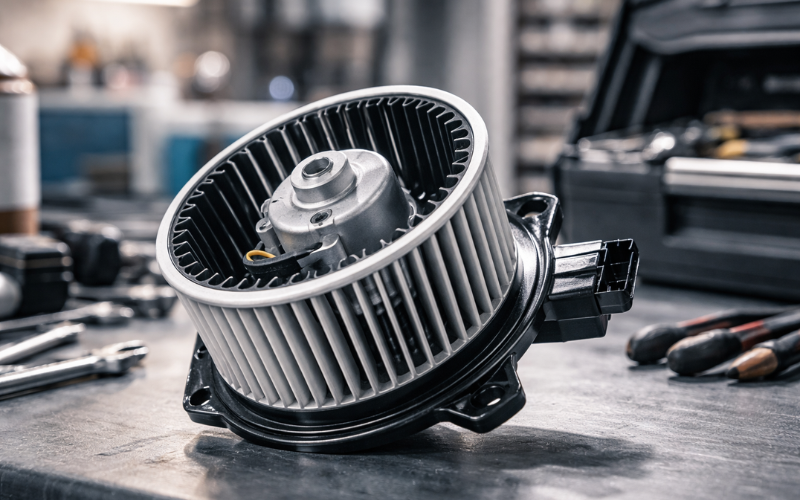
A blower motor is the electric part that powers the fan moving air through vents in both home HVAC systems and vehicle cabins, and this guide explains what it does, how it works, the main types you’ll see, the most common failure signs, what replacement usually costs in 2026, and how to decide between repair and replacement—using clear, simple language.
What Is a Blower Motor and Why It Matters
The blower motor’s role in airflow
A blower motor spins a fan that pushes air through the system, which is why it directly controls how strongly air comes out of your vents; without a working motor, heated or cooled air may still be produced, but it won’t be delivered properly into rooms (at home) or into the cabin (in a car).
Residential HVAC vs automotive blower motor use
In a home, the blower motor moves air through ductwork to spread heating or cooling across the entire house, while in a vehicle it pushes air through the dashboard vents to manage comfort for passengers; the purpose is similar, but the size, controls, and replacement process are quite different.
How performance affects comfort, efficiency, and lifespan
When a blower motor performs well, airflow stays steady, temperatures feel more even, and the system doesn’t have to “work overtime,” but when airflow is weak, the system often runs longer, comfort drops, and extra strain can speed up wear on other components over time.
How a Blower Motor Works Inside HVAC and Vehicle Systems
Air circulation in heating and cooling
In residential HVAC, the blower motor pulls air in through return vents, moves it across the heating or cooling section, and then pushes it out through supply vents, which is why poor airflow can make it feel like your heating or AC is weak even if the heating or cooling source is still functioning.
Interaction with furnace, air handler, and AC components
The blower motor works closely with parts like the furnace heat exchanger or the air conditioner coil, because it has to move enough air across these areas for the system to transfer heat correctly; if airflow is restricted by dirt, a clogged filter, or duct problems, the blower motor may strain and the system may become less comfortable and less efficient.
Cabin airflow management in cars
In vehicles, the blower motor sits inside the HVAC housing under the dashboard and pushes air through the vent system at the speed you select, so if the motor weakens, you may notice that even “high” fan settings feel soft or inconsistent.
Relationship with heater core and AC evaporator
A car’s blower motor pushes air across the heater core for warm air and across the AC evaporator for cool air, so weak airflow can reduce the “feel” of heating or cooling, even when the temperature system itself is working—because the air simply isn’t being moved strongly enough into the cabin.
Types of Blower Motor Used in Residential Systems
Permanent Split Capacitor (PSC) motors: how they work
PSC blower motors are a common older-style design that usually runs at a fixed speed and relies on a capacitor to operate, and they are often chosen because they’re simpler and typically cheaper to replace than newer motor styles.
PSC motors: pros and limitations
PSC motors can be a practical choice for older systems because of their lower upfront cost, but they generally use more electricity than modern designs and may deliver less consistent comfort, especially in homes where airflow needs change across seasons.
Electronically Commutated Motors (ECM): variable-speed control
An ECM blower motor uses electronic controls to adjust speed smoothly, which helps the system match airflow to real demand, making comfort feel steadier and reducing the “on/off blast” effect that some people notice with older motors.
ECM motors: energy efficiency benefits
Because ECM motors can run at lower speeds more often while still maintaining comfort, they usually use less fan energy over time and can support better temperature balance and humidity control, which is one reason they’re common in modern, higher-efficiency HVAC setups.
Multi-speed motors: preset speed operation
Multi-speed blower motors typically offer several fixed speed options—often low, medium, and high—allowing the system to choose a setting that fits heating, cooling, or circulation needs without full variable-speed control.
Multi-speed motors: performance balance
Multi-speed motors often give a good middle-ground experience by improving comfort and reducing noise compared to single-speed designs, while still being more affordable than full ECM systems for many homeowners.
Automotive Blower Motor Options and Design Differences
Standard assembly and what you’re actually replacing
Most automotive blower motors are sold as a unit that may include the fan wheel, and because the assembly must fit the HVAC housing correctly, the exact part match matters more than many drivers expect.
Brush vs brushless blower motors
Brushed blower motors are widely used and often cheaper, while brushless designs can run smoother and may last longer in some cases because they avoid brush wear, but they can also cost more and may rely on more advanced electronics.
OEM vs aftermarket: how to choose responsibly
OEM parts are designed to match the vehicle’s original specifications, while aftermarket parts can be a great value when bought from reputable manufacturers, but the key is choosing a part known for proper fit and consistent quality rather than picking only based on the lowest price.
Compatibility and fitment importance
Because connector types, mounting points, and fan wheel shapes can vary even within the same car model across different years, checking fitment details—year, make, model, engine, and trim—is essential to avoid noise, poor airflow, or an installation that simply doesn’t work.
Common Signs of Blower Motor Failure
Weak or inconsistent airflow
A failing blower motor often shows up as air that feels weaker than normal or changes strength on its own, and this can be especially noticeable when you turn the fan higher but the airflow still doesn’t improve much.
Unusual noises and what they usually mean
Squealing or screeching can point to worn bearings, while rattling may suggest a loose part or debris inside the housing, and in many cases these sounds get worse over time rather than improving on their own.
Burning smell or overheating concerns
A burning odor coming from vents can signal overheating inside the motor or an electrical issue, and because heat can damage wiring and nearby parts, it’s a sign to stop using the system and have it inspected promptly.
Electrical issues and tripped breakers
In homes, a struggling blower motor may draw extra power and trip a circuit breaker, while in vehicles you might see the fan stop working, work only on certain speeds, or cut in and out, which can also involve a resistor or control module.
When small symptoms become full failure
Minor issues like occasional noise or slightly weak airflow can gradually become a complete stop, and that often happens at the worst time—during extreme summer heat or winter cold—so early diagnosis is usually the most cost-effective approach.
Blower Motor Replacement Costs in 2026
Residential single-speed replacement range
For many homes, replacing a basic single-speed blower motor often falls into a mid-range cost that includes both parts and labor, and the final price depends heavily on how accessible the motor is and how long the job takes.
Residential variable-speed (ECM) cost range
ECM blower motor replacements are usually higher because the motor and control electronics are more advanced, and the system may also require correct programming or setup to ensure airflow matches the HVAC equipment and delivers stable comfort.
Automotive blower motor replacement cost range
Automotive blower motor replacement costs vary by vehicle design, but most standard passenger vehicles land in a few-hundred-dollar range when parts and labor are included, with higher costs possible when access is tight or extra diagnostics are needed.
What drives the final price
Labor rates, region, motor type, system access, and related parts—like capacitors in HVAC systems or resistors/control modules in vehicles—can all change the final bill, which is why two “blower motor replacements” can look very different in total cost.
Should You Repair or Replace a Blower Motor?
Age of system and practical value
If your HVAC system or vehicle is otherwise in good condition and not near end-of-life, replacing the blower motor can be a smart, straightforward fix, but if the system is already very old and multiple parts are wearing out, it may be worth considering a broader upgrade discussion.
Cost comparison that makes sense
A helpful way to decide is to compare the repair cost to the remaining value and expected lifespan of the system, because spending heavily on a major motor replacement in an aging setup can sometimes be less efficient than investing that money into a newer, more reliable option.
Energy savings vs upfront expense
Upgrading from an older motor style to a modern ECM can improve comfort and reduce fan energy use in many homes, but the decision should be based on your budget, how long you plan to stay in the home, and whether the upgrade truly fits your system.
When professional diagnosis is necessary
Because weak airflow can also come from clogged filters, duct restrictions, control issues, or failing electrical parts, a qualified diagnosis helps ensure you’re replacing the correct component rather than paying for a fix that doesn’t solve the real problem.
How to Extend the Life of Your Blower Motor
Preventive maintenance basics
A blower motor lasts longer when airflow is smooth and the system stays clean, so simple routine care—like keeping the unit area clean and scheduling periodic inspections—can reduce strain and help catch small issues early.
Filter changes and airflow management
Regular filter changes are one of the most effective ways to protect a residential blower motor because a clogged filter forces the motor to work harder, and in vehicles, keeping the cabin air filter clean can help the blower push air more easily and reduce long-term stress.
Electrical system checks
Electrical problems such as failing capacitors (home) or speed control issues (car) can overload the motor or cause inconsistent operation, so addressing early warning signs like speed problems or frequent breaker trips can prevent bigger and more expensive failures.
Seasonal inspection habits
Checking airflow and listening for new sounds at the start of hot and cold seasons helps you spot problems before peak demand, which can reduce emergency breakdown risk and often leads to cheaper, simpler repairs.
Conclusion
A blower motor is essential because it delivers the airflow that makes heating and cooling feel real in your home or vehicle, and when it weakens, comfort drops quickly through low airflow, strange noises, overheating smells, or electrical issues; by understanding motor types, expected 2026 costs, and the repair-versus-replace decision, you can choose the right fix confidently and keep the system running smoothly for longer.
FAQs
1. How long does a blower motor typically last?
In many homes, a blower motor can last roughly 10 to 20 years, but lifespan depends on maintenance, airflow restrictions, and electrical health, while in vehicles it varies more because driving conditions, heat cycles, and cabin filter care differ widely.
2. What causes a blower motor to fail prematurely?
Common causes include restricted airflow from dirty filters or blocked ducts, dust and debris buildup, worn bearings, overheating, and electrical stress from failing support parts like capacitors, resistors, or control modules.
3. How much does it cost to replace a blower motor in 2026?
Costs in 2026 depend on whether it’s a home HVAC or a vehicle job, the motor type, and labor rates, but residential ECM replacements are typically higher than basic single-speed motors, and automotive replacements often fall into a few-hundred-dollar range for many standard vehicles.
4. Can I replace a blower motor myself or should I hire a professional?
Some car owners with good tools and experience can replace an automotive blower motor when access is straightforward, but HVAC blower motor work is usually better handled by a qualified technician due to electrical safety, correct motor matching, and the need for proper setup—especially on ECM systems.