

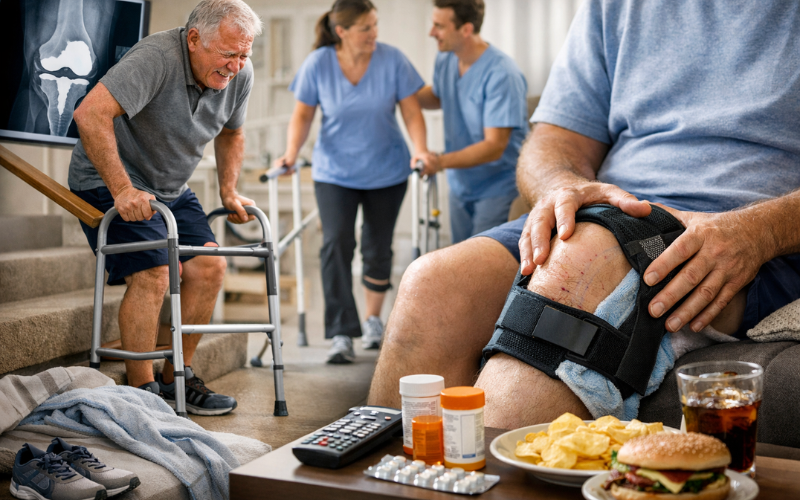
Introduction
If you’re searching for the top 5 mistakes after knee replacement, you’re already doing something smart: planning ahead. Most problems after surgery don’t come from one big “wrong move.” They usually come from small, repeated choices—either not moving enough or pushing too hard too soon. This guide explains the most common mistakes and how to avoid them so your recovery stays steady and safe.
Understanding Why Recovery Mistakes Happen
Knee replacement recovery can feel confusing because the “right” amount of activity changes week by week. Early on, movement helps prevent stiffness and supports healing, but the knee is also swollen and sensitive. That’s why people often swing between two extremes: protecting the knee so much that it stiffens, or getting overconfident and doing more than the joint can handle.
Another reason mistakes happen is mixed advice. Friends may tell you to “walk it off,” while your knee feels like it needs rest. The truth is you need both: planned movement and planned recovery. Many rehab programs also stress the importance of working on getting the knee straight early and gradually building bend over time.
Mistake #1: Skipping or Inconsistently Attending Physical Therapy
Physical therapy is not just an “extra.” It’s the main path back to normal walking, safer stairs, and better knee motion. When PT is skipped or done only sometimes, people often lose progress because the knee can stiffen quickly, especially in the early weeks.
A common pattern is feeling tired or sore and deciding to “take a break for a few days.” A short rest day can be fine, but going off track repeatedly can make it harder to regain motion and strength later. Many surgeon and rehab guides emphasize that regular exercises and gradual return to activity are key to recovery.
Why Physical Therapy Is Critical for Range of Motion
After surgery, swelling and healing tissues can make the knee want to stay slightly bent. Your rehab plan is designed to gently guide the knee back toward better motion—especially straightening. Some well-known rehab protocols stress restoring full or near-full extension early, because it supports a normal walking pattern and reduces long-term stiffness risk.
It’s also not only about the knee joint itself. Physical therapy helps the muscles around the knee do their job again, which takes pressure off the new joint and improves balance.
What Can Happen If You Avoid Rehab Exercises
When exercises are avoided, the knee may feel tighter each day. Walking can become uneven, and daily tasks like standing up, using stairs, or getting in and out of a car can stay difficult longer than expected. Over time, the knee may not straighten or bend as much as you need for comfortable movement. AAOS notes that improving motion is a goal of knee replacement, but “full motion” isn’t always restored—so the motion work you do early really matters.
Mistake #2: Doing Too Much, Too Soon During Early Recovery
It’s normal to have a “good day” where the knee feels better and you want to catch up on life. That’s also when people are most likely to overdo it. Too much walking, too many stairs, or returning to demanding tasks before you’re ready can increase swelling and pain, which then blocks good sleep and makes PT harder the next day.
In the early recovery period, many programs focus on safe walking, gentle strengthening, and steady range-of-motion work. When the knee is overloaded, it often responds with more swelling, which can slow progress instead of speeding it up.
Activities That Put Stress on a New Knee Joint
High-impact actions—like running, jumping, or quick twisting—are common examples of “too much” early on. Heavy lifting can also place extra strain through the leg and increase swelling. Even “normal” house tasks can be sneaky, like carrying laundry baskets up and down stairs, standing in the kitchen for long periods, or doing deep bending while cleaning.
A safer approach is usually low-impact movement that builds gradually. Many recovery guides encourage gentle walking and, later, low-impact options such as cycling or swimming when your surgeon or therapist says it’s appropriate.
Signs You May Be Overdoing It
Your body gives signals when the knee isn’t tolerating the load. The most common signs are swelling that keeps increasing, pain that ramps up at night, a noticeable limp, or stiffness that is worse the next morning than the day before. Another clue is needing to “push through” your home exercises because the knee feels angry or heavy.
A simple rule many therapists use is this: activity should challenge you, but it shouldn’t create a big flare that lasts into the next day. If you feel like every day becomes recovery from the day before, your plan likely needs adjusting.
Mistake #3: Ignoring Proper Pain Management
Pain control isn’t only about comfort—it’s about function. When pain is unmanaged, people tend to walk less, sleep worse, and avoid exercises. That can lead to a cycle where stiffness increases and rehab feels harder.
Good pain control can include a mix of options: the medication plan your surgical team recommends, icing, elevation, gentle movement, and timing your exercises when pain is best controlled. Many professional exercise guides stress regular movement and walking during early recovery, which is easier when pain is managed appropriately.
If you’re worried about side effects or dependence, it’s reasonable to ask for a plan that fits your needs. The goal is not to be “pain-free” at all times, but to keep pain low enough that you can sleep and do rehab safely.
Mistake #4: Using the Wrong Sleep and Elevation Position
One of the most common positioning mistakes is placing a pillow directly under the knee for long periods. It may feel comfortable, but it can keep the knee bent and make it harder to regain full straightening.
Many rehab protocols emphasize working toward full knee extension early. That’s why therapists often prefer supporting the ankle or calf (so the knee can straighten), rather than propping the knee itself.
If you need elevation for swelling, the goal is to support the whole leg comfortably while still allowing the knee to relax toward straight. Your therapist can show you a position that protects both swelling control and straightening progress.
Mistake #5: Missing Follow-Up Appointments With Your Surgeon
It’s tempting to skip follow-ups if you “feel fine,” especially once the hardest days pass. But follow-up visits matter because they help your surgeon check healing, motion, walking pattern, and any early issues that might not be obvious at home.
These appointments also help you get the right next-step advice, like when to change walking aids, how to progress activity, and what pain or swelling is normal at your stage. Guidance can vary based on your health, your knee motion before surgery, and your overall progress, which is why personalized follow-up is important.
Smart Recovery Habits That Protect Your New Knee
A helpful “do” is to keep your movement regular but measured. Short, frequent walks and short rehab sessions are often easier on the knee than one long push. AAOS notes that your care team may recommend daily exercise sessions and walking during early recovery, building up as strength returns.
Another “do” is to protect your progress with smart positioning. If swelling is an issue, use icing and elevation in a way that still supports straightening, such as resting with support under the ankle rather than under the knee for long periods. Early straightening is commonly emphasized in rehab protocols for a reason.
A simple “don’t” that makes a big difference is avoiding long sitting stretches. Many people sit for hours, then wonder why the knee feels stiff and hard to bend. Even gentle movement breaks can help reduce stiffness. Another “don’t” is returning to demanding tasks on a “good day” without thinking about the next day. A smoother recovery comes from consistency, not sudden bursts.
Fall prevention matters too. Supportive, non-slip shoes and a clear walking path at home lower the chance of a scary slip, especially when you’re still using a cane or walker.
If stairs are part of your day, use a safe pattern until your strength returns. Many physiotherapists teach a simple memory cue: the “good” leg leads going up, and the operated leg leads going down (“up with the good, down with the bad”).
When to Contact Your Doctor During Knee Replacement Recovery
Contact your surgeon or care team urgently if you have signs of infection such as fever, increasing redness, worsening warmth, drainage, or sudden worsening pain that doesn’t match your normal pattern.
Also watch for signs of a blood clot in the leg, such as new calf pain, one-sided swelling, redness, or warmth. Joint replacement patients can be at higher risk for clots in the days after surgery and remain at risk for weeks afterward, so taking symptoms seriously is important.
Seek emergency care right away if leg symptoms come with chest pain or difficulty breathing, which can be signs of a clot traveling to the lungs. Both NHS guidance and major medical sources list these as emergency warning signs.
Conclusion
The top 5 mistakes after knee replacement usually come down to one thing: losing the balance between healthy movement and overexertion. Skipping PT, doing too much too soon, letting pain get out of control, using poor sleep and elevation positions, and missing follow-ups can all slow recovery in ways that are hard to fix later.
The good news is that these mistakes are avoidable. Stick with your rehab plan, pace your activity, set up comfortable positioning that supports straightening, and keep your follow-up visits. When you pair steady effort with smart limits—and call your doctor when something feels truly off—you give your new knee the best chance to feel strong, stable, and reliable for the long run.
FAQs
1. How long does it take to fully recover after knee replacement?
Many people improve a lot over the first few months, but full recovery can take several months or longer depending on your health, activity level, and whether you had a total or partial knee replacement. The NHS notes recovery can take months or longer and varies from person to person.
2. What is the most common mistake after knee replacement surgery?
The most common mistake is usually being inconsistent with physical therapy and home exercises. Regular rehab supports better motion and strength, and many expert guides emphasize daily movement and exercise during recovery.
3. Can doing too much damage a knee replacement implant?
Overdoing activity early can increase swelling and pain and may slow progress. High-impact activity too soon can also place stress on the new joint and surrounding tissues before they are ready. The safest approach is a gradual return to activity guided by your surgeon and physical therapist.
4. Why is it important to keep the knee straight after surgery?
Getting the knee straight supports a normal walking pattern and reduces long-term stiffness. Rehab protocols often emphasize restoring full extension early, and AAOS also notes most patients can expect to almost fully straighten the knee after replacement, even if full motion is not always restored.