

Introduction
The Lanzarote Atlantic Ocean coastline is not just “a beach destination.” It’s where black lava meets deep blue water, where wind and waves shape the mood of the island, and where the sea influences almost everything you feel—temperature, light, and even the pace of life. If you’re planning a trip or simply curious, this guide explains what makes Lanzarote’s Atlantic side so distinct and memorable.
Where Lanzarote Meets the Atlantic Ocean
Lanzarote sits in the North Atlantic Ocean as the easternmost of Spain’s Canary Islands. It’s closer to Africa than many people expect, and that geography is a big part of why the island feels different from mainland Spanish coastlines. Lanzarote is roughly 125 km off the north coast of Africa and about 1,000 km from the Iberian Peninsula, placing it in a unique “in-between” Atlantic setting.
This ocean positioning shapes Lanzarote’s identity in subtle and obvious ways. You’ll notice it in the wide horizons, the steady coastal breeze, and the mix of cultures and travel influences that pass through the Canary Islands. Being closer to Africa also contributes to Lanzarote’s more arid look—less lush than some Atlantic islands farther north, but striking in its own way, especially where volcanic land drops into the sea.
How the Atlantic Ocean Shapes Lanzarote’s Climate and Landscape
One of the most practical reasons travelers love Lanzarote is its generally mild, steady weather. The Atlantic Ocean acts like a natural temperature buffer: it helps keep summer heat from becoming extreme and makes winter feel gentle compared with much of Europe.
A major player here is the Canary Current, a cooler ocean current that flows southward along the northwest African coast and influences waters around the Canary Islands. This cooler current helps keep Lanzarote’s air and sea temperatures from rising too sharply, which is one reason the island can feel comfortable across many months of the year.
Then there are the famous trade winds, which often arrive from the northeast. They can make certain days feel breezy—sometimes very breezy—but they also bring relief on warmer days and contribute to the island’s clear, bright feel. Together, ocean influence and wind patterns help create that “fresh Atlantic” atmosphere that’s part of the Lanzarote experience.
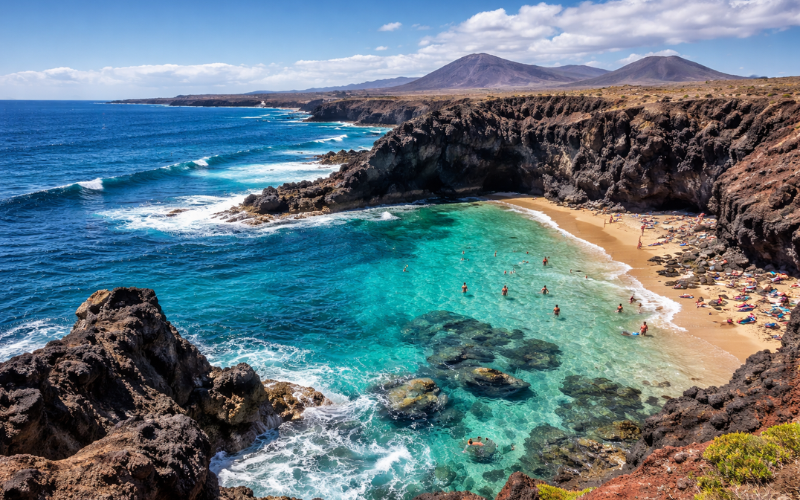
The landscape is where this all becomes visually unforgettable. Lanzarote’s volcanic history is written across the island in lava fields, dark rock, and dramatic coastal edges. On many shores, the Atlantic isn’t gently lapping at sand; it’s pushing and pulling against volcanic stone. This contrast—raw land against moving sea—is a big reason the Lanzarote Atlantic Ocean coastline looks so cinematic.
Beaches Along the Lanzarote Atlantic Ocean
Lanzarote’s beaches can feel like they belong to different worlds, depending on where you go. Some areas are naturally sheltered, with calmer water and an easygoing vibe. Other stretches of coast are fully open to the Atlantic, and you’ll immediately sense more power in the waves and wind.
On the calmer side, you’ll often find beaches protected by bays, headlands, or natural shapes in the coastline. These spots tend to be better for relaxed swimming, paddling, and a slower beach day. The water can still be Atlantic-cool at times, but the overall feel is gentler.
On the wilder side, the open coastlines deliver that classic Atlantic drama: bigger swells, stronger currents, and more rugged scenery. These areas can be stunning to walk along and photograph, and they’re often the places where people first understand what “Atlantic energy” really means. The trade-off is that these beaches aren’t always ideal for casual swimming, especially when the sea is active. If your goal is to experience the island’s natural side, these exposed shores are a huge part of what makes the Lanzarote Atlantic Ocean so special.
Marine Life in the Lanzarote Atlantic Ocean
The Lanzarote Atlantic Ocean isn’t only about views; it’s also a living environment with surprising variety. Around the island, you can find many common Atlantic fish species, and the waters support an ecosystem shaped by currents, rocky habitats, and protected zones.
Dolphins are among the most exciting sightings for visitors, and whale sightings can happen too, depending on season and conditions. Even when you don’t see larger animals, snorkeling or diving can reveal how much life exists around volcanic rock—small fish, textured seabeds, and shifting light patterns that make the water feel alive.
Protection matters here. Northern waters near Lanzarote connect with the Chinijo Archipelago area (including La Graciosa), which is recognized for its marine value. Official tourism sources describe the Chinijo Archipelago as a major protected natural space with a large marine component, highlighting the importance of conservation around this part of the island region. The result is that visitors can enjoy the ocean while the area still maintains a focus on safeguarding habitats and biodiversity.
Swimming and Water Conditions in the Atlantic Waters of Lanzarote
Sea temperature changes through the year. Typical averages often sit around 18°C in late winter and rise to around 22–23°C in late summer and autumn, which is pleasant for many swimmers, especially on sunny days. Because it’s the Atlantic, the water can feel cool when you first enter, even during warmer months. Many visitors adjust quickly, and others prefer a wetsuit for longer swims or water sports.
The bigger factor is not temperature—it’s sea behavior. On calmer days, sheltered bays can feel friendly and easy. On rougher days, open coastlines can develop strong waves and currents. This is where Lanzarote demands respect. If flags warn against swimming, it’s best to follow them. If you’re unsure, choose a more protected beach, stay close to shore, and avoid swimming alone.
If your trip is mainly about enjoying the Lanzarote Atlantic Ocean safely, a good approach is to treat swimming like a “conditions-based” activity rather than something you force every day. When the sea is calm, it’s wonderful. When it’s rough, it’s often better enjoyed from the shore with a walk, photos, and a coffee afterward.
Surfing and Water Sports on Lanzarote’s Atlantic Coast
For surfers, Lanzarote has a serious reputation. The Atlantic brings consistent energy, and the island’s coastline creates many different wave conditions depending on location, wind direction, and swell size. This is exactly why surf culture feels so at home here: the ocean is active, and the island’s shape gives plenty of variety. Timing matters Wave seasons vary, and conditions depend on swell patterns and wind. Even outside peak swell times, many days still offer enough movement for learning, practicing, or enjoying the water in other ways.
Beyond surfing, the Lanzarote Atlantic Ocean supports a wide range of activities. Snorkeling and diving are popular where visibility is good and the water is calmer. Windsurfing and similar sports are also common because trade winds can be steady. The key is matching the activity to the right part of the coast and the right day. Lanzarote rewards people who stay flexible and let the ocean set the schedule.
Natural Attractions Formed by the Atlantic Ocean
Some of Lanzarote’s most memorable “attractions” aren’t built at all—they’re shaped by wave, wind, and volcanic rock. In many places, you can see how the Atlantic has carved, smoothed, and sometimes sharply cut the coastline.
Sea cliffs are a perfect example. When you stand above the water, looking down at the ocean’s movement against dark rock, you get a clear sense of how powerful the Atlantic can be over time. The meeting of volcanic land and ocean forces creates scenery that feels raw and dramatic rather than polished.
Natural pools and sheltered coves are another highlight. In certain coastal areas, lava formations and natural barriers can create calmer pockets of water, sometimes forming swimming spots that feel almost hidden. These places tend to be especially appealing on days when the open sea is too rough. They also show a softer side of the Lanzarote Atlantic Ocean—still connected to the same ocean energy, but shaped into something more approachable.
Why the Lanzarote Atlantic Ocean Feels Different from Mainland Spain
If you’ve swum in the Mediterranean, the contrast can be immediate. The Mediterranean often feels calmer, warmer, and more predictable. The Lanzarote Atlantic Ocean, on the other hand, often feels more alive—more movement in the water, more wind in the air, and a slightly cooler, fresher character.
You can also see the difference. The color of the sea shifts with light, and Lanzarote’s volcanic coastline adds extra contrast—dark rock, pale sand in some areas, and deep blue water beyond. Even on quiet days, the Atlantic presence feels strong, like the island is constantly in conversation with the ocean.
Culturally and environmentally, the ocean’s role is central. It shapes where people swim, which sports thrive, and how coastal areas are managed. It also influences the island’s natural identity: Lanzarote isn’t trying to be a “tropical beach” in the usual sense. Its appeal often comes from the Atlantic mood—fresh air, open views, and landscapes that look like nowhere else.
Conclusion
The Lanzarote Atlantic Ocean is the island’s quiet main character. It cools the air, shapes the coast, powers the waves, and gives Lanzarote its fresh, open feeling. Whether you come for calm swims, wild shoreline walks, marine life, or ocean sports, the experience is defined by the Atlantic—sometimes gentle, sometimes dramatic, always memorable. If you travel with respect for conditions and curiosity for the landscapes, you’ll understand why this coast feels so unique within the Canary Islands and beyond.
FAQs
1. Is the Lanzarote Atlantic Ocean safe for swimming?
It can be safe, especially in sheltered bays and on calm days. The main risks come from waves and currents on exposed beaches. Always check beach flags and local guidance, and choose protected areas when conditions are rough.
2. How warm is the Atlantic Ocean in Lanzarote?
Sea temperatures commonly range from around 18°C in late winter to about 22–23°C in late summer and autumn. This can feel cool at first, but many people swim comfortably, especially on sunny days.
3. Are there sharks in the Lanzarote Atlantic Ocean?
Sharks exist in the wider Atlantic, but encounters close to shore are not something most visitors experience. For travelers, the more realistic concerns are strong currents and wave conditions rather than marine animals.
4. When is the best time to visit Lanzarote for Atlantic ocean activities?
If you want warmer water and easy beach time, late summer into autumn is popular because sea temperatures tend to be higher. For surf and wind-driven sports, different seasons can work depending on swell and wind patterns, so it helps to plan around your activity and stay flexible.