

Introduction
We’ve all had that moment — you pull on your favorite jeans and suddenly they feel tighter than you remember. Maybe they just came out of the wash, or maybe they’ve been sitting in your closet for a while. Before you give up on them, it helps to know that denim naturally reacts to heat, moisture, and movement. That means you can often improve the fit without replacing the pair.
Why Jeans Feel Too Tight in the First Place
Jeans can feel tight for several everyday reasons, and it doesn’t always mean you bought the wrong size. Denim is made from cotton fibers that react to moisture, heat, movement, and time. Even a pair that fit perfectly last month can suddenly feel snug after washing, sitting for long periods, or even after a season change when your body feels slightly different.
Common reasons denim shrinks or feels restrictive
One of the most common causes is heat. Warm or hot washing and especially machine drying can tighten cotton fibers. That “freshly washed and too snug” feeling is usually the fibers contracting. Another reason is stiffness from detergent buildup or fabric that hasn’t been worn in a while. Denim can also feel tighter when it’s new because the fibers haven’t softened yet.
Fit issues can also be very local. Sometimes the waist feels tight but the legs fit fine, or the thighs feel restrictive while the waist is comfortable. That matters because the best way to stretch out jeans depends on where the tightness is happening.
The difference between temporary tightness and true sizing issues
Temporary tightness usually improves after 20–60 minutes of wear. The jeans start to loosen as you move, sit, and walk. True sizing issues feel uncomfortable even after the denim warms up and relaxes. If you can’t sit comfortably, the waistband digs in sharply, or you’re constantly fighting the fabric, stretching can help—but only within reasonable limits.
A useful way to think about how to stretch out jeans is this: stretching works best when you need a small to moderate amount of extra room. If you need a full size bigger, stretching can provide relief, but it may not fully replace buying the right size or choosing a better cut.
Know Your Fabric: Cotton vs. Stretch Denim
Before you start stretching, check the tag. Fabric content matters more than most people realize, and it changes what results you can expect.
Why 100% cotton behaves differently from jeans with elastane
Jeans made from 100% cotton (sometimes called rigid denim) can stretch with wear, especially in the waist and seat, but they also shrink more easily after washing and drying. They often feel stiff at first and then gradually mold to your body. With these jeans, the best stretching methods usually involve moisture and movement, because cotton relaxes when damp and under gentle tension.
Stretch denim includes a small amount of elastane (also called spandex) or similar fibers. These jeans often feel comfortable right away, and they stretch more easily in the moment—but they don’t always “hold” a stretched shape the same way. Too much aggressive stretching can also weaken the stretch fibers over time, making the jeans feel baggy or uneven.
How fabric composition affects how much your jeans can stretch
As a general rule, rigid cotton denim can give you a noticeable stretch after the right method, but it may shrink back if you wash hot or use a dryer. Stretch denim can feel looser quickly, but you want to be careful not to overdo it, because you can lose recovery (the fabric’s ability to bounce back).
The Wet-and-Wear Method for a Custom Fit
If you want the most personalized results, the wet-and-wear method is one of the best answers to how to stretch out jeans without changing their overall look. It uses light moisture and body movement to relax the fibers exactly where you need space.
Dampening the Tight Areas
Start by turning the jeans right-side out and identifying the tight spots. Common areas are the waistband, hips, thighs, and behind the knees. Use a spray bottle with lukewarm water and mist only those areas until they are damp. You don’t want the jeans dripping wet—just evenly moist. If your denim is stiff or stubborn, you can mix a small amount of hair conditioner into the water to help soften the fibers, but keep it light so you don’t leave residue.
Moving to Loosen the Fibers
Put the jeans on while they’re damp. Then move around for 15–20 minutes. This part matters because your movement creates gentle tension in the fabric. Sitting down, standing up, walking around, and doing a few slow squats or lunges helps the fibers relax in a natural way. You’re not trying to “work out” in your jeans—you’re simply encouraging the denim to give where your body needs it.
If the waistband is the main problem, focus on bending and twisting movements that put mild tension at the waist. If thighs feel tight, focus on steps and controlled bends that open the leg area.
Letting Them Dry Naturally
For the best fit, keep them on until they are mostly dry. Air drying while wearing the jeans helps them set closer to your shape. Once they’re nearly dry, you can take them off and finish drying them on a hanger. Avoid putting them in a dryer, because heat can undo the stretch and tighten the fibers again.
Using a Full Soak for an All-Over Stretch
If your jeans feel tight everywhere—not just in one spot—a full soak can create a more even stretch. This method is stronger than wet-and-wear, so it’s best used carefully.
When This Method Works Best
A full soak is most helpful for rigid denim that feels uniformly tight, especially after shrinkage from washing. It can also help if the jeans feel stiff and restrictive all over. If your jeans contain a lot of elastane, you can still do a soak, but you should be extra gentle afterward to avoid overstretching.
How to Do It Safely
Fill a bathtub with lukewarm water. Hot water is not the goal here; it can set shrinkage and stress the fibers. Put the jeans on and sit in the tub for about 15–20 minutes. While the fabric is wet, stand up carefully and let the water drain. Then do light, slow movements—walking a bit, gently bending your knees, and sitting briefly—so the denim relaxes evenly.
After that, air dry naturally. You can keep them on for a short time to guide the stretch, then hang them to finish drying. The main idea is steady, gentle expansion rather than pulling aggressively at seams.
What to Avoid After Soaking
The biggest mistake after soaking is using high heat. A dryer can shrink the jeans back quickly, sometimes even smaller than before. Another common issue is over-stretching while the jeans are extremely wet, which can warp the shape at the knees or seat. Keep movements natural and controlled, and let time do most of the work.
How to Stretch Specific Areas Like the Waist or Thighs
Sometimes you don’t need an all-over stretch—you just want the waistband to feel better, or the thighs to loosen enough for comfortable movement. Targeted stretching is often the smartest option because it preserves the original fit everywhere else.
Stretching the Waistband
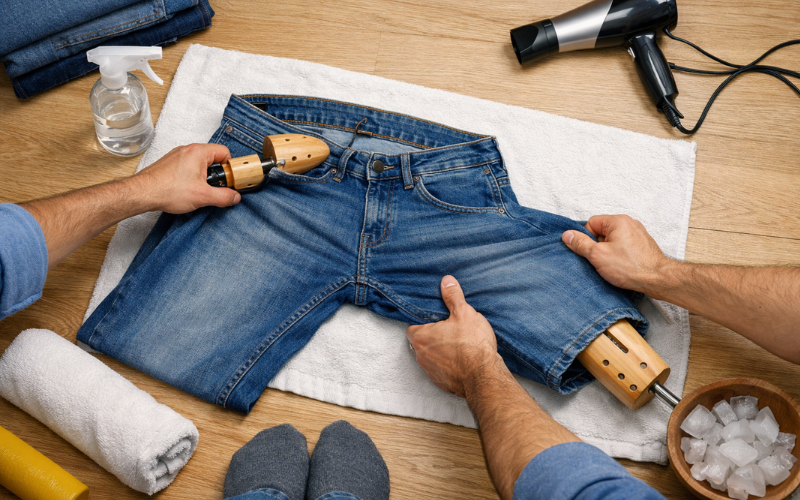
If the waist is tight, dampen the waistband with lukewarm water. Then use steady outward tension. A waistband stretcher works well, but you can also use a sturdy hanger or a firm object that fits inside the waist without sharp edges. The goal is gentle pressure held over time, not a quick tug.
Leave the waistband under tension as it dries or overnight. This method is especially useful when you need a small amount of extra room for comfort, and it keeps the jeans looking normal when worn.
Loosening Tight Thighs
For tight thighs, lay the jeans flat and dampen the thigh area. Then apply consistent outward pressure. A foam roller placed inside the leg can help create a controlled stretch. Let it sit for several minutes, then remove it and test the fit. You can repeat gradually rather than forcing it in one go. This slow approach helps avoid uneven stretching and keeps the legs from looking oddly shaped.
Using Heat Carefully for Quick Adjustments
Heat can help in small, controlled situations, but it needs caution. If you use a hair dryer, keep it on a medium setting and aim it at the tight area for a short time to soften the fibers. Then immediately stretch the fabric by hand or by wearing the jeans and moving gently. The important detail is moderation. Too much heat can cause shrinkage later, weaken fibers, or lead to a patchy look in some washes.
Quick Fixes When You Need Immediate Comfort
Not every situation needs a full stretching routine. Sometimes you just need relief right now, especially around the waist.
Button extenders and temporary solutions
A button extender can instantly add a bit of room without altering the jeans. It’s a simple option if the waistband is the only problem and you need comfort during a long day. It can also be a good solution while you gradually stretch the jeans over time.
Gentle tension methods that require minimal effort
If you have time but don’t want to do much, you can use gentle tension while the jeans are stored. Lightly dampen the tight area and stuff the jeans with pillows or rolled towels so the fabric rests under mild outward pressure. Over time, this encourages relaxation without aggressive pulling. It’s not the fastest method, but it’s low-risk and works well for small fit improvements.
What Not to Do When Stretching Jeans
Knowing what to avoid is just as important as knowing how to stretch out jeans. Many people get the result they want—then lose it or damage the denim by using the wrong follow-up steps.
Why high heat can undo your results
High heat is the main reason stretched jeans snap back. Hot washing and machine drying tighten fibers and reduce the relaxed fit you worked for. Even if you stretched the jeans perfectly, one hot cycle can erase most of the progress.
Mistakes that damage denim fibers
Pulling hard at seams can cause distortion, stress stitching, and create uneven stretching that looks strange when worn. Another issue is overusing products like fabric softener or conditioner until the denim feels coated. That buildup can affect how the jeans wash and wear over time. Also, stretching the knees too much while the jeans are wet can cause baggy knees later, especially in softer denim.
When stretching won’t solve the problem
If the jeans are tight because the rise is too low, the cut is wrong for your body, or the size is significantly off, stretching may only offer limited improvement. In those cases, a different fit—like a higher rise, a roomier thigh cut, or a different size—often solves the problem more cleanly than trying to force denim to behave like a different pattern.
How to Maintain the New Fit After Stretching
Once you’ve stretched your jeans successfully, the next step is keeping them comfortable. Most people lose their results because of how they wash and dry.
Washing habits that prevent shrinkage
Wash in cold water when possible. Cold water is gentler on the fibers and reduces the chance of the denim tightening up. Also consider washing less often. Denim naturally relaxes with wear, and frequent washing resets that relaxed feel.
Drying techniques that protect shape
Air drying is your best friend after stretching. Hang the jeans from the waistband or lay them flat to dry. If you must use a dryer, use the lowest heat possible and remove the jeans while they’re still slightly damp, then let them finish drying naturally. That small change can make a big difference in maintaining comfort.
How often to wash denim for long-term comfort
There’s no single perfect schedule, but many people find jeans stay comfortable when washed after several wears rather than after every use. Spot-cleaning small marks and airing them out between wears can help you wash less without sacrificing freshness. Over time, this keeps the denim softer, more flexible, and less likely to shrink back.
Conclusion
Learning how to stretch out jeans is mostly about choosing the right method for your fabric and your problem area. If you want a custom fit, wet-and-wear is usually the safest option. If the jeans are tight all over, a full soak can help—just avoid high heat afterward. And if you only need relief in the waist or thighs, targeted stretching can improve comfort without changing the entire shape of the jeans.
FAQs
1. How much can you realistically stretch out jeans?
Most jeans can stretch a little, often enough to improve comfort in the waist, hips, or thighs. The exact amount depends on the fabric. Rigid cotton can relax noticeably with wear and moisture, while stretch denim may loosen quickly but has limits if you want it to keep its shape.
2. Can you stretch out 100% cotton jeans permanently?
You can stretch 100% cotton jeans so they fit better, but the fit is only “permanent” if you care for them properly. Hot washing and machine drying often cause them to shrink again. Cold washing and air drying help keep the improved fit.
3. Does heat help or shrink jeans?
Heat can help soften fibers for a quick stretch if used carefully, but high heat often leads to shrinkage later. A gentle approach—light warmth plus stretching—is safer than strong heat.
4. How long does it take to stretch jeans using the wet-and-wear method?
You can feel a difference in one session, often within an hour from start to finish. If the jeans are very tight, repeating the method once or twice on separate days can improve the fit gradually without damaging the denim.