

Introduction
When people hear the words silverback gorilla, they often picture power, size, and an animal that could never be approached. In reality, the silverback gorilla is also a calm leader, a patient parent-figure, and the backbone of gorilla family life. This article explains what a silverback is, what makes him unique, how he leads, where he lives, what he eats, and why protecting gorillas matters more than ever.
What Is a Silverback Gorilla?
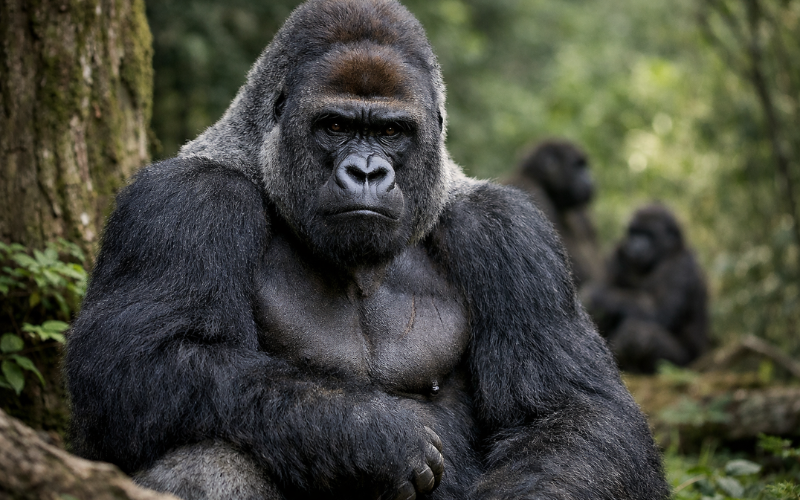
A silverback gorilla is a fully mature adult male gorilla. The name comes from the noticeable band of silver or gray hair that develops across his back and hips as he reaches adulthood. This change usually appears when a male is around 12 years old or older, though timing can vary depending on the individual and the group he lives with.
Not every adult male becomes the leader of a group right away. Some males live alone for a period, while others form small groups or join a group later. Over time, a strong, experienced male may become the main silverback who leads and protects a troop. In many ways, the silverback gorilla is both the “head of the family” and the main defender, helping the group stay safe and stable.
Physical Characteristics That Make a Silverback Gorilla Unique
A silverback gorilla is the largest and most powerful member of a gorilla group, and among the biggest primates on Earth. Adult male gorillas commonly weigh in the hundreds of pounds, and their bodies are built for climbing, knuckle-walking, and living in thick forests. Their chest and shoulders are especially strong, and their arms are longer than their legs, which helps them move efficiently through different terrain.
People often compare a silverback gorilla to a bodybuilder because of the muscular look, but it’s more than appearance. A silverback’s strength supports daily survival. He may need to push through heavy plants, climb steep areas, or protect the group during danger. His physical presence also sends a message to threats: “This group is protected.”
Even facial features can look intimidating to humans. Adult males often have a larger skull, stronger jaw muscles, and prominent canine teeth. These traits play a role in displays and warnings, and they help the silverback keep order in the group without constant fighting.
Physical Characteristics: Size, Weight, Arm Span, Bite Force, and Strength
A typical silverback gorilla is much larger than an adult female gorilla. Adult males often stand around 5.5 to 6 feet tall when upright, though gorillas usually move on all fours. Their weight often falls roughly between 300 and 500 pounds, and some males can be heavier, especially in captivity where diet and activity levels are different.
One of the most striking features is the arm span. A silverback’s arms can stretch far wider than his height, often reaching well over 7 feet from fingertip to fingertip. Those long arms support climbing, balance, and powerful movement through the forest. The arms also play a big role in display behaviors like chest-beating and charging the ground.
Strength is one of the most discussed parts of the silverback gorilla, but it’s important to understand what that means. A gorilla’s strength is built for natural life: pulling vegetation, climbing, defending, and carrying its own body weight across uneven land. You may see dramatic numbers online about lifting ability or bite force, but exact measurements can vary and are hard to confirm in the wild. What we can say with confidence is that a silverback is far stronger than an average adult human and has an extremely powerful jaw and grip.
Still, strength is only one part of the story. A silverback gorilla does not spend the day trying to prove power. Most of the time, he is eating, resting, watching the group, and guiding movement in a steady, controlled way.
The Leadership Role of a Silverback Gorilla in the Troop
The silverback gorilla is usually the central leader of a troop, which is a family group that can include several adult females, their young, and sometimes younger males. His leadership is not only about fighting. It’s mainly about making decisions, keeping peace, and protecting the group from danger.
A troop’s safety often depends on the silverback’s experience. He learns the landscape over time and remembers where food sources are, where it is safer to rest, and which routes help the group avoid trouble. He also helps manage social relationships. Gorilla groups have emotions and social bonds, and a strong leader reduces stress by keeping the group stable.
In many groups, the silverback is also a “social anchor.” Young gorillas often stay close to him because his presence is reassuring. When the group feels threatened, they look to him first. When there is tension among group members, he may step in and calm things down.
How a Silverback Gorilla Protects Its Family
Protection is a big part of what makes a silverback gorilla so important. The silverback’s job is to keep the group safe from dangers such as predators, rival gorillas, or human threats near the habitat. But protection does not always mean violence. In fact, silverbacks often prefer to avoid serious conflict because injuries can be life-threatening in the wild.
When danger appears, the silverback usually starts with warning behaviors. He may stand tall, stare, grunt, beat his chest, or throw plants. These displays are meant to look impressive and convince the threat to back off. If the threat continues, he may charge, sometimes as a “mock charge” that stops short, showing that he is serious without immediately attacking. If there is no other choice and his family is at risk, a silverback can fight with great force.
A silverback also protects the group in quieter ways. He chooses safer sleeping spots, keeps an eye on the group during feeding, and positions himself between the group and danger. His calm awareness is often the main reason the troop can live without constant conflict.
Decision-Making, Territory, and Daily Movement
Daily life for a silverback gorilla involves many small decisions that add up to survival. The silverback often leads the group to feeding areas and chooses when to rest. Gorillas spend a large part of the day eating and digesting plant foods, so choosing good feeding spots matters. He also decides when to move on, which can help the group avoid overusing one area.
Gorillas do not defend territory the same way some animals do, but they do have home ranges where they spend most of their time. A silverback becomes familiar with this range and may avoid areas where rival groups are known to travel. If two groups meet, silverbacks may display, vocalize, and try to keep their groups apart, because conflict can be dangerous for everyone.
Movement also depends on weather, food availability, and the needs of young gorillas. The silverback must balance safety and access to food. If there are infants or small juveniles, the group’s pace may be slower, and the leader adjusts accordingly.
Behavior and Personality: Are Silverback Gorillas Really Gentle Giants?
The phrase “gentle giant” is often used for a silverback gorilla, and in many ways it fits. Silverbacks are typically calm, confident, and steady. They are not constantly aggressive. In fact, their calm nature is part of what makes them successful leaders. A troop does better when the leader does not panic easily.
Silverbacks can show patience with young gorillas, sometimes allowing them to climb on them or play nearby. They may act like watchful babysitters, keeping an eye on infants while mothers feed or rest. They can also show affection through grooming and close contact.
That said, it’s important not to romanticize them. A silverback is a wild animal with strong instincts. If he feels threatened, especially if his group is at risk, he can become dangerous. Most conflicts happen when a group feels cornered, surprised, or stressed. In the wild, silverbacks generally avoid humans when possible. Problems increase when habitats shrink or when gorillas are pressured by human activity.
Where Silverback Gorillas Live in the Wild
A silverback gorilla lives wherever gorillas live, because “silverback” describes an adult male, not a separate species. Gorillas are native to parts of Central and East Africa, and they live in forests that provide enough plant food, water, and cover.
Depending on the type of gorilla, habitats can range from lowland rainforests to higher mountain forests. In higher areas, temperatures can be cooler and vegetation can change with altitude. In lowland areas, forests can be dense, humid, and rich with a wide variety of plants.
These habitats are not only “homes.” They are complete survival systems. When forests are damaged or broken into smaller pieces, gorilla life becomes harder, and the risks from humans and disease can increase.
Mountain Gorillas vs. Lowland Gorillas
People often hear about mountain gorillas because they are famous and closely protected in certain parks. Mountain gorillas live in higher-altitude forests in parts of Uganda, Rwanda, and the Democratic Republic of the Congo. Their environment can be cooler, with thick vegetation. Mountain gorillas are generally the ones most associated with guided gorilla trekking experiences.
Lowland gorillas live in lower, flatter forest regions. Western lowland gorillas are found in parts of Central Africa and are the most numerous gorilla type, though they still face serious threats. Eastern lowland gorillas, also called Grauer’s gorillas, live mainly in the eastern Democratic Republic of the Congo and are also under heavy pressure.
A silverback gorilla in either environment has the same basic role: protect the group, guide movement, and keep social order. Differences in habitat can affect diet, group movement, and daily behavior, but leadership remains central across gorilla groups.
Natural Habitat and Environmental Conditions
Gorilla habitats are typically forested areas with abundant plant life. Gorillas rely on leaves, stems, shoots, and fruit, so they need ecosystems that can support steady feeding. The health of the forest directly shapes gorilla health. When forests are cut, mined, or turned into farmland, gorillas may be pushed into smaller spaces. This can lead to less food, more contact with humans, and higher stress.
Weather and seasons also matter. In some regions, certain fruits appear at specific times, and the group’s movement may shift to follow food availability. Rainfall influences plant growth, and temperature changes can affect daily activity patterns.
In short, the silverback gorilla is closely tied to the forest. Protecting the forest protects the gorillas, and protecting gorillas also supports the wider ecosystem they help maintain.
Diet and Daily Life of a Silverback Gorilla
A silverback gorilla is mainly a plant eater. Much of the diet includes leaves, stems, shoots, and other vegetation. In some habitats, fruit plays an important role when it is available. Gorillas may also eat small amounts of insects, but plants are the main focus.
Because plant foods can be bulky and take time to digest, gorillas spend many hours eating and resting. Daily life often follows a calm rhythm: feeding, resting, moving, and social time. Social behavior includes grooming, play among young gorillas, and quiet contact within the group.
The silverback’s daily life includes these same basics, but with added responsibility. He watches the surroundings, checks on the group, and responds to tension. He is not “bossy” all day, but he is always aware of what’s happening.
Threats, Conservation Status, and Protection Efforts
Gorillas face serious challenges, and protecting them is not a simple task. The biggest threats include habitat loss, illegal hunting, and disease. In some places, human conflict and instability also harm conservation work, making protection harder to maintain.
Different gorilla populations have different conservation statuses, but overall, gorillas are at risk and require ongoing protection. Even when populations increase in one area, they may decline in another. That’s why conservation needs to be consistent and long-term.
Protection efforts often include anti-poaching patrols, habitat protection, community programs, and responsible tourism in areas where it is allowed. When done correctly, tourism can support park funding and local jobs, which can encourage long-term conservation. When done poorly, it can increase stress on animals and spread disease. The key is careful, respectful management.
Why Silverback Gorillas Are Critically Endangered
It’s common to hear that gorillas are endangered, and some populations are at especially high risk. A main reason is that gorillas reproduce slowly. Females do not have many babies in a lifetime, and young gorillas take years to grow. If adults are lost to hunting or disease, it can take a long time for a group to recover.
Habitat loss is another major factor. When forests are cleared for farming, logging, or development, gorilla groups lose space and food. They may also become more exposed to humans, which increases the risk of conflict and disease transmission.
Illegal hunting is still a threat in some regions, whether for bushmeat or the illegal wildlife trade. Even when gorillas are not the target, traps set for other animals can injure or kill them. Disease is also a concern, especially because gorillas can catch some illnesses from humans.
All of these pressures together make the situation serious. The silverback gorilla, as the leader of a group, is especially important. If a troop loses its main silverback, the group can become unstable, and infants may be at higher risk.
Conservation Programs Protecting Their Future
Conservation works best when it supports both wildlife and local communities. Programs that protect gorillas often include ranger patrols, park management, habitat restoration, and education. Community support is crucial, because people living near gorilla habitats are part of the solution. When communities benefit from conservation through jobs, training, and shared value, protection becomes stronger.
Health protections are also important. In some places, conservation teams monitor gorilla health, reduce risky human contact, and respond to injuries or illness. Strict rules for viewing gorillas, such as keeping distance and limiting group size, help reduce stress and disease risk.
Success stories exist, and they show that protection can work. But it requires funding, stability, and consistent effort. Protecting a silverback gorilla means protecting the whole system around him: forest, food sources, and the safety of the people who share the land.
Conclusion
The silverback gorilla is more than a symbol of strength. He is a leader, protector, and steady guide for a complex and emotional family group. His size and power are real, but his calm decision-making and protective instincts are what truly define him. Understanding how a silverback lives, where he belongs, and what threatens his survival helps us see why gorilla conservation matters. Protecting the silverback gorilla means protecting forests, supporting responsible conservation, and respecting one of nature’s most remarkable animals.
FAQs
1. How strong is a silverback gorilla compared to a human?
A silverback gorilla is far stronger than an average adult human. Its strength is built for climbing, pulling vegetation, and defending a group. Exact numbers vary, but the overall difference is clear: a silverback has much greater raw power in its arms, shoulders, and grip.
2. At what age does a gorilla become a silverback?
Most males begin developing the silver back hair when they reach full maturity, often around 12 years old or later. This timing can differ from one gorilla to another, but the “silverback” label generally refers to a fully mature adult male.
3. Where can you see a silverback gorilla in the wild?
Silverback gorillas live in parts of Central and East Africa, depending on the gorilla population. Mountain gorillas live in higher-altitude forests in the region of Uganda, Rwanda, and the Democratic Republic of the Congo, while lowland gorillas live in forested areas of Central Africa.
4. Are silverback gorillas dangerous to humans?
Silverbacks are usually calm and avoid conflict, but they can be dangerous if they feel threatened or if their family group is at risk. In the wild, they generally avoid humans. Problems are more likely when gorillas are surprised, stressed, or pushed too close.