

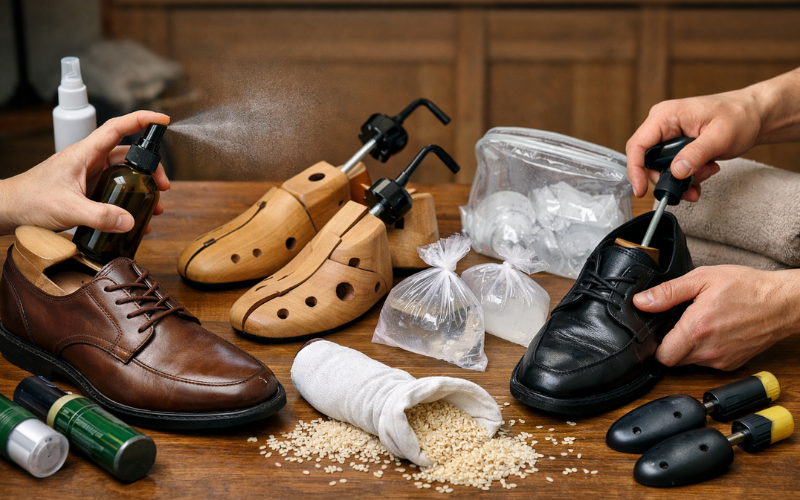
Leather shoes are supposed to feel supportive and comfortable, but a new pair can sometimes feel tight in all the wrong places. If you’re wondering how to stretch leather shoes safely, you’re not alone. The good news is that leather can usually be stretched a little, and you can often do it at home without damaging the shape or finish. The key is using gentle methods, being patient, and knowing when it’s better to stop and get help.
This guide is designed to be practical and beginner-friendly. You’ll learn safe and effective ways to stretch leather shoes at home, how to spot the areas that need stretching, and how to avoid common mistakes that lead to cracked leather, misshapen shoes, or a fit that still feels wrong.
Why Leather Shoes Feel Tight in the First Place
Leather shoes often feel tight for a few simple reasons. The most common one is that leather is firm when it’s new. Even high-quality leather needs time to soften and adjust to the shape of your feet. In the beginning, it can feel stiff across the toe box, the sides, or the top of the foot. This doesn’t always mean the shoe is too small. Sometimes it simply means the leather hasn’t “given” yet.
Another reason is sizing differences between brands and styles. A size that fits perfectly in one brand might feel narrow or short in another. Shoe shapes also matter. Some styles have a pointed toe, a narrow front, or a tight heel cup. These design choices can create pressure even if the length is correct.
Foot shape plays a big role too. If you have a wider forefoot, a higher arch, or bunions, you might feel tightness in specific spots while the rest of the shoe feels fine. That’s actually a helpful sign, because it suggests targeted stretching might solve the problem. On the other hand, if the shoe feels painfully tight everywhere, especially in length, stretching may not be enough.
It’s also worth noting that your feet change during the day. Many people’s feet swell slightly by evening, after walking or standing. If you try on shoes early in the day and they feel fine, they may feel tight later. That’s one reason leather shoes can feel “wrong” even if they seemed okay at first.
Things to Know Before You Start Stretching Leather Shoes
Real leather usually stretches a bit because it’s a natural material. It can soften and relax with wear, and it often responds well to gentle stretching methods. Synthetic materials, however, may not stretch much at all. Some synthetic uppers can loosen slightly, but many do not hold a stretched shape the way leather does. If your shoes are made from faux leather or a coated synthetic, stretching efforts may have limited results and may even cause cracking or peeling.
Even real leather has limits. In most cases, you can stretch leather shoes by a small amount, not a full size. Think of it as improving comfort, not completely changing the fit. If your toes are crushed or your feet go numb, the shoes may simply be the wrong size or shape for you.
It’s also important to identify where the tightness is coming from. Tightness across the ball of the foot is common in narrow shoes. Pressure on the little toe can happen if the toe box is narrow. Tightness on the top of the foot often means the upper is stiff or the shoe is low-volume. A tight heel may cause rubbing, but stretching the heel area is tricky and often requires careful handling.
Take a moment to put the shoes on and walk a few steps indoors. Notice the exact spots that pinch or rub. If you can, lightly mark those areas with a small piece of tape on the outside so you remember where to focus. This makes your stretching more controlled and helps prevent overstretching areas that already fit well.
Also consider the condition of the leather. If the shoes are old, dry, or cracking, aggressive stretching can make things worse. Dry leather is more likely to split. In that case, conditioning the leather first is a smart step. Soft, hydrated leather is more flexible and less likely to get damaged.
Simple At-Home Methods to Stretch Leather Shoes Safely
One of the easiest methods is wearing the shoes with thick socks at home. This works best when the shoes are only slightly tight. The socks add a bit of extra volume, and the warmth from your feet helps soften the leather over time. The key is short sessions. Wear the shoes for 10 to 20 minutes, walk around, and then take them off. Repeat daily until the fit improves. If the shoes cause sharp pain, don’t push through it. Pain is a sign that the shoe may be too small or that you need a different approach.
Another common method uses controlled heat, but it must be done carefully. Heat can soften leather, making it easier to shape, but too much heat can dry it out, weaken adhesives, or cause the leather finish to change. If you use heat, keep it mild. Some people use a hair dryer for a short time while wearing thick socks, focusing only on tight areas. The safest approach is to use low heat, keep the dryer moving, and limit the time to a minute or two. Then walk around until the leather cools. Afterward, conditioning the leather helps keep it from drying out.
There is also a freezer method that some people use for gentle expansion, especially for tight width. It involves placing a sealed bag of water inside the shoe and freezing it so the water expands. While this can work in some cases, it comes with risks. Moisture and leather do not always mix well, and if a bag leaks, it can damage the shoe. If you try it, be very careful to prevent any water contact with the leather. Use double bags, remove excess air, and ensure the bag fits neatly in the tight area. Let the shoe thaw naturally before removing the bag. Never force it out while still frozen, as that can distort the shoe.
Using a Shoe Stretcher for More Precise Results
A shoe stretcher is often the best tool if you want a more controlled way to stretch leather. It’s especially useful when tightness is in a specific spot, such as the toe box or the sides, and you want steady pressure instead of relying on wear alone.
When choosing a stretcher, make sure it matches the type of shoe. Some stretchers are designed for length and width, while others mainly widen the shoe. There are also stretchers made for certain shapes, like boots or high heels. A basic stretcher can work well for many leather shoes, but it should fit the shoe size range closely so it applies pressure evenly.
For targeted stretching, some stretchers come with small attachments that press into specific areas. This is helpful for pressure points, bunions, or places where your toes rub. It’s a more focused way to stretch without changing the whole shoe.
How long you leave the stretcher inside depends on how tight the shoe is and how the leather responds. For mild tightness, several hours might be enough. For more stubborn spots, leaving it overnight is common. The key is to increase pressure slowly. If you crank it too far, you risk warping the shoe or stretching it unevenly. A good approach is to tighten a little, wait, test the fit, and repeat if needed. This step-by-step method gives you better control and lowers the chance of damage.
Many people also use a leather stretching spray along with a stretcher. These sprays are made to soften the leather slightly and help it relax. If you use one, apply a light amount to the inside of the tight area, not the entire shoe. Then insert the stretcher and apply gentle pressure. Always test first on a small hidden area if you’re worried about the leather finish.
Stretching Specific Areas Like the Toe Box or Width
Sometimes your shoes don’t need overall stretching. They just need relief in one or two places. This is very common, and it’s also where careful stretching can make the biggest difference.
If your toes feel crowded, the toe box may be too tight. In many leather shoes, you can gain a little extra room by widening the front. A shoe stretcher that expands width is helpful here, especially if it can apply pressure closer to the toe area. Thick-sock wear can also help if the tightness is mild. The goal is not to turn a narrow toe box into a wide one, but to reduce rubbing and pressure so your toes can sit naturally.
For narrow shoes that squeeze the sides of your feet, stretching the width is usually the most effective solution. This is often a good fit issue to fix because the shoe length may be correct. A stretcher works very well for width, and you can also do gentle wear sessions at home. If you feel pain along the outer edge of your foot or near the ball of your foot, width stretching may provide real comfort.
For bunions or sensitive spots, targeted stretching is often the best approach. A pressure point that hits the same spot every time is a classic reason people seek stretching. In these cases, a targeted stretcher attachment can help create a small “pocket” so the shoe no longer presses directly on the painful area. This is something cobblers do very well, but you can sometimes manage it at home if you have the right tool and you move slowly.
When to Visit a Professional Cobbler
Home methods work well for minor to moderate tightness, but some situations are better handled by a professional. A cobbler has the right tools to stretch leather in a controlled way, and they can usually target problem areas more accurately than most at-home setups.
If your shoes are expensive, delicate, or made from specialty leather, professional stretching is often a safer choice. Some leather finishes can react badly to heat, moisture, or sprays. A cobbler can choose a method that protects the look and structure of the shoe.
It’s also a good idea to visit a cobbler if the shoe needs stretching in a difficult area, like a tight heel or a stiff seam that rubs. Heel stretching can be tricky because you don’t want to loosen the heel too much and cause slipping. A cobbler can adjust the fit while keeping the shoe stable.
If you’ve tried gentle stretching and nothing changes, that’s another sign to get help. Sometimes the issue is not just tightness, but the overall shape of the shoe. A cobbler can tell you what’s realistic, and whether stretching will truly solve the problem.
Mistakes to Avoid When Stretching Leather Shoes
The biggest mistake people make is overstretching. Leather can loosen more than you expect, especially if you stretch repeatedly without checking the fit. Once leather is stretched too far, it’s hard to reverse. The shoe may start to feel loose, or your foot may slide forward, which can create new discomfort.
Another common mistake is using too much heat or moisture. High heat can dry leather, cause stiffness, and lead to cracking over time. Too much moisture can stain leather, weaken the structure, and damage the inside lining. If you use any method involving warmth or humidity, keep it mild and controlled, and condition afterward when appropriate.
Trying to stretch materials that don’t stretch well is also a problem. Some shoes look like leather but aren’t. If the upper is synthetic, the material may resist stretching, or it may stretch unevenly and look damaged. If you’re unsure, check the label or product description. Real leather generally responds better, while many synthetic materials do not.
Another mistake is stretching the wrong problem. If the shoes are too short, stretching won’t fix it. You may gain a tiny bit of space, but not enough to protect your toes. If your toes hit the front of the shoe, it’s often better to size up or switch to a roomier shape.
Finally, don’t ignore pain signals. Mild tightness can be normal for new leather shoes, but sharp pain, numbness, or intense pressure is a warning sign. Stretching should improve comfort, not become a battle.
How to Keep Leather Shoes Comfortable After Stretching
Once you’ve improved the fit, you’ll want the shoes to stay comfortable. Leather care matters here because stretching often involves softening the leather, and softened leather needs support to stay in good shape.
Conditioning the leather can help maintain flexibility. When leather is dry, it becomes stiff and more likely to crack. A simple leather conditioner used occasionally can keep the material supple and help the shoes feel better over time. You don’t need to overdo it. A light, occasional conditioning routine is usually enough.
Proper storage also helps your shoes keep their shape. If possible, store leather shoes with shoe trees or gentle support inside. This helps prevent the leather from shrinking back too much and keeps the toe box from collapsing. It also reduces creases that can turn into pressure points later.
To prevent tightness in the future, pay attention to when you wear your shoes. If your feet swell later in the day, you might save tight-fitting shoes for times when you know you’ll be sitting more, or you can break them in gradually. Rotating shoes also helps because it gives the leather time to rest and dry naturally between wears.
Conclusion
Knowing how to stretch leather shoes can save you from wasting a good pair and help you wear your shoes comfortably without pain. The safest approach is always gradual: start with gentle at-home methods, use a shoe stretcher for more control when needed, and focus on the exact areas that feel tight. Avoid high heat, excess moisture, and forcing shoes that are simply the wrong size. With patience and basic leather care, you can often get a better fit while keeping the shoes looking and feeling like they should.
FAQs
1. How long does it take to stretch leather shoes properly?
It depends on how tight they are and which method you use. Gentle wear with thick socks may take several days. A shoe stretcher can show results in a few hours to overnight, but sometimes you may need a few sessions to reach a comfortable fit.
2. Can all leather shoes be stretched?
Most real leather shoes can stretch a little, especially in width. However, the amount is limited. Shoes that are too short or made with stiff components may not stretch enough to solve the issue. Shoes with synthetic uppers may stretch very little or not at all.
3. Is it safe to stretch leather shoes with heat?
It can be safe if the heat is mild and controlled. Too much heat can dry out leather or damage the finish. If you use a gentle heat method, keep it brief, avoid high temperatures, and consider conditioning afterward to keep the leather from becoming dry.
4. How much can leather shoes stretch without damage?
In many cases, leather shoes can stretch slightly, often enough to ease pressure and improve comfort. You should not expect a full size change. The safest approach is to stretch gradually and stop as soon as the fit feels comfortably snug.