

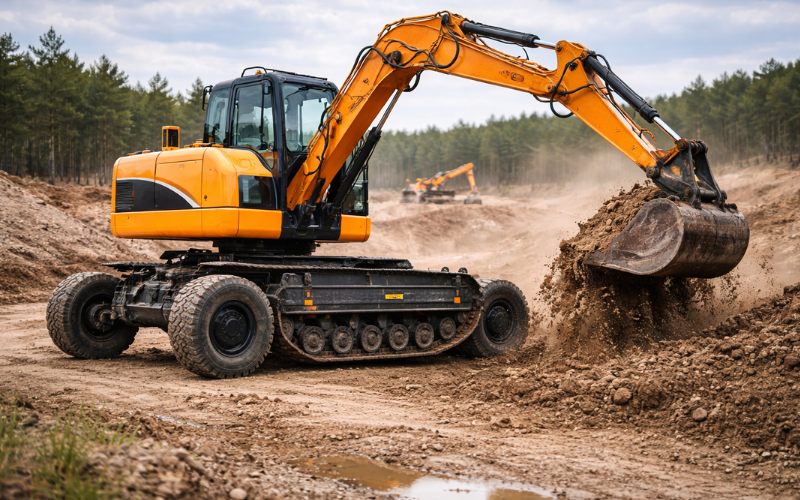
Introduction
Tracked-wheeled vehicles are a unique type of transport and machinery that combine the best of both worlds wheels and tracks. This hybrid design allows them to handle a variety of terrains more efficiently than traditional vehicles, making them highly versatile across industries. From construction sites to military operations, tracked-wheeled systems have become an essential part of modern mobility. In this article, we will explore what tracked-wheeled vehicles are, how they work, their benefits, applications, and key considerations when choosing one.
What Are Tracked-Wheeled Vehicles?
Tracked-wheeled vehicles are machines that use both wheels and tracks for movement. Unlike fully wheeled or fully tracked vehicles, this hybrid system combines the speed and maneuverability of wheels with the stability and traction of tracks. Essentially, the wheels handle smooth surfaces efficiently, while the tracks help traverse rough, uneven, or soft terrains.
The key components of a tracked-wheeled vehicle include a set of wheels integrated with track assemblies, a suspension system that balances weight distribution, and a drive mechanism capable of powering both wheels and tracks. This combination allows the vehicle to transition seamlessly between paved roads and off-road conditions without compromising stability or performance.
History and Evolution of Tracked-Wheeled Technology
The concept of tracked-wheeled vehicles dates back to the early 20th century, when engineers were experimenting with ways to improve mobility over rough terrain. Early prototypes were mainly used in military operations, providing the advantage of off-road mobility without the slow speeds of fully tracked tanks.
Over the decades, tracked-wheeled systems evolved significantly. Modern engineering has refined the hybrid mechanism, making these vehicles faster, more reliable, and more adaptable. Today, tracked-wheeled vehicles incorporate advanced materials, electronic control systems, and efficient engines that make them capable of handling extreme environments while maintaining fuel efficiency and safety.
How Tracked-Wheeled Vehicles Work
The Mechanics of Combining Tracks and Wheels
Tracked-wheeled vehicles rely on a carefully engineered system where both wheels and tracks contribute to motion. Wheels typically handle propulsion on firm surfaces, reducing wear on tracks and improving speed. Tracks, on the other hand, provide traction in challenging terrains like mud, snow, sand, or loose gravel. The suspension system ensures that weight is evenly distributed, preventing excessive pressure on any single component and allowing smooth operation across uneven surfaces.
Advantages of Hybrid Traction Systems
The hybrid traction system of tracked-wheeled vehicles provides several advantages over single-mode designs. These vehicles are capable of handling slopes, obstacles, and soft ground that would stop a conventional wheeled vehicle. At the same time, they maintain higher fuel efficiency and lower ground pressure compared to fully tracked vehicles. This combination makes tracked-wheeled designs ideal for scenarios where versatility and reliability are essential.
Applications Across Industries
Tracked-wheeled vehicles have become indispensable in multiple industries due to their adaptability.
Construction and Heavy Machinery
In construction, these vehicles are used to transport heavy loads over loose soil, gravel, and uneven terrain. Their hybrid design allows operators to navigate construction sites more efficiently, reducing delays caused by terrain challenges.
Military and Defense Vehicles
In military applications, tracked-wheeled vehicles offer both speed and off-road capability. They are used for troop transport, reconnaissance, and logistics support, providing mobility in environments where fully wheeled or tracked vehicles alone may be limited.
Agriculture and Off-Road Transport
Farmers and off-road operators benefit from tracked-wheeled vehicles for tasks like soil cultivation, harvesting, and transporting goods across fields. The hybrid design reduces soil compaction while allowing the vehicle to maintain stability and maneuverability.
Benefits of Tracked-Wheeled Vehicles
One of the primary advantages of tracked-wheeled vehicles is their ability to move effectively on rough and uneven terrain. This enhanced mobility ensures that operations in challenging environments can continue without interruptions.
Stability is another key benefit. By distributing weight more evenly across tracks, these vehicles maintain balance even when carrying heavy loads or traveling over obstacles. This reduces the risk of tipping or vehicle damage.
Additionally, tracked-wheeled vehicles tend to offer better fuel efficiency and lower wear compared to fully tracked systems. The wheels reduce friction on smooth surfaces, preserving track lifespan and minimizing maintenance costs.
Challenges and Limitations
Despite their advantages, tracked-wheeled vehicles are not without challenges. Their hybrid systems are more mechanically complex than fully wheeled vehicles, which can increase maintenance requirements. Owners must ensure regular inspections of tracks, wheels, and suspension systems to prevent operational failures.
Cost is another consideration. Tracked-wheeled vehicles generally have higher initial purchase prices due to their advanced engineering and materials. While they offer long-term efficiency benefits, upfront investment can be significant.
Finally, although highly versatile, tracked-wheeled vehicles may not match the performance of specialized vehicles in extreme environments. For example, deep mud or extremely steep slopes may still favor fully tracked vehicles for maximum traction.
Choosing the Right Tracked-Wheeled Vehicle
Selecting the right tracked-wheeled vehicle requires careful consideration of the intended purpose, terrain, and load capacity. Operators should evaluate factors such as engine power, track and wheel design, suspension quality, and overall durability.
Key features to consider include the vehicle’s maximum payload, ground clearance, maneuverability, and adaptability to different terrains. Additionally, evaluating the manufacturer’s support, maintenance requirements, and availability of spare parts ensures long-term reliability and value.
Conclusion
Tracked-wheeled vehicles represent a remarkable blend of engineering innovation and practical utility. By combining the benefits of wheels and tracks, these vehicles offer superior mobility, stability, and efficiency across various industries. While they require careful maintenance and thoughtful selection, their versatility makes them a valuable choice for operators needing a vehicle that performs well in both smooth and challenging terrains. Understanding the design, advantages, and applications of tracked-wheeled vehicles allows businesses and operators to make informed decisions, ensuring optimal performance and long-term reliability.
FAQs
1. What is the main difference between tracked-wheeled and fully tracked vehicles?
Tracked-wheeled vehicles combine wheels and tracks, offering speed on firm surfaces and traction on rough terrains, whereas fully tracked vehicles rely solely on tracks for off-road performance.
2. Are tracked-wheeled vehicles suitable for all types of terrain?
While highly versatile, they perform best on mixed terrains. Extremely soft or steep surfaces may still require specialized fully tracked vehicles.
3. How often do tracked-wheeled systems require maintenance?
Maintenance depends on usage and terrain but typically involves regular inspection of tracks, wheels, and suspension components to ensure safe operation.
4. Can tracked-wheeled vehicles be used for both civilian and military purposes?
Yes. Their hybrid design makes them suitable for construction, agriculture, logistics, and military operations, providing both mobility and stability in diverse conditions.