

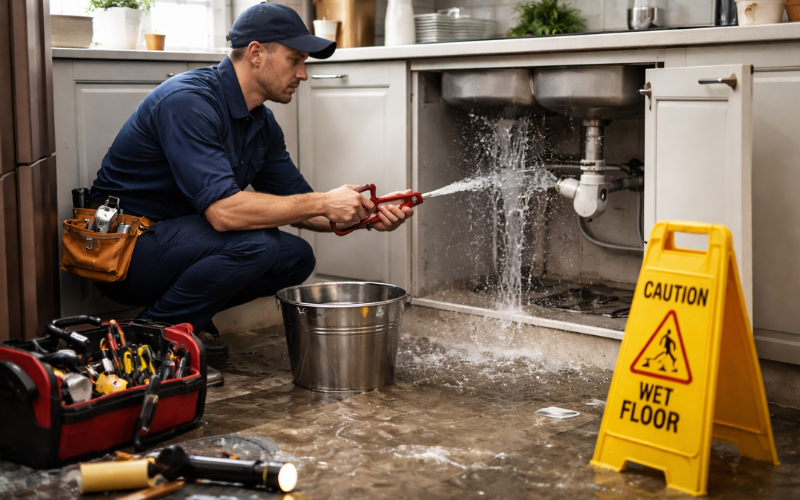
Introduction
Emergency plumbing is any plumbing problem that needs fast action because it can damage your home, risk your safety, or stop basic daily use of water. It’s not the same as a slow drip you can watch for a week. Emergency plumbing usually involves active leaking, flooding, sewage coming back up, no water at all, or anything that could quickly get worse in minutes or hours.
Plumbing emergencies can’t wait because water moves fast. A small burst pipe can soak floors, ruin walls, and damage furniture before you even finish a phone call. A blocked toilet can overflow and spread bacteria. A sewer backup can create health risks and make parts of the home unsafe. Even when the issue looks “not that bad,” it can turn serious quickly, especially if water reaches electrical areas or weakens ceilings and drywall.
Delaying emergency plumbing repairs often leads to bigger problems. Water damage can cause swelling wood, mold growth, and stained ceilings. Safety hazards can appear when water is near outlets, appliances, or a fuse box. Repair costs can rise because a simple fix becomes a full replacement, and the cleanup becomes a project of its own. The goal in emergency plumbing is not to panic, but to act in the right order.
In this guide, you’ll learn how to recognize emergency plumbing situations, what usually causes them, what to do immediately before a plumber arrives, how emergency plumbing services work, what affects the cost, and how to prevent the same kind of problem from happening again.
What Qualifies as an Emergency Plumbing Situation
A true emergency plumbing situation is one where time matters. Burst or leaking pipes are a top example, especially when water is spraying, pouring, or dripping heavily. A burst pipe can flood a room fast, and even a steady leak inside a wall can quietly destroy drywall and insulation while you’re trying to figure out what’s happening.
Overflowing toilets and blocked drains can also fall under emergency plumbing when the water level is rising or wastewater is spilling out. If one drain is slow, it might be an inconvenience. But if multiple drains are backing up, or if the toilet won’t stop overflowing, it becomes urgent because the mess spreads quickly and can carry germs.
Sewer line backups are among the most serious plumbing emergencies. When sewage comes back into sinks, showers, or floor drains, it’s not just unpleasant—it’s a health hazard. The smell, the bacteria, and the contamination risk mean you should treat it as emergency plumbing right away.
No water supply can also count as emergency plumbing, especially if it affects the whole home. Sometimes the issue is a local shutoff, sometimes it’s a main-line problem, and sometimes it’s a hidden leak that caused the system to lose pressure. If you have no water and you can’t identify a simple reason, it’s worth urgent attention.
Water heater failure or leaking tanks can quickly damage floors and nearby rooms. A water heater that is leaking from the tank usually won’t “get better.” It often means the tank is failing. If the leak is active and spreading, it becomes an emergency plumbing issue.
Gas-related plumbing concerns should be treated with extreme care. If you smell gas near a gas water heater or gas line connections, treat it as an emergency. Leave the area, avoid switching lights on or off, and contact the proper emergency service before anything else. In these situations, safety comes first.
The Most Common Causes of Plumbing Emergencies
Many emergency plumbing situations start with aging or corroded pipes. Over time, metal pipes can weaken from rust, mineral buildup, or small cracks that grow. Even modern materials can fail if they were installed poorly or stressed for years. Often the pipe doesn’t “warn” you in a big way—it may show small signs like discolored water, low pressure, or a damp smell before a real break happens.
High water pressure is another common reason behind emergency plumbing calls. When pressure is too strong, it pushes your plumbing system harder than it should. That stress can wear out seals, damage valves, and increase the chance of pipe failure. Some homes never check pressure, so it stays high for years until something finally gives.
Clogged drains and buildup are behind many overflow situations. Grease, food scraps, hair, soap scum, and wipes can slowly narrow pipes until water has nowhere to go. The problem often shows up at the worst time, like when guests are over or when you’re doing laundry. A clog can turn into an emergency plumbing situation if it causes a backup or overflow.
Poor installation or low-quality materials can also lead to emergency plumbing problems. Loose connections, wrong pipe sizing, weak fittings, and shortcuts during installation can work “fine” for a while. Then a small shift, temperature change, or pressure spike can create a leak. In some homes, earlier DIY work causes issues later because the parts were not meant for that system.
Extreme weather and frozen pipes are major triggers for emergency plumbing, especially in colder areas. When water freezes, it expands and can crack pipes from the inside. The worst part is that the damage often appears when the ice melts and the water starts flowing again, leading to sudden flooding. Even in places with mild winters, one cold snap can cause this kind of problem if pipes aren’t protected.
Immediate Steps to Take Before the Plumber Arrives
When emergency plumbing hits, your first job is to stop or slow the damage. If water is actively leaking or flooding, shut off the main water supply as soon as possible. Most homes have a main shutoff valve near where the water line enters the home, often near a meter, basement wall, utility room, or outside in a box. Turning it off can quickly prevent further flooding, even if you’re not sure which pipe is leaking.
If water is near outlets, cords, appliances, or your electrical panel, turn off electricity to the affected area. This part matters because water and electricity do not mix. If you can safely reach the breaker panel without stepping in water, shut off the circuit for that area. If you cannot do it safely, avoid the area and wait for help.
Next, try draining excess water safely. Open a few faucets to relieve pressure after shutting off the main valve. If a pipe burst, draining can reduce leftover water in the system. Use towels, a mop, or a wet/dry vacuum if you have one. Move rugs, furniture, and valuables away from the wet area if you can.
Containing the leak can reduce damage while you wait. A bucket under a drip, a towel wrapped around a small leak, or a temporary patch tape can help in the short term. For a toilet overflow, closing the toilet shutoff valve near the base can stop the flow. If the toilet tank is still filling, lifting the float or closing the valve can prevent more water from entering.
One of the biggest emergency plumbing mistakes is trying the wrong DIY fix. Avoid using harsh drain chemicals, especially when water is backing up. These chemicals can damage pipes and make it harder—and more dangerous—for a plumber to work. Also avoid over-tightening fittings or forcing valves that don’t turn easily, because that can cause a bigger break. In emergency plumbing, the safest approach is simple: stop the water, protect the area, and call a professional.
How Professional Emergency Plumbing Services Work
Emergency plumbing services are built around speed and control. Many plumbers offer 24/7 availability, but response times can depend on your location, weather, traffic, and how busy the service is. When you call, the dispatcher usually asks what’s happening, whether water is shut off, and if there’s flooding or sewage involved. The clearer you are, the faster they can prepare.
Once the plumber arrives, they start with a diagnostic process. This usually means confirming the source of the problem, checking nearby fixtures, testing water pressure, and inspecting visible pipes and valves. In sewer backup cases, they may check cleanouts and consider camera inspection if the issue is not obvious. For water heater problems, they examine valves, connections, and the tank condition to see whether it’s repairable or needs replacement.
Emergency plumbing often involves temporary fixes first, then permanent repairs. A temporary fix might stop the leak, restore basic water use, or prevent further backup. Permanent repairs can include replacing sections of pipe, clearing blockages fully, fixing damaged valves, or replacing a failing water heater. In many cases, the plumber will stabilize the situation and then recommend the next steps if more work is needed.
Tools and equipment vary depending on the emergency. Plumbers often use leak detection tools, pipe repair clamps, drain augers, hydro-jetting machines for tough clogs, and cameras for sewer line inspection. For burst pipes, they may cut out the damaged section and replace it with new piping. The right tools help them work faster and reduce disruption in your home, which is one reason emergency plumbing is best handled by trained professionals.
The Cost of Emergency Plumbing Services
Emergency plumbing costs can vary widely, mainly because emergencies are not all the same. Factors that influence pricing include how severe the problem is, how long it takes to access the issue, whether parts are needed, and whether walls or floors need to be opened to reach pipes. A simple valve replacement is usually far cheaper than repairing a burst pipe inside a wall.
After-hours service charges are common in emergency plumbing. Nights, weekends, and holidays often come with a higher rate because the plumber is responding outside regular business hours. Some services charge a flat emergency call-out fee, while others charge a higher hourly rate. Asking about the fee structure on the phone helps you avoid surprises, even during a stressful moment.
Repair complexity and parts replacement also matter. A clogged drain might be cleared quickly, while a sewer line issue might require advanced equipment or longer work time. A leaking water heater might need a small repair, but if the tank is failing, replacement can be the only safe option. Materials, brand, size, and local labor rates all influence the final price.
Preventing Future Plumbing Emergencies
You can’t prevent every emergency plumbing situation, but you can reduce the risk a lot with basic habits. Regular plumbing inspections help catch small issues early, like slow leaks, corrosion, or failing valves. Even a once-a-year check can uncover problems before they become a late-night flood.
Drain maintenance habits make a big difference. Being careful about what goes down sinks, showers, and toilets reduces clogs. Small steps like using drain strainers, avoiding grease in kitchen drains, and flushing only toilet paper can prevent many of the overflow emergencies people face.
Monitoring water pressure is an often-missed step. If your pressure is too high, it stresses pipes and fixtures every day. A plumber can test pressure quickly and recommend a pressure-reducing valve if needed. This is one of the simplest ways to prevent emergency plumbing problems caused by system strain.
Winterizing pipes is essential if your area gets cold. Insulating exposed pipes, sealing drafts near plumbing, and keeping a consistent indoor temperature can help prevent freezing. During severe cold, letting a faucet drip slightly can reduce freeze risk in vulnerable lines, though it should be used wisely and only when needed.
Replacing aging plumbing systems can be a smart investment if your home has older pipes that are known to fail. If you’ve had repeated leaks, discolored water, or frequent repairs, it may be time to plan upgrades rather than wait for another emergency plumbing event.
Choosing a Reliable Emergency Plumbing Service
In a true emergency plumbing situation, you don’t want to gamble. Licensing and certification matter because they show a plumber meets local standards and can legally perform the work. A licensed professional is more likely to follow safe practices and local codes, which protects your home in the long run.
Experience with urgent repairs is important because emergency plumbing requires calm decision-making under pressure. A plumber who handles emergencies regularly is more likely to diagnose quickly and choose the safest approach, especially when water damage is already happening.
Transparent pricing helps you feel more in control. Even in emergencies, reputable services can explain call-out fees, after-hours rates, and possible cost ranges based on what you described. While no one can give an exact number before seeing the issue, clear communication is a good sign.
Customer reviews and response reliability give you clues about how the company treats people when things go wrong. You’re looking for patterns: showing up on time, explaining clearly, cleaning up after the job, and standing by the work. Availability and service guarantees can also matter, especially if you want confidence that they’ll respond again if a repair fails soon after the visit.
Emergency Plumbing for Homes vs. Commercial Properties
Emergency plumbing in homes is usually focused on protecting living spaces and restoring daily comfort. The scale is often smaller, but the impact feels personal because it affects bedrooms, kitchens, and family routines. A burst pipe in a home can ruin flooring and walls quickly, and an overflowing toilet can make a bathroom unusable.
Commercial emergency plumbing often involves larger systems and higher stakes. A small issue can disrupt customers, staff, and operations. The plumbing layouts can be more complex, and the time pressure is stronger because downtime can mean lost income. In some cases, emergency plumbing work needs to happen fast while also keeping the area safe for people.
Compliance and safety requirements are also a bigger factor in commercial properties. Businesses may need to meet specific health and safety rules, especially in restaurants, clinics, and public buildings. A sewer backup in a business can require careful cleanup and may affect whether the space can legally stay open.
Downtime impact is often the key difference. In a home, the goal is comfort and damage control. In a commercial space, the goal includes getting operations back online quickly and safely. That’s why commercial emergency plumbing may involve a more structured response, faster coordination, and sometimes larger repair teams.
Conclusion
Emergency plumbing problems are stressful, but the best outcomes usually come from simple, fast decisions. Knowing what qualifies as emergency plumbing helps you respond without guessing. Understanding common causes makes it easier to spot early warning signs. And having a clear plan—shut off water, protect electrical safety, contain damage, and call a professional—can limit both the mess and the cost.
The most important takeaway is that emergency plumbing is about time and safety. Acting quickly can protect your home, reduce repair work, and lower the chance of long-term issues like mold and structural damage. With a bit of prevention and a trusted plumber saved in your phone, you’ll be ready if the next plumbing emergency happens when you least expect it.
FAQs
1. What is considered an emergency plumbing issue?
An emergency plumbing issue is usually any problem that can quickly cause damage or create health or safety risks, such as burst pipes, major leaks, sewage backups, or uncontrolled overflows.
2. Should I turn off the water if I have a leak but can’t find the source?
Yes. If you suspect active leaking and can’t locate it, shutting off the main water supply can prevent further damage until a plumber can diagnose the issue.
3. Can a clogged drain become an emergency?
It can. A slow drain is often manageable, but if water starts backing up, overflowing, or affecting multiple fixtures, it can turn into an emergency plumbing situation.
4. Why are emergency plumbing services more expensive at night or on weekends?
Emergency plumbing often includes after-hours labor, fast dispatch, and urgent scheduling, which typically increases the service rate compared to standard appointments.