

Introduction
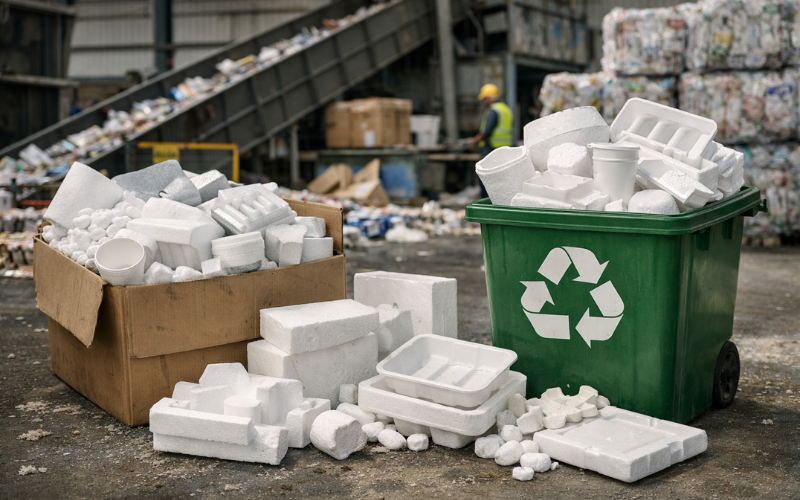
Styrofoam is a material most people use regularly without giving it much thought. It appears in takeout containers, coffee cups, packaging inserts, coolers, and even building insulation. Because it is a plastic product and often carries a recycling symbol, many people naturally ask: is Styrofoam recyclable?
The honest answer is that Styrofoam, or expanded polystyrene (EPS), is technically recyclable. However, in practical terms, it is rarely accepted in standard curbside recycling programs. This gap between technical possibility and real-world practice is what causes so much confusion.
Understanding What “Styrofoam” Really Is
Before answering in detail whether Styrofoam is recyclable, it helps to understand what the material actually is. “Styrofoam” is commonly used as a general term, but it is technically a brand name originally associated with a type of foam insulation. The material most people refer to as Styrofoam is expanded polystyrene, or EPS.
EPS is a lightweight plastic made from polystyrene beads that are expanded using air. The final product is about 95 to 98 percent air, which makes it extremely light and a good insulator. This is why it is widely used for packaging fragile items and keeping food warm or cold.
You can often identify EPS by the #6 plastic symbol with the letters “PS.” This symbol means the item is made from polystyrene. However, seeing this symbol does not automatically mean the item can go into your home recycling bin. Acceptance depends on local recycling facilities and their capabilities.
Is Styrofoam Recyclable in 2026? The Real Answer
So, is Styrofoam recyclable in 2026? From a material standpoint, yes. EPS can be collected, cleaned, compressed, and melted down to create new plastic products such as picture frames, molding, and construction materials.
In everyday life, though, most curbside recycling programs still do not accept it. The reason is not that recycling is impossible. Instead, the process is expensive, complicated, and often not practical for local waste systems.
Recycling policies vary by city and region. Some communities have introduced specialized drop-off centers that accept clean foam packaging. A few cities have pilot programs that collect certain types of EPS. However, these programs are still limited compared to standard plastics like bottles and containers.
Why Most Curbside Programs Do Not Accept Styrofoam
One of the main reasons curbside programs reject Styrofoam is contamination. Food containers made from EPS are often stained with grease, sauces, or leftover food. Even small amounts of residue can make recycling difficult and reduce the quality of recycled plastic.
Another major challenge is sorting. Styrofoam easily breaks into small pieces and can clog sorting machines at recycling facilities. These small fragments can also mix with paper, glass, and other materials, causing contamination problems throughout the system.
Transportation is another issue. Because EPS is mostly air, it takes up a lot of space but weighs very little. This makes it inefficient and costly to transport to recycling facilities. Large trucks may carry very little actual plastic by weight, which increases fuel use and expenses.
Finally, market demand plays a role. The cost of collecting, cleaning, and compressing Styrofoam often exceeds the value of the recycled material. For many municipalities, the economics simply do not support large-scale curbside recycling of EPS.
Which Types of Styrofoam Can Be Recycled
Clean white foam blocks used in packaging are the most commonly accepted form. These are often found protecting electronics, appliances, and fragile items during shipping. Because they are usually clean and free from food contamination, they are easier to process.
Protective packaging inserts and rigid foam packaging may also be accepted at certain drop-off centers. Foam coolers, if clean and undamaged, are sometimes eligible for recycling as well.
On the other hand, food containers are rarely accepted. Even if they appear clean, they often contain grease that makes processing difficult. Insulation foam used in construction may also contain flame retardants or other additives, which require special handling and are typically not accepted in standard recycling programs.
How to Recycle Styrofoam the Right Way
If your curbside bin does not accept EPS, you still have options. The first step is to check whether your area has a specialized drop-off recycling center. Some facilities use machines called densifiers, which compress foam into dense blocks. These blocks are then transported more efficiently and reused in manufacturing.
Mail-back recycling programs are another option. Some companies and organizations accept clean EPS packaging through the mail. While this may involve shipping costs, it ensures the material is processed properly.
It is also important to review your local waste management website for updated rules. Recycling policies can change, and some cities expand their programs over time.
Online recycling locator tools can help you find facilities that specifically accept foam materials. Searching by material type rather than assuming general plastic acceptance is the safest approach.
What to Do If Recycling Is Not Available
In many areas, recycling Styrofoam simply is not an option. When this happens, reusing the material is often the most practical solution. Foam packaging can be saved for future shipments or storage needs.
Packing peanuts and foam inserts can sometimes be donated to shipping stores or small businesses that reuse packaging materials. This helps extend the life of the product and reduces waste.
Some packing peanuts are made from plant-based materials rather than traditional polystyrene. A simple way to test them is to place one under running water. If it dissolves, it may be biodegradable and safe for composting, depending on local guidelines.
If no recycling or reuse option is available, placing the material in general waste may be necessary. While this is not ideal, proper disposal prevents litter and environmental contamination.
Environmental Impact of Styrofoam Waste
EPS is lightweight, but its environmental impact can be significant. Because it is not biodegradable, it can remain in landfills for many years. In the environment, it can break into smaller fragments rather than fully decomposing.
These small pieces can enter waterways and oceans, contributing to plastic pollution. Over time, foam breaks down into microplastics, which are tiny particles that can affect marine life and potentially enter the food chain.
Due to these concerns, some regions have introduced restrictions or bans on certain foam food containers. These policies aim to reduce waste and encourage the use of alternative materials.
Consumers also play an important role. Reducing reliance on single-use foam products can lower overall demand and limit environmental impact.
Smarter Alternatives to Styrofoam Packaging
As awareness grows, many businesses are shifting toward alternative packaging materials. Compostable packaging made from plant fibers is becoming more common in food service.
Molded pulp and paper-based packaging provide protective cushioning without relying on plastic foam. These materials are often easier to recycle or compost.
Reusable insulated containers are another option for individuals and businesses. Investing in durable products reduces the need for disposable foam items over time.
Conclusion
So, is Styrofoam recyclable? Technically, yes. Expanded polystyrene can be recycled under the right conditions. In practice, however, most curbside recycling programs still do not accept it due to contamination risks, transportation challenges, and economic limitations.
Recycling options depend heavily on local facilities. Clean foam packaging may be accepted at specialized drop-off centers, while food containers and insulation foam are rarely recyclable. When recycling is not available, reuse and responsible disposal are the best alternatives.
Understanding the realities behind Styrofoam recycling helps you make better choices. By staying informed and exploring available options in your area, you can reduce waste and contribute to a more sustainable future.
FAQs
1. Is Styrofoam recyclable in regular curbside bins?
In most communities, Styrofoam is not accepted in standard curbside recycling bins. Always check local guidelines.
2. What does the #6 symbol on Styrofoam mean?
The #6 symbol indicates the item is made from polystyrene (PS). It does not guarantee curbside recyclability.
3. Can clean Styrofoam packaging be recycled?
Yes, clean white foam packaging is sometimes accepted at specialized drop-off centers.
4. Why are Styrofoam food containers rarely recyclable?
Food containers often contain grease and residue, which contaminate recycling processes.
5. What should I do if my city does not recycle Styrofoam?
Consider reusing the material, donating clean packaging, or disposing of it responsibly according to local waste rules.