

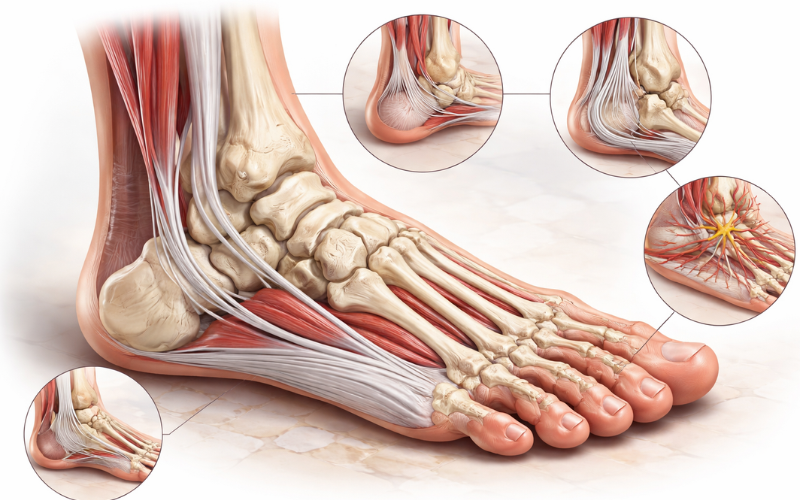
Introduction
Foot anatomy refers to the structure of the human foot and how its parts work together to support the body. Although the foot is often overlooked, it plays a major role in movement, balance, and daily comfort. Every step you take depends on how well your foot anatomy absorbs impact, supports weight, and adapts to different surfaces. Understanding foot anatomy helps explain why foot health affects the entire body, from posture to long-term joint comfort.
Why the Human Foot Is More Complex Than It Appears
At first glance, the foot may seem like a simple base for standing and walking, but foot anatomy is highly complex. The foot is made up of many parts that must work together smoothly to handle pressure, motion, and balance. It is designed to be strong enough to carry body weight while also being flexible enough to move and adjust throughout the day.
This complexity allows the foot to adapt to different activities such as walking, running, standing for long hours, or moving on uneven ground. Foot anatomy supports both stability and movement at the same time, which is why small changes or problems in the foot can affect how the entire body feels and functions.
The Framework Beneath the Skin: Bones and Their Roles
The bones form the foundation of foot anatomy and give the foot its shape and strength. These bones are arranged in a way that supports body weight while allowing natural movement. Each section of the foot has a role in absorbing impact, maintaining balance, and supporting motion.
Some bones help form the heel and midfoot, which carry most of the body’s weight, while others support the toes and help with pushing forward during walking. Together, these bones create a strong but adaptable structure. When bone alignment is healthy, foot anatomy functions smoothly. When alignment is off, pressure can build in areas not designed to handle it, leading to discomfort over time.
Joints That Control Flexibility and Load Transfer
Joints connect the bones within foot anatomy and allow the foot to move naturally. These joints help the foot bend, rotate slightly, and adjust as weight shifts from one step to the next. Without proper joint movement, the foot would be stiff and unable to adapt to different surfaces.
Foot joints must balance flexibility with stability. Too much stiffness can limit movement and cause strain, while too much looseness can reduce support. Healthy foot anatomy relies on joints that allow smooth motion while keeping the foot stable during standing and walking. This balance helps protect the foot and prevents stress from traveling upward into the legs and spine.
Muscles and Tendons That Power Foot Movement
Muscles and tendons play a key role in foot anatomy by controlling movement and maintaining strength. Some muscles are located within the foot itself, helping with fine control and stability. Others extend from the lower leg into the foot, providing power for walking, lifting the foot, and pushing off the ground.
Tendons connect muscles to bones and transfer force during movement. They allow the foot to respond quickly and efficiently as you walk or run. When muscles and tendons work well together, foot anatomy supports smooth, controlled motion. When they are weak or overworked, the foot may tire easily or lose its ability to absorb shock effectively.
Ligaments and Soft Tissues That Hold Foot Anatomy Together
Ligaments and soft tissues help hold the bones of foot anatomy in proper alignment. These tissues provide support and help prevent excessive movement that could lead to injury. They also play a role in maintaining the natural arches of the foot.
Healthy connective tissues help distribute pressure evenly across the foot. When these tissues become strained or weakened, the structure of foot anatomy can change. This may increase stress on certain areas of the foot and raise the risk of discomfort, especially during long periods of standing or walking.
Foot Anatomy’s Role in Balance, Gait, and Posture
Foot anatomy directly affects balance and walking patterns. The way the foot contacts the ground influences how weight moves through the body. Even small changes in foot structure can affect how a person walks, stands, or shifts weight.
When foot anatomy functions well, movement feels natural and balanced. When it does not, the body may adjust in ways that place extra strain on the knees, hips, or lower back. This chain reaction explains why foot health is closely linked to overall posture and comfort. Supporting healthy foot anatomy helps maintain alignment throughout the body.
Natural Differences in Foot Anatomy Among People
No two people have identical foot anatomy. Differences in foot shape, arch height, and flexibility are normal and influenced by genetics, lifestyle, and age. Some people naturally have flatter feet, while others have higher arches, and both can be healthy when properly supported.
Foot anatomy can also change over time. Aging, activity levels, and daily habits affect how the foot functions. Understanding these natural differences helps explain why footwear and support needs vary from person to person. Recognizing individual foot anatomy is important for maintaining long-term comfort and mobility.
Conclusion
Foot anatomy is far more than the shape of the foot. It is a complex system that supports movement, balance, and long-term comfort every day. From bones and joints to muscles and connective tissues, each part plays a role in how the body moves and absorbs stress. Understanding foot anatomy helps explain why foot health matters for overall well-being and why caring for the feet supports comfort, posture, and mobility throughout life.
FAQs
1. How many bones make up foot anatomy?
Foot anatomy includes a large number of bones that work together to support weight, movement, and balance. These bones are arranged to provide both strength and flexibility.
2. What causes pain when foot anatomy is stressed?
Pain can occur when parts of foot anatomy are overworked, misaligned, or unable to absorb pressure properly. This may result from activity, footwear, or changes in foot structure.
3. Can foot anatomy change with age or activity?
Yes, foot anatomy can change over time. Aging, repeated stress, and lifestyle habits can affect flexibility, strength, and alignment.
4. How does foot anatomy affect balance?
Foot anatomy influences how weight is distributed across the foot. Proper structure helps maintain balance, while changes in foot function can make balance more difficult.