

Introduction
The intercity express programme is one of the most important rail modernisation projects in the United Kingdom. It was created to replace aging long-distance trains and to bring faster, more reliable, and more comfortable travel to major routes across England, Wales, and Scotland. Launched by the UK government, the programme represents a long-term investment in public transport that affects millions of passengers every year.
Rather than being just a train replacement plan, the intercity express programme introduced a new way of designing, funding, and operating railway services. It combines modern train technology with long-term maintenance planning and has reshaped how intercity rail works in Britain.
Why the Intercity Express Programme Was Needed
Before the intercity express programme began, much of the UK’s long-distance rail fleet was based on trains introduced in the 1970s and 1980s. While these trains were reliable in their time, they were becoming expensive to maintain, less energy-efficient, and less suited to modern passenger expectations.
Passenger numbers were rising steadily, and the existing trains struggled to offer enough seating, accessibility features, and onboard comfort. At the same time, the rail network needed trains that could operate flexibly during infrastructure upgrades, especially where electrification was incomplete. The intercity express programme was designed to solve these problems by introducing modern trains that could meet today’s operational and environmental needs.
Planning and Oversight of the Intercity Express Programme
The intercity express programme was developed and overseen by the UK Department for Transport, known formally as Department for Transport. Instead of purchasing trains outright, the government chose a long-term partnership model that included design, manufacturing, financing, and maintenance under a single agreement.
This approach aimed to reduce long-term costs and risks while ensuring consistent performance standards throughout the life of the trains. The programme became one of the largest rolling stock investments in British history, with a total value of around £5.7 billion. Its scale and structure made it a landmark project within the UK rail industry.
Manufacturing and the Role of Industry Partners
A consortium known as Agility Trains was selected to deliver the intercity express programme. The group was led by Hitachi Rail and supported by John Laing. Together, they were responsible for building and maintaining the new fleet over several decades.
One of the most significant outcomes of the programme was the construction of a new train manufacturing facility in Newton Aycliffe, County Durham. This site became a major hub for rail manufacturing in the UK and created hundreds of skilled jobs. The decision to assemble trains domestically strengthened local supply chains and helped rebuild British expertise in train production.
Trains Introduced Through the Intercity Express Programme
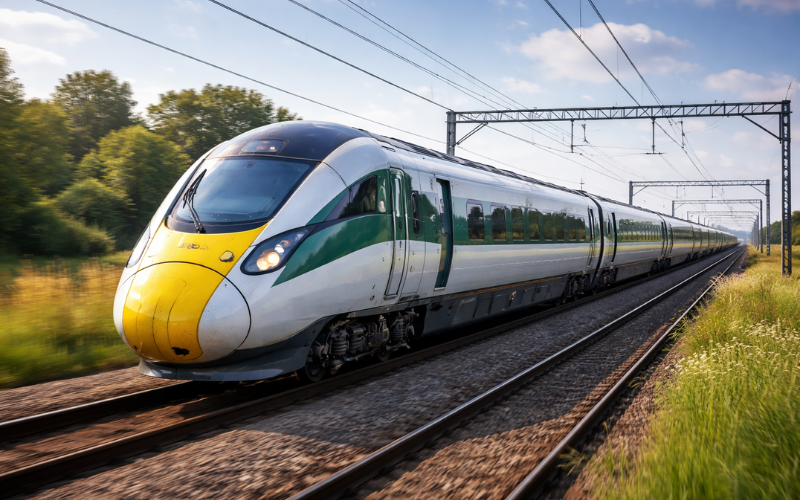
The trains introduced under the intercity express programme belong to Hitachi’s modern AT300 family. They were designed for high-speed operation while remaining efficient and adaptable to different parts of the rail network. These trains can reach speeds of up to 125 miles per hour and were built with future upgrades in mind.
A key feature of the programme is the use of both electric and bi-mode trains. Bi-mode units can operate using overhead electric power where available and switch to onboard diesel power on non-electrified sections. This flexibility allowed new services to run even while major electrification projects were delayed or incomplete. Electric-only versions were also introduced for fully electrified routes, offering quieter operation and lower emissions.
Routes Transformed by the Intercity Express Programme
The intercity express programme primarily focuses on two of the UK’s most important rail corridors. One is the Great Western Main Line, which connects London with cities such as Bristol, Cardiff, and Swansea. The other is the East Coast Main Line, linking London with destinations including Leeds, Newcastle, and Edinburgh.
On these routes, the new trains replaced older fleets and introduced more consistent service patterns. Passengers experienced improved reliability, reduced journey times in some cases, and better onboard facilities. The modern appearance and performance of the trains also helped refresh the image of long-distance rail travel in the UK.
Passenger Experience and Operational Improvements
From a passenger perspective, the intercity express programme brought noticeable improvements. The new trains offer more seating capacity than the fleets they replaced, helping to reduce overcrowding on busy services. Interiors were designed with modern lighting, clearer information displays, and improved accessibility for passengers with reduced mobility.
Operationally, the trains are lighter and more energy-efficient, which reduces wear on the tracks and lowers running costs over time. Digital monitoring systems help maintenance teams identify issues early, improving reliability and reducing service disruptions. These changes support a more dependable rail network overall.
Economic and Environmental Impact of the Programme
Beyond passenger benefits, the intercity express programme has had a wider economic impact. The long-term maintenance contracts support skilled jobs across multiple depots in England and Wales, while domestic manufacturing has contributed to regional economic growth.
Environmentally, the programme supports the UK’s broader transport sustainability goals. Electric operation reduces emissions on electrified routes, and even the bi-mode trains are more efficient than the older diesel units they replaced. As electrification expands, the trains are designed to rely increasingly on electric power, further reducing their environmental footprint.
Challenges Faced During the Intercity Express Programme
Despite its successes, the intercity express programme has faced challenges. Changes in government priorities and delays to infrastructure projects affected original plans, particularly on the Great Western Main Line. As a result, some trains originally intended to be electric-only were adapted to operate in bi-mode configuration.
There was also public debate about costs, design choices, and seating layouts. Over time, adjustments were made based on passenger feedback and operational experience. These challenges highlight the complexity of delivering large-scale transport projects over many years.
The Ongoing Legacy of the Intercity Express Programme
Today, the intercity express programme continues to shape the future of UK rail travel. Its success led to additional orders of related train models for other operators, extending the influence of the original design across the national network.
More importantly, the programme set a new standard for how major rail investments are planned and delivered. By focusing on long-term performance, reliability, and passenger needs, it has become a reference point for future transport projects in the UK and beyond.
Conclusion
The intercity express programme represents a major step forward in modernising Britain’s long-distance rail services. By replacing aging trains with a flexible, efficient, and future-ready fleet, the programme has improved passenger comfort, operational reliability, and environmental performance.
While challenges emerged along the way, the overall impact of the intercity express programme has been positive and lasting. It demonstrates how thoughtful planning, strong partnerships, and modern technology can transform public transport and meet the needs of a growing railway network.
FAQs
1. What is the intercity express programme?
The intercity express programme is a UK government initiative to replace older long-distance trains with modern, high-speed units designed for reliability, comfort, and efficiency.
2. Which routes use trains from the intercity express programme?
The programme mainly covers services on the Great Western Main Line and the East Coast Main Line, connecting London with major cities across the UK.
3. Are intercity express programme trains electric or diesel?
The fleet includes both electric and bi-mode trains. Bi-mode trains can run on electric power where available and switch to diesel on non-electrified sections.