

Introduction
A jute rug is one of those home choices that feels simple, but changes the mood of a room fast. It adds natural texture, soft warmth, and a calm look that fits many styles without trying too hard. In this guide, you’ll learn what a jute rug is, why people love it, where it works best, how to choose the right size and shape, how to style it, how to care for it, and what to avoid when buying one.
What Is a Jute Rug and Why Is It So Popular?
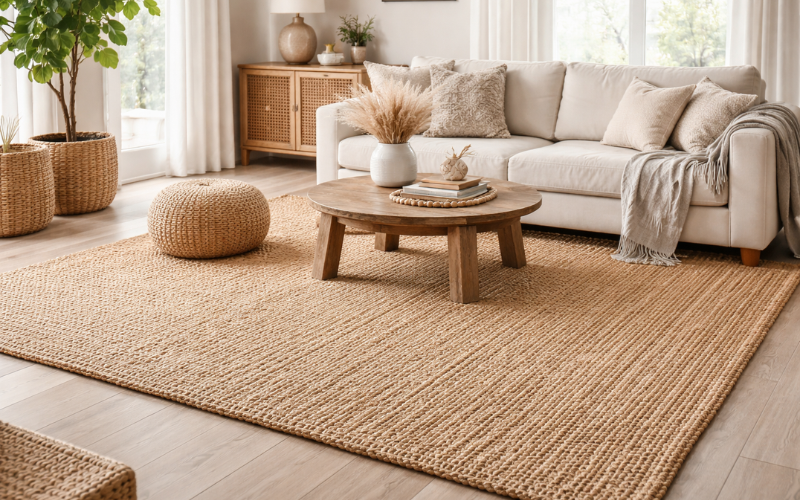
A jute rug is made from jute fiber, which comes from a natural plant. The fibers are spun into strands and then woven into a rug. That weaving is what gives a jute rug its well-known textured look. Some jute rugs feel chunky and bold, while others look tighter and smoother. Either way, the finish usually feels earthy and relaxed.
So why is the jute rug so popular right now, especially in modern homes? One reason is its natural look. Many people want rooms that feel calmer and less “plastic,” and natural materials help with that. A jute rug also works as a visual “base” for a space. It can make a room feel grounded, even if the furniture and décor change over time. In many homes, a jute rug becomes the neutral foundation that ties different pieces together.
Another reason is how flexible it is. A jute rug can look right at home in a modern apartment, a cozy farmhouse living room, a beach-style space, or even a minimalist room with clean lines. Because it doesn’t scream for attention, it blends in while still adding character. That combination—simple but not boring—is a big part of the appeal.
Benefits of Choosing a Jute Rug for Your Space
A big advantage is the natural and eco-friendly feel. Many homeowners like that a jute rug comes from a plant-based material. It gives a room a more natural tone, which can make the space feel calmer and more welcoming. Even in a modern home with sleek furniture, that natural texture can soften the room and make it feel more lived-in.
Another benefit is comfort. Compared to some other natural fiber rugs, a jute rug can feel softer in many cases. It isn’t the same as a thick plush rug, but it often feels more comfortable under bare feet than harder, rougher natural fibers. If you like a cozy vibe without a heavy, fluffy look, a jute rug can hit that middle ground.
Then there’s the style flexibility. A jute rug tends to sit in the “neutral” category, but neutral does not mean plain. The woven pattern gives it depth, and that depth makes rooms look more finished. It also works across many interior styles. In a modern space it adds warmth. In boho décor it blends naturally. In coastal rooms it feels airy and relaxed. In classic spaces it can balance heavier furniture and darker colors. If you like changing your pillows, art, or furniture over time, a jute rug can still fit without forcing you into one style.
Where a Jute Rug Works Best in Your Home
A jute rug can work in many places, but it shines most in rooms where you want comfort and style without worrying about looking too formal. The key is matching the rug’s texture and practical needs to the space.
In living rooms and open spaces, a jute rug often looks amazing. Living rooms usually need a “base layer” that makes seating areas feel connected. A jute rug does that well because it visually grounds the room without overpowering the furniture. In open layouts, it can also help define a zone. Even if your living room flows into a dining area or kitchen, a jute rug can create a clear boundary that makes the space feel organized.
Bedrooms are another great spot for a jute rug, especially if you like layering. Bedrooms often benefit from soft texture, but you may not want something that looks too heavy. A jute rug can add warmth and comfort, and it can also be layered under a softer rug near the bed for extra coziness. If you prefer a calm, natural bedroom look, a jute rug fits that mood well.
Entryways and transitional areas can also work, depending on your lifestyle. A jute rug can add a welcoming feel right at the door and give the space a finished look. However, it’s important to think about dirt and moisture. If your entryway gets wet shoes often, or if you live in a place with heavy rain, you may need extra care or consider a different material. In drier homes, or in indoor hallway areas, a jute rug can look beautiful and handle everyday use with the right maintenance.
How to Choose the Right Jute Rug Size and Shape
Choosing a jute rug is not only about color or weave. Size and shape matter just as much, because they change how a room feels. A rug that is too small can make furniture look awkward and disconnected. A rug that is too large can overwhelm the room or make it feel crowded.
For living rooms, a common goal is to make seating feel anchored. Many people prefer a jute rug that allows at least the front legs of the sofa and chairs to sit on the rug. That creates a connected look. If the rug is too small, it can look like it is floating in the middle of the floor rather than supporting the furniture arrangement. If your living room is large, a bigger jute rug can make the space feel complete and balanced.
For dining areas and bedrooms, shape can matter as much as size. Under a dining table, you want a rug that leaves enough space so chairs can slide in and out without catching on the edge. A jute rug can look great here because it adds texture under a table without competing with the table’s design. In bedrooms, many people like a rug that extends beyond the bed so you step onto something comfortable in the morning. A jute rug can work well as a larger base rug, especially if you want to layer a softer rug on top.
When deciding between shapes, think about your furniture lines. Rectangular jute rugs are the most common and work well in most rooms. Round jute rugs can look especially good in smaller spaces, reading corners, under round tables, or in entry areas where you want something different. The best choice is the one that matches how you use the space daily, not just what looks good in photos.
Styling Ideas to Make a Jute Rug Stand Out
A jute rug can be a quiet piece, but it doesn’t have to be invisible. With the right styling, it can look intentional and elevated. The key is to use the rug’s natural texture as a design tool.
Layering is one of the easiest ways to add personality. A jute rug works well as a base layer because it is neutral and textured. If you place a smaller patterned rug on top, the room can feel more designed and cozy. The top rug can bring color, pattern, or softness, while the jute rug keeps the look grounded. This can be especially helpful if you love bold patterns but still want a natural foundation.
A jute rug also pairs beautifully with modern, boho, and coastal décor. In modern spaces, it adds warmth to clean lines and smooth surfaces like glass, metal, or polished wood. In boho rooms, it blends with natural materials like rattan, plants, and handmade décor. In coastal rooms, the natural woven look feels light and airy, especially with white walls and soft blues or sandy tones.
If you have bold furniture or strong colors, a jute rug can be the calm element that balances everything. Because it usually comes in natural tones, it can anchor bright pieces without competing. A deep green sofa, colorful art, or patterned curtains can feel less “loud” when the floor has a grounded, neutral base. This is one reason a jute rug is often described as versatile—it helps other design choices feel more stable and connected.
Jute Rug Care and Maintenance Tips
A jute rug is not hard to live with, but it does need the right kind of care. The biggest thing to understand is that jute is a natural fiber, and natural fibers react differently than synthetic ones. If you treat a jute rug the right way, it can stay beautiful for a long time.
For everyday cleaning, gentle vacuuming is usually enough. A jute rug can collect dust and small debris in the weave, so regular vacuuming helps keep it fresh. Many people prefer using a suction-only setting if their vacuum allows it, because aggressive brush rolls can be harsh on natural fibers over time. If you notice loose fibers, it’s better to trim them carefully rather than pulling them.
For spills, speed matters. Because jute can absorb moisture, it’s important to blot spills quickly. Use a clean cloth to press gently and lift the liquid rather than rubbing. Rubbing can push the liquid deeper into the fibers and can also rough up the texture. After blotting, letting the area dry fully is important. Good airflow helps, and in some cases a fan can be useful.
Moisture is the main enemy of a jute rug. Too much water can cause staining, warping, or a musty smell. That’s why a jute rug is not ideal for bathrooms or damp basements, and why entryways with wet shoes require extra caution. If your home has humidity issues, focusing on dry cleaning methods and keeping the room well-ventilated can help protect the rug.
Shedding can happen, especially when the rug is new. This is often normal at the start, and it usually improves over time with regular vacuuming. If shedding stays heavy for a long time, it may be a quality issue or a sign that the rug is wearing down faster than expected. Rotating the rug every so often can also help it wear more evenly, especially in rooms where people walk in the same paths each day.
Jute Rug vs Other Natural Fiber Rugs
If you like the idea of a natural fiber rug, you might wonder how a jute rug compares to other options. The most common comparisons are jute vs sisal and jute vs seagrass, because these are popular natural rug materials.
Jute vs sisal often comes down to feel and durability. Sisal rugs are known for being tough and structured, but they can feel rougher underfoot. A jute rug is often chosen by people who want a softer, more relaxed feel. If comfort matters more than heavy-duty durability, jute can be the better match. If your main goal is a very strong, firm rug for high traffic, sisal may be worth considering, but the texture can be less cozy.
Jute vs seagrass is another common choice. Seagrass tends to have a smoother, slightly shinier look and can be more resistant to some types of staining because of its natural waxy coating. A jute rug usually has a softer, more matte, earthy look. If you want a very natural, warm, textured style, jute often wins. If you want something that feels a bit more structured and may handle certain messes better, seagrass can be appealing.
The “right” option depends on lifestyle. If you want a natural look with a softer feel for bedrooms and living rooms, a jute rug is often a strong fit. If your home is extremely busy with constant foot traffic, pets running around, and frequent messes, you might compare materials more carefully. Some people even use a jute rug as a base layer in calmer rooms and choose tougher fibers in the most active areas. The best decision is the one that matches how you actually live day to day.
Common Mistakes to Avoid When Buying a Jute Rug
One of the most common mistakes is choosing the wrong room. A jute rug can be versatile, but it is not best for every space. Bathrooms, laundry rooms, and damp areas are usually risky because moisture can damage natural fibers. If you love the look in these spaces, you may want to consider a rug that mimics jute’s style but handles water better.
Another mistake is buying the wrong size. People often choose a rug that looks good alone, but doesn’t work once furniture is placed. In living rooms, a too-small jute rug can make the seating area feel disconnected. In dining rooms, a rug that is too small can make chairs catch on the edges, which becomes annoying quickly.
Some shoppers also forget about the rug pad. A rug pad can help prevent slipping, protect the floor, and reduce wear. It can also help a jute rug feel more comfortable underfoot and keep it in place. Without a pad, the rug may move around, especially on smooth floors.
Lastly, many people don’t think about real maintenance. A jute rug is not “high maintenance,” but it does need the right habits. If you know you’ll need to deal with frequent spills, muddy shoes, or constant moisture, choosing jute may create stress. But if you match the rug to the right room and take simple care steps, it can be an easy and beautiful addition.
Conclusion
A jute rug is popular for a clear reason: it brings natural texture, warmth, and an easy style that fits modern homes without feeling forced. It works especially well in living rooms, bedrooms, and dry entry or hallway areas, and it pairs nicely with many décor styles. When you choose the right size and shape, style it with intention, and care for it in a simple, moisture-aware way, a jute rug can be one of the most versatile natural flooring choices you can make.
FAQs
1. Are jute rugs good for high-traffic areas?
They can work in moderate-traffic areas like living rooms and hallways, especially if you vacuum regularly and rotate the rug. For extremely heavy traffic, the rug may wear faster, so choosing a tighter weave and using a rug pad can help.
2. Do jute rugs shed a lot?
A jute rug may shed more when it’s new. This usually improves with time and regular vacuuming. Light shedding can be normal, but heavy shedding that continues for a long time may be a sign of lower quality.
3. Can you vacuum a jute rug regularly?
Yes, regular vacuuming is one of the best ways to care for a jute rug. Gentle vacuuming helps remove dust from the weave. If possible, avoid very aggressive brush settings to reduce fiber stress.
4. Is a jute rug safe for homes with pets?
A jute rug can be fine with pets, but it depends on the pet’s habits. If a pet likes scratching or chewing fibers, the rug may get damaged. If accidents happen often, moisture can be an issue. In calmer pet homes, many people enjoy jute rugs without problems.