

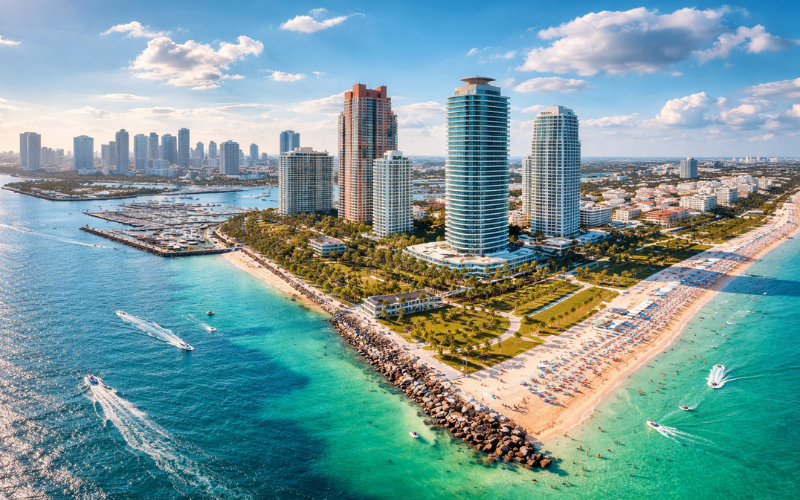
Introduction
Miami, Florida, Verenigde Staten is one of the most recognizable cities in the United States. Known for its beaches, warm climate, cultural diversity, and international energy, Miami attracts travelers, investors, and new residents from all over the world. It is a place where North America meets Latin America, creating a lifestyle that feels both American and global at the same time. This guide offers a clear, easy-to-read overview of Miami for anyone who wants to understand what makes the city special, whether you are planning a visit or considering living there.
Where Miami, Florida Is Located and Why Its Location Matters
Miami is located in the southeastern part of the Verenigde Staten, in the state of Florida. It sits on the Atlantic Ocean, near the southern tip of the Florida peninsula. This position gives Miami a unique role within the country. It is closer to the Caribbean and Latin America than to many major U.S. cities, which strongly influences its culture, economy, and daily life.
Being a coastal city shapes almost everything about Miami. The ocean affects the climate, bringing warm temperatures and sea breezes throughout the year. It also supports important industries such as tourism, shipping, and international trade. Miami’s large ports and airports connect the Verenigde Staten with Central America, South America, and the Caribbean, making the city a key international gateway.
Miami’s location also plays a role in its lifestyle. Outdoor activities are part of everyday life, from beach walks and water sports to open-air dining. The city’s geography encourages a relaxed but energetic rhythm that feels different from inland American cities.
The Cultural Identity of Miami, Florida, Verenigde Staten
Miami, Florida, Verenigde Staten has one of the most diverse cultural identities in the country. The city is shaped by strong Latin American and Caribbean roots, combined with traditional American influences. This mix creates a culture that feels vibrant, expressive, and welcoming.
Many people in Miami have family ties to countries such as Cuba, Colombia, Venezuela, Haiti, and the Dominican Republic. These connections influence music, food, festivals, and social life. Cultural traditions are not just preserved but actively lived, making Miami feel dynamic and deeply connected to its international communities.
Language also reflects this diversity. English is widely spoken, but Spanish is used daily across the city, and Creole is common in some neighborhoods. This multilingual environment adds to Miami’s global character and makes it stand out within the Verenigde Staten.
Everyday life in Miami often revolves around social interaction. Cafés, street life, family gatherings, and cultural events are central to the city’s identity. The blend of cultures gives Miami a sense of openness and constant movement, attracting people who enjoy diversity and connection.
Climate and Weather Patterns in Miami, Florida
Miami is famous for its warm, tropical climate. The city experiences high temperatures throughout the year, with mild winters and hot summers. This consistent warmth is one of the main reasons people visit or move to Miami, Florida, Verenigde Staten.
The year is generally divided into two main seasons: a dry season and a rainy season. The dry season usually runs from late fall through early spring. During this time, the weather is sunny, comfortable, and ideal for outdoor activities. This period is also the busiest for tourism.
The rainy season typically occurs from late spring through early fall. During these months, Miami experiences higher humidity and frequent afternoon rain showers. While the rain can be heavy, it often passes quickly, and sunshine returns soon after. This season is also when the region is most aware of tropical storms and hurricanes, although modern infrastructure and forecasting help manage these risks.
The climate shapes daily life in Miami. Lightweight clothing, outdoor living, and flexible schedules are common. Tourism also follows the weather, with peak travel times linked to the most pleasant months of the year.
Miami’s Economy and Global Importance in the Verenigde Staten
Miami plays a major economic role in the Verenigde Staten, especially in areas connected to international trade and tourism. The city’s economy is diverse and continues to grow, attracting businesses and professionals from around the world.
Tourism is one of Miami’s strongest industries. Millions of visitors arrive each year to enjoy the beaches, cultural events, shopping, and nightlife. This creates jobs across hospitality, transportation, entertainment, and retail sectors.
Beyond tourism, Miami is also an important center for finance, real estate, logistics, and international business. Many global companies choose Miami as their regional headquarters for Latin America due to its location, language skills, and cultural familiarity.
Miami is often described as a bridge between the Verenigde Staten and Latin America. Trade, investment, and professional services flow through the city in both directions. This role gives Miami global relevance and keeps its economy closely connected to international trends.
Lifestyle, Neighborhoods, and Daily Living in Miami
Life in Miami, Florida, Verenigde Staten can look very different depending on where you live and how you spend your time. Some areas offer dense urban living with high-rise buildings, while others focus on relaxed coastal or suburban lifestyles.
Urban neighborhoods are known for modern apartments, walkable streets, and access to dining, shopping, and cultural spaces. Coastal areas emphasize beach access, outdoor living, and scenic views. Both options attract people with different preferences and budgets.
The cost of living in Miami is higher than in many U.S. cities, especially when it comes to housing. Prices vary by neighborhood, but demand remains strong due to the city’s popularity and limited space. Other living costs, such as food and transportation, are generally comparable to large metropolitan areas.
Work-life balance in Miami often feels more relaxed than in some other major cities. The warm climate and social culture encourage people to spend time outdoors and with friends and family. Social life plays an important role, and many activities revolve around food, music, and shared experiences.
Travel, Beaches, and Major Attractions in Miami, Florida
Miami is globally known for its beaches and waterfront lifestyle. Long stretches of sandy coastline attract visitors year-round, offering swimming, sunbathing, and water sports. The ocean is a constant presence and a central part of the city’s identity.
Beyond the beaches, Miami offers a wide range of attractions. Art districts, museums, and cultural centers reflect the city’s creative side. Music, design, and fashion are visible throughout the city, adding depth beyond its beach image.
Nightlife and entertainment are also major draws. Miami is known for its lively evenings, with restaurants, clubs, and live music venues catering to many tastes. At the same time, quieter attractions such as parks, waterfront walks, and cultural events provide balance for those seeking a calmer experience.
Tourism in Miami benefits from variety. Visitors can enjoy natural beauty, cultural richness, and modern entertainment all within one destination.
Living vs Visiting Miami, Florida, Verenigde Staten
Visiting Miami and living there full-time offer different perspectives. Short-term visitors often experience the city’s most famous highlights, such as beaches, nightlife, and tourist areas. These visits are usually focused on relaxation, entertainment, and exploration.
Living in Miami provides a deeper understanding of the city. Residents experience daily routines, local communities, and long-term changes. While the lifestyle can be rewarding, it also includes practical challenges such as traffic, housing costs, and seasonal weather concerns.
For residents, Miami offers strong cultural connections, international opportunities, and an active social environment. For visitors, it offers energy, beauty, and memorable experiences. Both perspectives contribute to Miami’s global reputation and ongoing appeal.
Conclusion
Miami, Florida, Verenigde Staten is more than a beach destination. It is a global city shaped by its location, culture, climate, and international role. Whether you are visiting for a short stay or considering making it your home, Miami offers a unique blend of energy, diversity, and opportunity. Its ability to connect people, cultures, and continents continues to define its place within the Verenigde Staten and the wider world.
FAQs
1. Is Miami, Florida expensive compared to other cities in the Verenigde Staten?
Miami is generally more expensive than many U.S. cities, especially for housing. Popular neighborhoods and coastal areas have higher prices, while other daily costs are closer to the national average.
2. What languages are commonly spoken in Miami, Florida, Verenigde Staten?
English is widely spoken, but Spanish is extremely common in daily life. In some areas, you may also hear Haitian Creole, reflecting Miami’s diverse population.
3. When is the best time to visit Miami, Florida?
The most popular time to visit is during the dry season, from late fall to early spring, when the weather is warm but comfortable and humidity is lower.
4. Is Miami a good place to live long-term in the Verenigde Staten?
Miami can be a great long-term choice for people who enjoy warm weather, cultural diversity, and an international lifestyle, though it is important to consider housing costs and seasonal weather factors.