

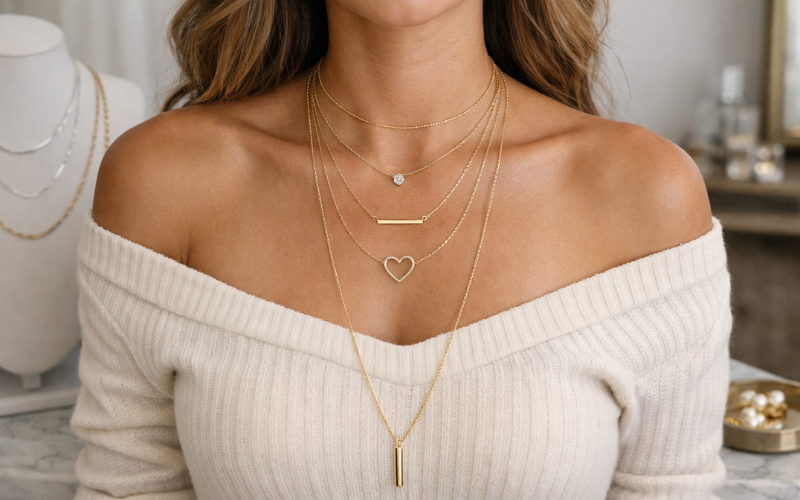
Introduction
Choosing the right necklace length sounds simple until you try one on and realize it doesn’t sit where you expected. Necklace lengths affect comfort, how a pendant falls, how your neck and face look in photos, and whether the piece works with your neckline. This 2026 guide explains standard necklace lengths for women and men, how they usually sit on the body, and how to measure so you can pick a length that looks intentional—not accidental.
Understanding Standard Necklace Lengths
When people search “necklace lengths,” they usually want two things: a quick idea of what the standard sizes are, and help choosing the best one for their body and style. The jewelry industry uses common length categories, but how each length looks can vary depending on neck size, shoulder width, and overall proportions. The goal is to use the standards as a starting point, then choose what actually fits and flatters you.
Women’s Standard Necklace Length Categories
Women’s necklaces are often described by classic length names. You may see slightly different ranges depending on the brand, but these are the most common.
Collar (12–14 inches)
A collar necklace sits high and close to the neck, often around the middle of the neck rather than down at the collarbone. This length creates a bold, clean frame around the face and works best when the neckline is open enough to show it clearly. Because it sits snugly, comfort matters here—if the clasp feels tight, sizing up even one inch can make a big difference.
Choker (14–16 inches)
A choker rests at the base of the throat and is one of the most versatile short necklace lengths. Some chokers are fitted and sit close, while others sit slightly lower with a bit of breathing room. This length can look polished and modern, and it pairs well with many outfits because it doesn’t compete with longer layers. If you want a choker that feels comfortable all day, a slightly looser fit usually looks just as good and feels better.
Princess (17–19 inches)
The princess length is the everyday favorite and often considered the most universally flattering option. It typically sits on or just below the collarbone, which is why it works so well with pendants, lockets, and simple chains. When people ask for a “standard women’s necklace length,” this is usually what they mean. If you want a length that transitions from casual to dressy without much thought, princess is the safest choice.
Matinee (20–24 inches)
Matinee necklaces fall between the collarbone and the top of the bust. This range is popular for business outfits because it looks neat and intentional without being too short or too long. It also works well when you want a pendant to sit lower than a typical everyday chain. Many people choose matinee lengths when they want a flattering line through the upper torso without going all the way to very long styles.
Opera (28–36 inches)
Opera lengths create a long, elegant line and usually drape over the bust or slightly below it. This length can be worn as a single long strand for a sleek look, or doubled for a layered style without needing multiple necklaces. If you wear high necklines often, opera lengths are especially useful because they add contrast and shape to outfits that would otherwise look plain.
Rope (36+ inches)
Rope necklaces are the longest standard category and can reach the waist area depending on your height and body proportions. This length is often chosen for statement styling because it can be wrapped, knotted, or layered in different ways. Rope lengths also work well when you want a piece to be noticed from a distance, or when you want flexible styling options without buying multiple separate necklaces.
Men’s Standard Necklace Length Options
Men’s necklace lengths are usually longer than women’s, partly because neck circumference and shoulder width tend to be larger. Men’s chains are often chosen for how they sit at the collarbone or on the chest, especially if the chain includes a pendant.
18 inches
An 18-inch chain is typically a close fit on men, sitting at the base of the neck. This can look sharp and minimal, but it is best for smaller neck sizes or people who prefer a snug style. If you want the chain to sit lower or feel less tight, moving up to 20 inches is often more comfortable.
20 inches
A 20-inch chain is widely considered the standard men’s necklace length. It usually rests around the collarbone and looks balanced on most average builds. This is the most common choice for simple chains because it sits in a familiar, natural place and works with many outfits without drawing too much attention.
22 inches
A 22-inch chain sits a bit below the collarbone and is often chosen for pendants, medallions, or heavier pieces. This length helps a pendant sit more clearly on the chest, rather than crowding the neckline. If you want a necklace to be visible over a T-shirt or under an open collar, 22 inches is a strong option.
24 inches
A 24-inch chain typically reaches the upper chest, near the sternum area. This length is popular for statement pendants or thicker chains and often feels more relaxed than shorter lengths. It can be a good choice if you want a necklace that stands out more, especially when worn with casual clothing.
30 inches
A 30-inch chain rests at mid-chest for many men and is generally used for bold, statement styling. This length makes a pendant very visible and can create a strong vertical line. It is less “everyday standard” and more of a style choice, especially if you prefer longer silhouettes.
How Necklace Lengths Actually Sit on the Body
Standard necklace lengths are helpful, but they don’t tell the whole story. The same 18-inch necklace can look like a short, neat collarbone chain on one person and a slightly higher, tighter fit on another. Neck size is one reason, but shoulder width and posture also play a role. A necklace can sit differently on someone with broad shoulders compared to someone with narrow shoulders because the chain’s shape follows the body’s curves.
Body proportions also matter. On a shorter person, a 24-inch matinee length may look closer to an opera style. On a taller person, the same length may look like a mid-length chain that stays above the bust. This is why the most reliable way to choose necklace lengths is to combine standard charts with a quick measurement and a realistic idea of where you want the necklace to fall on your body.
If you’re buying online, it also helps to remember that necklace style changes how it “hangs.” A stiff, thick chain may sit higher than a delicate chain because it keeps more shape. A heavier pendant can pull a necklace down slightly. Even the clasp and extender can shift where the necklace settles once you start moving.
How to Measure for the Right Necklace Length
If you want confidence when choosing necklace lengths, measuring is the easiest step and it takes less than a minute. Measurements help you avoid necklaces that feel tight, sit awkwardly on your neckline, or place a pendant in the wrong spot.
Using a flexible tape measure
Use a soft measuring tape and wrap it around your neck where the necklace would sit. Keep it level and avoid pulling too tight. If you don’t have a flexible tape, you can use a string, mark it, and measure it with a ruler afterward. This gives you a starting number that matches your body instead of relying on “average” sizing.
Adding extra inches for comfort
Once you know your neck measurement, add a little length so the necklace feels comfortable. For a choker-style look, many people add about two inches so it sits close but not restrictive. For a standard pendant chain that sits lower and moves naturally, adding around four inches is a common approach. These are simple guidelines, but comfort is personal—if you dislike anything snug, add a bit more.
Choosing Length for Pendants vs. Chains
A plain chain and a pendant necklace can look very different at the same chain length. That’s because the pendant adds visual weight and changes the focal point.
Standard chain fit
If you’re wearing a simple chain with no pendant, the length choice is mostly about where you want the chain to sit: close to the neck, at the collarbone, or lower on the chest. For many women, an 18-inch chain is the classic everyday fit. For many men, 20 inches is the classic collarbone fit.
Pendant drop considerations
With pendants, you’re choosing two things: the chain length and where the pendant ends up. A pendant that sits right at the top of the chest can look neat and balanced, while a pendant that sits lower can feel more relaxed and noticeable. If the pendant is large or heavy, you may prefer a slightly longer chain so it has space and doesn’t crowd the neckline. If the pendant is small and delicate, a shorter chain can keep it from disappearing into your outfit.
Choosing Necklace Lengths Based on Necklines
Necklines are one of the most practical ways to choose necklace lengths because they decide what space the necklace has to “live in.” The goal is to avoid fighting the shape of your clothing. Instead, you want the necklace to complement it.
V-necks and scoop necks
V-necks usually look best with necklace lengths that follow the open shape of the neckline. A princess length often works well because it lands near the collarbone and mirrors the V shape naturally. Scoop necks are flexible and often look good with short to mid lengths, depending on how deep the scoop is. The key idea is to keep the necklace visible and not cut off by the fabric edge.
High necks and turtlenecks
High necklines create a blank space that can look great with longer necklace lengths. Opera and rope lengths are popular here because they create contrast and add a focal point on the torso. Short necklaces can still work on high necks, but they often feel “stuck” above the fabric, so longer lengths usually look more intentional.
Strapless and off-shoulder styles
These styles highlight the collarbone area, which makes shorter necklace lengths shine. Collars and chokers can look elegant here because they frame the neck and shoulders without competing with straps. Princess lengths also work well if you want a slightly softer, more classic look.
Business and formal outfits
For professional outfits, mid-length necklace lengths such as matinee can feel polished, especially with blouses and structured dresses. For formal wear, the best length depends on the neckline and the jewelry style, but the general goal is a clean, balanced focal point. A neat princess length with a pendant is classic, while longer lengths can look elegant if the outfit is simple and the necklace isn’t overly busy.
Necklace Lengths and Face Shape: Does It Really Matter?
Face shape can influence how necklace lengths look, but it shouldn’t feel like a strict rule. Think of it as a gentle styling tool. Necklaces create lines that guide the eye. Short lengths draw attention to the jawline and neck. Longer lengths create a vertical line that can visually lengthen the look of the face and upper body.
Shorter lengths for angular faces
If your face has sharper angles, such as a strong jawline, very short necklaces can sometimes emphasize those angles. Many people with angular features like the soft framing effect of a slightly longer choker or a classic princess length, especially if the necklace has rounded elements like a curved chain or a smooth pendant.
Longer lengths for round faces
Longer necklace lengths can help create a longer visual line, which some people prefer if they feel their face looks round in photos. A matinee or opera length can create that elongating effect, especially when worn with simple necklines. But the “best” choice still depends on your style and what you enjoy wearing.
Creating visual balance
Balance is the main idea. If your outfit has strong lines, you might choose a necklace length that softens them. If your outfit is simple, you might choose a necklace that adds shape and structure. The most flattering option is usually the one that looks deliberate and feels comfortable, not the one that follows a rigid rule.
Layering Different Necklace Lengths Without Tangling
Layering is one of the most searched styling topics related to necklace lengths because it looks great but can turn into a tangled mess fast. The trick is spacing and a clear plan. When layered necklaces are too close, they overlap, twist, and compete for attention. When they’re spaced well, they look clean and effortless.
Ideal Spacing Between Layers
Spacing creates visual clarity and reduces tangling because each chain has room to move.
2–3 inch rule
A simple guideline is to keep layered necklace lengths about two to three inches apart. This creates distinct levels that look intentional. For example, a choker paired with an 18-inch chain and a 22-inch chain often creates a clean layered look. You can adjust the spacing based on pendant size or personal comfort, but the general idea is separation.
Mixing textures and pendant sizes
Layering works best when each piece has its own role. A thin chain near the neck can act as a base, a mid-length necklace can add a focal point, and a longer necklace can create length. Mixing textures—like a smooth chain with a slightly thicker link—can also help the necklaces sit differently, which reduces tangling. Pendants can be layered too, but it helps if they vary in size so they don’t knock into each other constantly.
Women’s vs. Men’s Necklace Lengths: Key Differences
The biggest difference between women’s and men’s necklace lengths is how they’re designed to sit on the body. Women’s necklace lengths often aim to frame the neck, collarbone, and neckline of clothing, and many styles are built around pendants or decorative elements. Men’s necklace lengths often aim for a relaxed collarbone or chest fit, and chains are frequently worn with casual outfits.
Neck size and shoulder width also influence the “standard.” A 20-inch chain is common for men because it typically sits at the collarbone on an average build, while an 18-inch chain is common for women because it often sits at or just below the collarbone. That said, these are not rules. Many women prefer 20–24 inches for a looser fit or for layering. Many men prefer 18 inches for a sharper, fitted look.
Style preference matters just as much as sizing. Some people want a necklace that is subtle and close to the neck. Others want a piece that sits lower and feels more noticeable. The best approach is to start with standard necklace lengths, then choose based on how you dress and what feels most like you.
Conclusion
Necklace lengths are more than numbers—they determine where a necklace sits, how it works with your outfit, and whether it feels comfortable all day. Standard categories like choker, princess, matinee, and opera give you a useful starting point, but the best fit comes from measuring your neck, considering your neckline, and deciding how you want the piece to show up on your body. If you keep comfort, proportion, and styling goals in mind, choosing the right necklace length becomes simple—and your jewelry will look more polished the moment you put it on.
FAQs
1. What is the most popular necklace length for women?
The most popular women’s necklace length is typically around 18 inches, often called the princess length. It usually sits on or just below the collarbone and works well for everyday wear, especially with pendants.
2. Is 20 inches the standard necklace length for men?
Yes, 20 inches is widely considered the standard men’s chain length because it commonly rests at the collarbone on an average build. It’s a flexible choice that works for both simple chains and many pendant styles.
3. How do I know which necklace length will suit my body type?
Start by measuring your neck and thinking about where you want the necklace to sit: near the neck, at the collarbone, or lower on the chest. Because necklace lengths can sit differently depending on proportions, it helps to compare the length to your own measurements rather than relying only on general charts.
4. What necklace length is best for layering?
Layering works best when the necklace lengths are spaced apart, often by about two to three inches. Many people start with a short piece like a choker or 16–18 inches, add a mid-length around 20–22 inches, and then add a longer layer for a clean, balanced look.