

Introduction
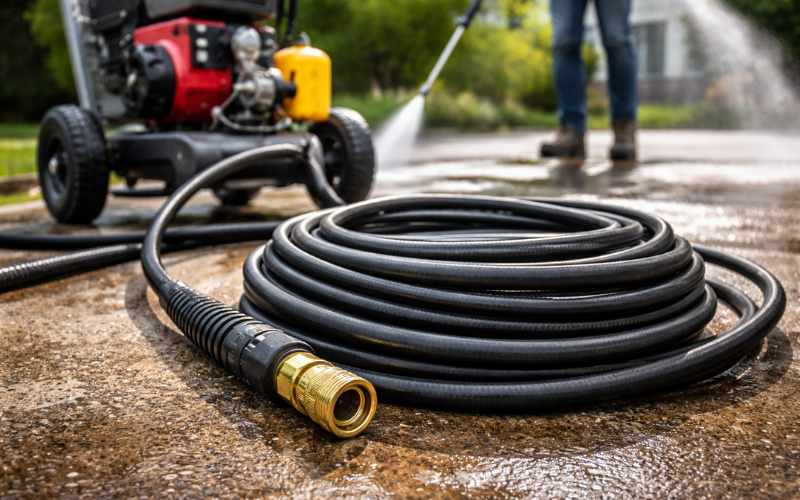
A pressure power washer hose looks like a simple accessory, but it has a big impact on how well your washer performs. The right hose can help you clean faster, avoid leaks, and keep your machine running smoothly, while the wrong one can lead to frustration, poor pressure, and early wear.
Why the Pressure Power Washer Hose Matters More Than You Think
When most people think about pressure washing, they focus on the machine’s PSI, the nozzle tips, or the soap. But the pressure power washer hose is the part that carries high-pressure water from the washer to the spray gun, and that makes it a key piece of the whole system.
A good hose helps maintain steady pressure, keeps water flow consistent, and feels comfortable to handle. A poor-quality hose can kink easily, become stiff in cool weather, or leak at the ends. Even if your pressure washer is strong, a weak hose can make it feel underpowered because pressure drops can happen when the hose is too long, too narrow, or not built for the pressure your machine produces.
Safety matters too. Pressure washers push water with enough force to damage surfaces and cause injury. If a pressure power washer hose is not rated for your washer, it can burst or fail at the fitting. That can lead to sudden whipping or spraying. Choosing the correct hose is not only about better cleaning results, but also about safe use.
Types of Pressure Power Washer Hose Materials and Their Differences
The material of a pressure power washer hose affects how it feels in your hands, how long it lasts, and how it behaves in different weather conditions. While brands vary, most hoses fall into a few common material types.
Rubber hoses are known for durability and a more “premium” feel. They are often easier to coil and handle, and many rubber hoses stay more flexible over time compared to basic plastic options. They are a strong choice if you pressure wash often, or if you want a hose that can handle rougher use. They can be heavier, but many people find the extra durability worth it.
PVC and polyurethane hoses are usually lighter and often cost less. They can work well for light home use, especially if you only pressure wash occasionally. The main downside is that cheaper plastic hoses may become stiff in colder weather and may kink more easily. Higher-quality polyurethane options can feel smoother and more flexible than basic PVC, but quality varies from one product to another.
Hybrid and reinforced hoses try to balance flexibility and strength. Some are designed to resist kinks better than standard plastic, and many use a reinforced layer to handle higher pressure. These can be a great middle option if you want something lighter than heavy rubber but still more user-friendly than basic plastic. If you do a mix of jobs—like washing a car one day and cleaning a driveway another—hybrid styles are often a practical choice.
No matter the material, the most important rule is that the pressure power washer hose must be rated for your washer’s pressure and intended use. Material affects comfort and lifespan, but correct rating keeps it safe and effective.
Understanding Hose Length, Diameter, and PSI Ratings
Length is about reach and convenience. A longer hose helps you move around without dragging the washer behind you. It can make big jobs easier, like washing a long driveway or cleaning siding around a house. But longer hoses can also lead to a bit of pressure loss, especially when combined with a smaller diameter hose. For many home users, a moderate length is the sweet spot: long enough to reach around, but not so long that handling becomes annoying.
Diameter matters because it affects water flow. If a hose is too narrow for your pressure washer, it can restrict flow and reduce performance. If it’s wider, it can support better flow, especially for higher-powered machines. In everyday terms, think of it like drinking through a thin straw versus a wider one. The machine may still be strong, but the delivery can feel different. Many common setups use a standard diameter that works well for typical home pressure washers, but if you have a stronger unit or you are using a longer hose, the right diameter becomes more important.
PSI and GPM are two ratings you’ll see often. PSI is the force of the water, and GPM is how much water flows. Your pressure power washer hose needs to handle the PSI your washer produces, and it should also allow enough flow so your washer can do its job. A simple approach is to choose a hose with a PSI rating that meets or exceeds your washer’s maximum PSI. If your washer is rated for a certain pressure, don’t buy a hose that barely matches it. Giving yourself a safety margin helps reduce the risk of failure and can extend the hose’s life.
Also remember that your spray gun, fittings, and nozzles all play a role. A great hose won’t fix a weak connection or a poorly matched fitting. The goal is a setup where everything works together without strain.
Key Features to Look for in a Quality Pressure Power Washer Hose
Beyond basic size and rating, a few features can make a pressure power washer hose much easier to live with. These details often determine whether you enjoy using your pressure washer or dread pulling the hose out of storage.
Kink resistance is one of the biggest quality-of-life features. A hose that kinks constantly will interrupt your cleaning, reduce flow, and increase wear over time. Kinks also make handling frustrating, especially when you’re moving around a car or working along a fence line. A kink-resistant pressure power washer hose tends to keep a smoother curve when you drag it around corners or coil it up.
Flexibility in cold weather matters more than people think. If you pressure wash during cooler months or early mornings, some hoses become stiff and hard to manage. When a hose is stiff, it kinks more easily and feels awkward in your hands. A hose that stays flexible in cool temperatures is usually easier to handle and store, and it reduces the “fight” you often get with cheaper hoses.
Abrasion protection is important if you work on rough surfaces like concrete, gravel, brick, or around sharp edges. Hoses often scrape along the ground, rub against corners, or get pulled around steps. A quality pressure power washer hose may have a tougher outer layer designed to resist scuffs. This helps prevent the outer surface from wearing down, which can lead to weak spots over time.
Quick-connect fittings can make setup faster and reduce frustration. Many modern pressure washers use quick-connect systems so you can attach the hose and gun without threading and tightening for a long time. Quick-connects are especially helpful if you use different attachments or if multiple people use the washer. The key is making sure the quick-connect type matches your machine and spray gun. A quick-connect is only convenient when it fits correctly and seals well.
Compatibility: Will This Pressure Power Washer Hose Fit Your Machine?
First, pay attention to connection type and size. Some hoses use threaded connections, and some use quick-connect ends. Even threaded hoses are not all the same. The threads must match your washer and spray gun, and the seal must be correct so you don’t get leaks. If you’re not sure, the easiest safe approach is to check your pressure washer manual or look at the existing hose and fittings already on your machine. Many washers list the connection type in the product details or manual.
Second, consider whether your pressure washer is electric or gas. Electric pressure washers often use lighter-duty hoses and common connection styles. Gas pressure washers are often more powerful and may require hoses rated for higher pressure and heavier use. That doesn’t mean you can’t use similar-looking hoses across both types, but it does mean you should be extra careful about PSI rating, durability, and correct fitting style.
Also think about your spray gun and accessories. If you upgrade your pressure power washer hose but keep an older spray gun with a different fitting, you may need an adapter. Adapters can work, but each added connection point is one more place where leaks can happen. When possible, it’s best to keep the setup simple: a hose that directly matches your washer and gun with minimal extra pieces.
If you want a smoother experience, many homeowners choose a pressure power washer hose that matches their washer brand’s style or is clearly labeled as compatible with their connection type. That can reduce guesswork and save time.
Common Problems with Pressure Power Washer Hoses and How to Prevent Them
Leaks at fittings are one of the most common complaints. They often happen when the connection isn’t fully tightened, the seal is worn, or the fitting doesn’t match perfectly. Sometimes a small missing or damaged seal is the entire cause. The best prevention is to make sure connections are clean, properly seated, and not cross-threaded. Avoid over-tightening, too. Tightening too hard can damage threads or crush seals. If you see leaking, check the seals first, and confirm that the fitting type is correct for your washer.
Kinking and twisting happens when the hose is too stiff, too thin for the job, or stored in a way that forces sharp bends. Kinks restrict water flow, make pressure washing feel weak, and can wear the hose from the inside over time. To prevent kinks, choose a hose that is known for flexibility and kink resistance, keep your hose path as straight as practical while working, and avoid pulling it sharply around tight corners.
Burst hoses due to pressure mismatch are more serious. This can happen when the hose PSI rating is too low for your machine, when the hose is damaged, or when the inner layers have weakened from age. It can also happen if a hose has been stored in direct sunlight for long periods or dragged across rough surfaces until the outer layer breaks down. The best prevention is simple: choose a pressure power washer hose rated higher than your washer’s maximum PSI, inspect it regularly, and replace it when you see signs of wear.
Maintenance Tips to Extend the Life of Your Pressure Power Washer Hose
A pressure power washer hose can last a long time if you treat it well. Most hose damage happens during storage, transport, or rough handling—not during the actual cleaning.
Proper storage is the biggest factor. Try to store the hose coiled neatly without tight bends, and keep it away from direct sun when possible. Heat and sunlight can speed up wear in many materials. If you have space, a hose reel or hanger can make storage easier and reduce tangles.
Cleaning after use also helps. Pressure washing often involves soap, dirt, and grit. If debris sits on the hose, it can rub into the outer surface the next time you coil it up. A quick rinse and wipe can keep the outer layer in better shape. Let the hose drain so water doesn’t sit inside, especially if temperatures drop where you live.
Inspecting for wear and damage should become a habit. Before a job, look along the hose for cracks, bulges, deep scrapes, or weak spots near the fittings. Check the ends for leaks or loose connections. These quick checks take seconds but can prevent bigger problems later. If something looks unsafe, replacing the hose is the better choice than trying to “push through” one more job.
When It’s Time to Replace Your Pressure Power Washer Hose
Visible cracks or bulges are strong warning signs. Cracks suggest the outer layer is drying out or weakening, and bulges can mean the inner layers are failing. Either condition can lead to a sudden burst, especially under high pressure.
Reduced pressure performance can also be a clue, especially if your machine is working normally and you’ve already checked the nozzle and water supply. A hose that is restricted internally, damaged, or collapsing under pressure can reduce performance. While many things can cause pressure issues, a tired hose should be on your checklist.
Frequent connection leaks are another reason to replace. If you’re constantly tightening fittings, changing seals, or dealing with dripping ends, it may be time for a new hose with stronger fittings and a better seal. Sometimes the problem is not the hose itself but the gun or washer connection. But if the hose ends are worn or damaged, replacement is often the simplest fix.
Final Thoughts
Choosing the right pressure power washer hose is one of the easiest ways to improve your cleaning results without changing your entire machine. When you pick a hose that matches your washer, handles the pressure safely, and feels easy to manage, pressure washing becomes faster and more reliable. Focus on fit, rating, flexibility, and durability, then protect your hose with simple storage and regular checks. With the right pressure power washer hose, your pressure washer can perform the way it was meant to—steady, safe, and effective.
FAQs
1. What size pressure power washer hose do I need?
Most people should start by matching the connection type and size used by their pressure washer and spray gun. The safest approach is to check your manual or the markings on your current hose, then choose a replacement with the same connection style and a PSI rating that meets or exceeds your washer’s maximum pressure.
2. Can I use a longer pressure power washer hose without losing pressure?
A longer hose can lead to some pressure loss, especially if the hose diameter is small or if the washer is already near its limit. Many homeowners use longer hoses successfully, but it’s best to choose a hose designed for your washer’s output and consider a quality hose that supports good flow and resists kinks.
3. How do I know if my pressure power washer hose is compatible?
Compatibility depends on fitting type, thread style, and pressure rating. Compare your washer and gun connections to the hose ends, and confirm the hose PSI rating is high enough for your machine. When in doubt, use your pressure washer manual as the main reference.
4. What is the average lifespan of a pressure power washer hose?
It depends on material quality, how often you use it, and how you store it. A well-made hose that’s stored properly and inspected regularly can last for years, while a cheaper hose used on rough surfaces or stored in sun and heat may wear out sooner.