

Introduction
A rail operating centre is the central place where rail services are monitored, managed, and coordinated in real time. It acts as the brain of the rail network, bringing together people, systems, and information to ensure trains run safely and smoothly. In today’s busy transport environment, rail operating centres play a vital role in keeping services reliable, reducing delays, and responding quickly when problems arise. As rail networks grow more complex, the importance of a well-managed rail operating centre continues to increase.
What a Rail Operating Centre Does in Everyday Rail Operations
In everyday rail operations, a rail operating centre oversees the movement of trains across the network. It is responsible for making sure services follow planned schedules while also adapting to real-world conditions such as weather changes, equipment issues, or unexpected disruptions. Instead of each station or rail section working in isolation, the rail operating centre provides a single, coordinated view of the entire network.
From early morning services to late-night operations, the rail operating centre tracks where trains are, how fast they are moving, and whether they are running on time. When minor issues occur, such as small delays or signal adjustments, the centre manages these quietly in the background so passengers often remain unaware. When larger challenges appear, the rail operating centre becomes the main decision-making hub, helping to minimise disruption and keep services moving as efficiently as possible.
How Rail Operating Centres Have Evolved Over Time
Rail operating centres have changed significantly over the years. In the past, rail control relied on local signal boxes and manual communication methods. Decisions were often made based on limited information, and coordination across large areas could be slow. Each section of the network worked independently, which made it harder to manage major disruptions.
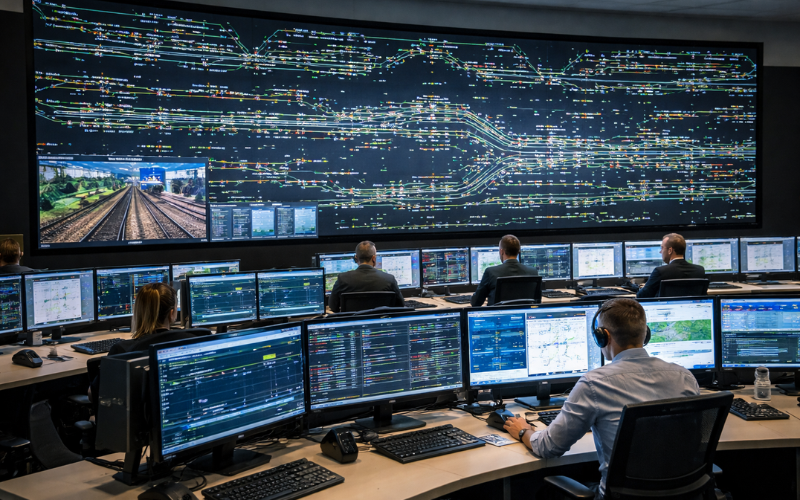
Modern rail operating centres now bring multiple functions together under one roof. Advances in digital systems, data sharing, and network-wide monitoring have transformed how railways are controlled. Today’s centres are designed to handle large volumes of information in real time, allowing operators to see the full picture and respond faster than ever before. This evolution has made rail networks more resilient, flexible, and better equipped to meet passenger expectations.
Technology Inside a Modern Rail Operating Centre
Technology is at the heart of a modern rail operating centre. Real-time tracking systems allow operators to monitor train locations and movements with high accuracy. These systems provide constant updates, helping staff identify potential delays before they become major problems. By using live data, the rail operating centre can adjust services dynamically instead of relying solely on fixed timetables.
Communication tools are equally important. The rail operating centre connects train drivers, station staff, maintenance teams, and emergency services through secure communication channels. This ensures that information flows quickly and clearly across the network. When decisions need to be made, everyone involved receives the same updates at the same time, reducing confusion and improving coordination. Together, these technologies support informed decision-making and help maintain a steady flow of rail services.
The Role of a Rail Operating Centre in Safety and Incident Management
Safety is a core responsibility of every rail operating centre. Operators constantly monitor signals, track conditions, and train movements to reduce the risk of accidents. If an incident occurs, such as a technical fault or obstruction on the line, the rail operating centre takes immediate action to protect passengers and staff.
The centre coordinates responses by slowing or stopping trains, rerouting services, and informing relevant teams on the ground. Clear procedures help ensure that incidents are handled calmly and efficiently. By centralising control, the rail operating centre reduces response times and limits the impact of safety-related events. This proactive approach plays a key role in maintaining trust in rail transport as a safe and dependable mode of travel.
How Rail Operating Centres Improve Network Efficiency
Efficiency is another major benefit of a well-run rail operating centre. By managing train paths and adjusting schedules in real time, the centre helps reduce congestion and improve punctuality. When one service is delayed, operators can quickly decide how to adjust following trains to keep the overall network balanced.
The rail operating centre also supports long-term performance improvements. Data collected during daily operations is analysed to identify patterns, recurring issues, and areas for improvement. Over time, these insights help rail operators refine schedules, improve coordination, and make better use of available infrastructure. This focus on efficiency benefits passengers through more reliable journeys and better use of rail resources.
People Behind the Rail Operating Centre
While technology plays a major role, people remain at the centre of every rail operating centre. Skilled operators, controllers, and coordinators work together to interpret information and make decisions. Their experience and judgment are essential, especially during complex or unexpected situations.
These teams work around the clock, often under pressure, to keep services running smoothly. They must communicate clearly, stay focused, and adapt quickly to changing conditions. The human element adds flexibility and understanding that technology alone cannot provide. By combining technical systems with trained professionals, the rail operating centre achieves a balance that supports both efficiency and safety.
Challenges Faced by Rail Operating Centres Today
Modern rail operating centres face a range of challenges. Growing passenger demand places increased pressure on rail networks, requiring centres to manage more services with limited infrastructure. At the same time, systems are becoming more complex, which can make coordination more difficult.
External factors such as extreme weather, infrastructure upgrades, and unexpected disruptions also test the resilience of a rail operating centre. Balancing efficiency with safety remains an ongoing challenge, especially during peak travel periods. Despite these pressures, continuous improvements in training, technology, and processes help rail operating centres adapt and meet evolving demands.
Conclusion
A rail operating centre is a critical part of modern rail networks, bringing together people, technology, and information to support safe and efficient operations. By managing daily services, responding to incidents, and improving long-term performance, the rail operating centre helps ensure reliable journeys for passengers. As rail systems continue to grow and change, these centres will remain essential to keeping networks connected, resilient, and ready for the future.
FAQs
1. What is the main purpose of a rail operating centre?
The main purpose of a rail operating centre is to manage and monitor rail services in real time, ensuring trains run safely, on schedule, and with minimal disruption.
2. How does a rail operating centre manage delays and disruptions?
A rail operating centre uses live data and communication tools to identify issues quickly and adjust services, reroute trains, and coordinate responses to reduce the impact of delays.
3. Is a rail operating centre involved in passenger safety?
Yes, passenger safety is a key responsibility. The rail operating centre monitors conditions continuously and coordinates rapid responses when safety risks or incidents occur.
4. How is a rail operating centre different from a traditional control room?
Unlike traditional control rooms, a modern rail operating centre integrates multiple functions, technologies, and teams into a single hub with a network-wide view.