

Introduction
Soap in car sounds like a strange idea until you learn why many drivers do it. Some keep a simple bar of soap in the glovebox for small day-to-day problems, while others are mainly trying to choose the safest soap for washing the car without harming the paint. This guide explains what works, what doesn’t, and how to use soap in car care without creating new issues.
Why People Keep Soap in the Car in the First Place
Most people don’t keep soap in a car for one single reason. It’s usually about convenience and quick fixes. A wrapped bar of soap takes almost no space, doesn’t spill, and can be used in more than one way. For some drivers, it’s an “odor helper.” For others, it’s a backup for squeaks, sticky rubber seals, or an unexpected situation where you need something slippery, mild, and dry.
There’s also confusion online because “soap in car” can mean two different things: keeping a bar of soap inside the cabin, and using soap on the outside when you wash the vehicle. These are not the same, and the risks are different. A bar of soap in the glovebox is mostly about small comfort or minor maintenance. Washing soap is about protecting your paint, wax, sealant, and trim—where the wrong choice can slowly ruin the finish.
Practical Hacks for Keeping Soap in Car Interiors
One reason “soap in car” became popular is that soap can work like a simple odor reducer. Many people leave a bar of soap in its wrapper and poke a few small holes so the smell comes out slowly. This is not the same as a strong perfume air freshener; it’s usually lighter, and some people find it more comfortable for long drives. Just keep it away from fabric seats or carpets if the wrapper breaks, because some soaps can leave residue, especially in heat.
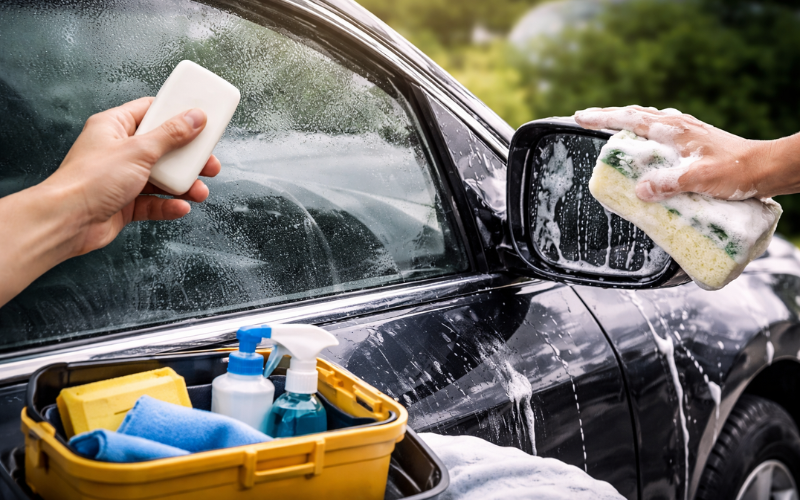
Another common claim is using soap on mirrors to reduce rain droplets or streaking. The idea is that a tiny film changes how water sits on the surface. In real life, results vary. Some people notice less sticking in light rain, while others get haze or smearing—especially at night when headlights hit the mirror. If you try it, do it very lightly, buff fully, and test before depending on it in bad weather. This is more of a “try at your own risk” hack than a guaranteed improvement.
Soap is also used for small cabin noises. If you have a squeak where rubber touches rubber—like a door seal rubbing against the frame—dry soap can sometimes reduce the friction for a while. This is not a real repair, but it can make a noisy door feel normal again until you can clean and condition the seal properly. (If you notice cracks or the seal is damaged, soap won’t solve the real problem.)
Finally, some people keep soap in a car because they’ve heard about an emergency “leak plug” trick. You’ll see stories and videos where drivers rub a bar of soap into a small hole in a fuel tank or an oil pan to slow dripping long enough to reach help. There are real anecdotes of it working temporarily, but it’s not reliable, and it can be dangerous—especially with fuel. You should treat this as a last-resort, get-to-safety method, not a repair.
Washing Your Car: Choosing the Right Soap Matters
When people search “soap in car,” they often really mean: “What soap should I use to wash my car?” This part matters a lot, because the wrong soap can slowly remove the protection you’ve built up over time.
A dedicated car wash soap (often called car shampoo) is designed to lift dirt while providing enough “slip” so your wash mitt glides instead of dragging grit across the paint. Many are made to be pH-balanced, meaning they are less likely to strip wax or sealants during normal washes.
Household dish soap is different. Dish detergent is made to cut grease hard—great for plates, not ideal for a car’s protective layers. Detailing sources commonly warn that frequent use can strip wax and leave paint more exposed over time. That exposure can lead to dullness and faster oxidation, especially under strong sun.
People also ask about baby shampoo as a backup. You’ll find mixed opinions, but the most common reason it comes up is that it’s usually mild. Some sources describe it as a safer household alternative compared with dish soap, though it may not clean as effectively as a real car shampoo when the car is heavily dirty. The key is to see it as “better than dish soap in an emergency,” not as the best long-term plan.
What Happens When You Use the Wrong Soap on Your Car
Using the wrong soap doesn’t always cause immediate damage, which is why the problem is easy to ignore. The changes are often slow. First, you may notice water doesn’t bead like it used to. Then the paint looks less glossy. Over time, the surface can start to feel rough because protection is weaker and contamination sticks more easily.
If dish soap (or other harsh cleaners) is used regularly, you can slowly remove wax or sealants. Once protection is reduced, UV light and environmental grime have a bigger effect. Plastic trim can look faded faster, and dark colors can start looking tired sooner than expected. This is why many car-care guides suggest using dish soap only in special situations (like preparing for a full re-wax), not as your weekly wash soap.
Interior surfaces can also suffer if the wrong soap ends up inside the car. Strong cleaners can dry out leather or leave sticky residue on steering wheels and touch points. If you keep soap in a car for cabin use, it’s usually best kept wrapped and away from direct contact with materials.
How to Safely Wash Your Car Without Damaging the Finish
Start with shade and a cool surface. Heat dries soap too fast and can leave spots. Rinse first to remove loose dust. Then wash with a proper car shampoo mixed with water as instructed, using a soft wash mitt or microfiber. The biggest scratch risk is not the soap—it’s grinding dirt into paint. That’s why rinsing and using plenty of lubricated suds matters.
Rinse often and don’t let soap dry on the paint. After washing, rinse well and dry with a clean microfiber drying towel. Drying is important because water left to evaporate can leave mineral spots.
If you’re out of car wash soap and truly need a wash, a mild shampoo is usually a safer short-term choice than dish detergent, but keep expectations realistic. It may take more gentle passes to lift dirt, and you still need a soft mitt and careful rinsing.
Buying Car Soap in 2026: What to Look for Before You Purchase
Shopping for car shampoo can feel confusing because labels use many “promises.” In 2026, you’ll commonly see terms like pH-balanced, wax-safe, ceramic-safe, high-foam, wash-and-wax, and gloss enhancers. Here’s how to read those claims in a practical way.
If you wash often and want to maintain wax or a sealant, a pH-neutral or “wax safe” soap is usually the safer everyday option. If you plan to polish or apply new protection, some people intentionally choose stronger “stripping” washes to remove old layers first, but those aren’t meant for regular weekly use.
You’ll also see budget vs premium choices. Budget soaps can work fine for routine washing if they rinse clean and don’t feel harsh, especially if you’re careful with technique. Premium brands often focus on extra lubrication, consistent foam, and compatibility with wax, sealants, and ceramic coatings. Whether that price jump is “worth it” depends on your car, your expectations, and how often you wash.
For Pakistan specifically, online marketplaces and local detailing stores show a wide range of pricing depending on brand and bottle size. Listings for major brands like Meguiar’s and Turtle Wax in Pakistan can be found on Daraz and local detailing shops, and prices vary by seller and stock. For example, Daraz listings show Meguiar’s wash products in the several-thousand-rupee range, while other brands and local options can be far lower.
Because online prices change quickly, it’s smart to compare a few sellers and check size (ml/L) before deciding. A “cheap” bottle can become expensive if it’s very small or needs heavy use per wash.
When Soap in Car Maintenance Is Helpful — and When It’s Not
It’s helpful when you’re using a bar of soap as a mild cabin freshener, when you need a short-term squeak reducer on rubber contact points, or when you’re choosing the right soap for washing without harming paint protection. In these cases, the idea is low-risk and practical.
It’s not helpful when it becomes a substitute for real fixes. If your door seal is torn, soap won’t repair it. If your mirror visibility is unsafe in rain, don’t rely on a soap film—use proper rain-repellent products made for glass and mirrors, and keep surfaces clean.
And for emergency leaks, the soap trick should be treated with extreme caution. Yes, there are anecdotes and videos showing it can slow a drip temporarily, but fuel leaks are serious. If you ever face this situation, prioritize safety: stop driving if there’s strong fuel smell, keep away from heat sources, and get professional help. Treat “soap as a plug” as a last resort only to reduce dripping long enough to reach a safer place—not as a normal roadside method.
Conclusion
Soap in car care can be surprisingly useful, but it helps to be clear about the goal. A bar of soap in the cabin can support simple comfort fixes like light odor control or temporary squeak reduction. For the exterior, the smartest move is using proper car wash soap so you clean safely without stripping wax or leaving the paint unprotected. If you keep the keyword idea simple—soap in car for small, practical uses, and the right soap for washing—you’ll avoid the common mistakes and get better results with less effort.
FAQs
1. Is it safe to keep a bar of soap in the car during hot weather?
Usually yes, as long as it stays wrapped and doesn’t touch fabric or plastic surfaces directly. Heat can soften soap and make it sweat oils or fragrance, which may stain if the wrapper breaks. Keep it in a small pouch or container in the glovebox.
2. Can soap stop a fuel or oil leak temporarily?
Sometimes people report that rubbing bar soap into a small puncture can slow dripping long enough to get help, but it’s not guaranteed and can be unsafe with fuel. Treat it as an emergency-only, last-resort action and get a proper repair immediately.
3. Does dish soap damage car paint if used once?
One wash usually won’t “destroy” paint, but dish soap can remove wax or weaken protection, which is why repeated use is the real risk. If you use it once, plan to reapply protection (wax/sealant) soon and switch back to car shampoo for regular washing.
4. What is the safest type of soap for washing a car?
A dedicated car wash soap (car shampoo) made for automotive paint is the safest regular choice because it’s designed to clean without stripping protection. If you’re out of it, a mild shampoo is often considered a safer backup than dish detergent, but a real car shampoo is best for routine washes.