

Introduction
Leather seats give a car a premium, comfortable feel, but they also need the right care to stay beautiful over time. Dirt, body oils, food spills, and sunlight slowly damage leather if it is ignored. Many drivers think wiping seats with water is enough, but improper cleaning can cause fading, stiffness, and cracking. Learning how to wash leather car seats the right way keeps your interior looking fresh, soft, and well-maintained for years. This guide explains everything in simple, practical language so you can clean your seats safely without harming the leather.
Understanding Leather Before You Wash Car Seats
Before you wash leather car seats, it helps to understand what leather really is. Automotive leather is usually coated with a thin protective layer. This coating protects against stains and wear, but it can still dry out and crack if treated poorly. Some seats are made from real leather, while others are leather-trimmed or synthetic blends. Even though they look similar, all of them need gentle care.
Leather is a natural material that breathes. It absorbs oils from skin, dust from the air, and moisture from the environment. When dirt settles into the surface, it slowly breaks down the coating. Harsh cleaners remove natural oils and leave the seats stiff. That is why washing leather car seats is not just about removing dirt, but also about protecting and feeding the material so it stays flexible and smooth.
What You Need to Properly Wash Leather Car Seats
To wash leather car seats correctly, you do not need expensive equipment, but you do need the right items. A soft vacuum brush helps remove loose dust without scratching. Microfiber towels are important because they are gentle and do not leave lint behind. A pH-balanced leather cleaner is much safer than household soap because it cleans without stripping natural moisture.
Using the wrong products is one of the main reasons leather gets damaged. Strong detergents, alcohol, ammonia, or bleach break down the protective layer on leather. Furniture polish and silicone sprays may look shiny at first, but they block the pores and cause long-term dryness.
When you wash leather car seats, always choose products made for automotive leather. These are designed to lift dirt while keeping the surface soft and breathable.
Preparing Your Seats Before You Start Washing
Preparation makes a big difference when you wash leather car seats. Start by inspecting the seats. Look for cracks, worn spots, heavy stains, or areas where the coating is thin. These places need extra care and gentle handling.
Before using any cleaner, always test it on a small hidden area. This simple step helps you avoid discoloration or damage. Even safe products can react differently depending on the leather finish.
Next, remove surface debris. Dirt and sand act like tiny blades if you rub them into leather. Vacuum the seats carefully, especially along seams and corners where dust collects. This step prevents scratches and helps the cleaner work better.
How to Wash Leather Car Seats Step by Step
When it is time to wash leather car seats, work slowly and in small sections. Do not spray large amounts of liquid directly onto the seat. Too much moisture can soak into the leather and weaken it over time.
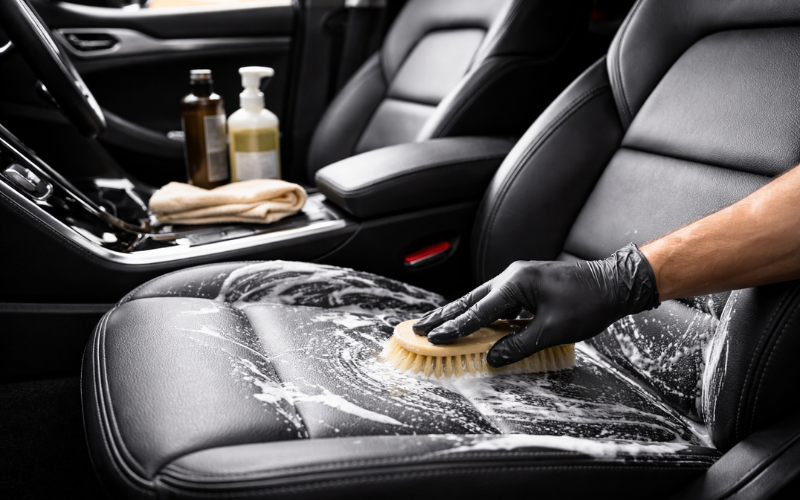
Apply a small amount of leather cleaner onto a microfiber cloth or soft brush. Gently work it into the surface using light circular motions. The goal is to lift dirt, not scrub aggressively. Let the cleaner do the work instead of pressing hard.
Pay attention to seams and perforations. These areas trap body oils and dust. Clean them gently so moisture does not sink deep into the padding.
After loosening the dirt, wipe the area with a clean, dry microfiber towel. This removes leftover cleaner and grime. Make sure the leather feels dry, not wet. Leaving moisture behind is one of the most common mistakes when people wash leather car seats.
Conditioning After You Wash Leather Car Seats
Cleaning alone is not enough. After you wash leather car seats, the material needs conditioning. Leather loses natural oils during daily use and cleaning. Without replacing those oils, the surface becomes stiff and more likely to crack.
A good leather conditioner restores softness and adds light protection from heat and friction. Apply a small amount to a cloth and massage it gently into the seats. You do not need to flood the surface. Thin, even layers work best.
Let the conditioner absorb for a short time, then lightly buff the seats with a clean towel. This leaves a natural finish instead of a greasy shine.
Conditioning keeps leather flexible, comfortable, and resistant to aging. When washing leather car seats becomes a habit that includes conditioning, the interior stays attractive for much longer.
Common Mistakes That Ruin Leather Car Seats
Many people damage their seats without realizing it. One common mistake is using too much water. Leather is not fabric, and soaking it weakens the fibers and glue underneath. Another mistake is using household cleaners. These products remove oils and fade the color.
Scrubbing too hard is also harmful. It wears down the protective coating and leaves rough patches. Some drivers also skip conditioning after they wash leather car seats. Without moisture replacement, leather dries out and cracks faster.
Using rough towels, ignoring seams, and cleaning in direct sunlight are other problems. Heat makes leather absorb chemicals too quickly and dry unevenly.
How Often Should You Wash Leather Car Seats for Best Results
There is no single schedule for everyone, but your habits and environment matter. If you drive daily, transport kids or pets, or eat inside the car, dirt builds up faster. In hot climates, sweat and sun exposure also dry leather quickly.
Light cleaning, such as wiping dust, can be done weekly. A deeper wash leather car seats routine works well every one to three months for most drivers. Conditioning is usually best every two to three months, depending on usage.
If the seats feel stiff, look dull, or show stains, it is time to clean them. Regular care is easier and safer than waiting until the leather looks damaged.
Conclusion
Learning how to wash leather car seats properly is one of the easiest ways to protect your car’s interior. Leather is strong, but it still needs gentle cleaning, light moisture, and regular care to stay soft and attractive. By preparing your seats, using safe products, cleaning carefully, and conditioning after every wash, you prevent cracking, fading, and stiffness. With a simple routine, washing leather car seats becomes less work and more protection, keeping your vehicle comfortable and stylish for many years to come.
FAQ
1. How do you wash leather car seats without damaging them?
The safest way is to vacuum first, use a pH-balanced leather cleaner on a cloth, gently clean in small sections, wipe dry, and finish with conditioner. Avoid soaking the leather or scrubbing too hard.
2. Can you use household cleaners to wash leather car seats?
No. Household cleaners often contain alcohol, ammonia, or harsh chemicals. These strip natural oils and cause cracking. Always use products designed for automotive leather.
3. How long does it take for leather car seats to dry after washing?
After cleaning, leather usually dries within 15 to 30 minutes if you use small amounts of cleaner. Always make sure the surface feels dry before applying conditioner.
4. What’s the best way to keep leather seats clean after washing?
Wipe dust weekly, avoid eating on the seats, park in shade when possible, and condition regularly. These habits reduce how often you need to wash leather car seats deeply.