

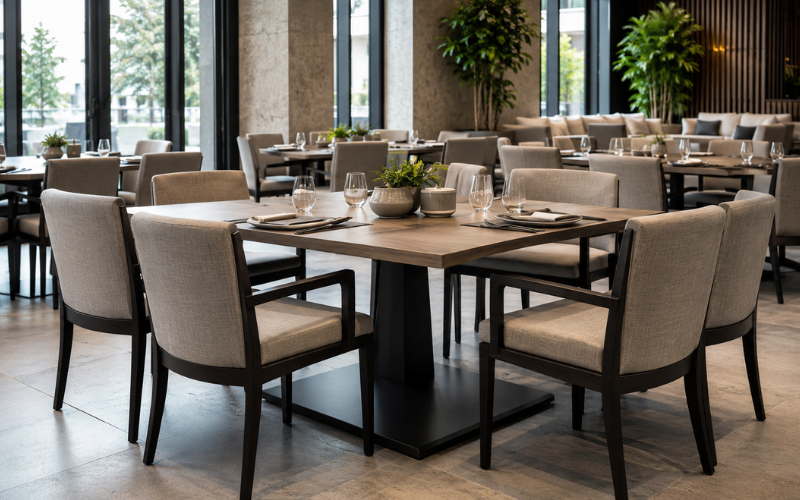
Contract grade furniture is furniture made for spaces where people use it often, every day, and sometimes in large numbers. In simple words, it is built to be stronger, safer, and more durable than many regular home furniture pieces. You will often see contract grade furniture in offices, hotels, restaurants, waiting rooms, schools, lounges, and other busy places.
The term matters because furniture in commercial spaces goes through much more use than furniture in an average home. A restaurant chair may be used by dozens of people in one day. A hotel lobby sofa may be sat on by hundreds of guests in a week. An office desk or conference table may be used for long hours every day. Because of this, contract grade furniture must be made to handle heavy use while still looking good and feeling comfortable.
Contract grade furniture is different from regular residential furniture because it is usually designed with stronger frames, better materials, safer finishes, and higher performance standards. While residential furniture is often made for lighter daily use, contract grade pieces are built for long-term use in demanding environments.
Understanding Contract Grade Furniture
Contract grade furniture is furniture designed for commercial or high-use spaces. The word “contract” often refers to furniture purchased for business, hospitality, office, or public settings. These pieces are usually made to meet higher quality and safety expectations because they must perform well in places where many people use them.
This does not mean contract grade furniture is only for businesses. Many homeowners also choose it because they want furniture that lasts longer, especially in busy living rooms, dining areas, rental homes, or family spaces. If a piece is labeled contract grade, it generally means it has been built with durability, stability, and frequent use in mind.
Good contract grade furniture balances strength with style. It should not only be tough but also comfortable and attractive. Modern contract furniture comes in many designs, from simple office chairs to stylish restaurant seating and elegant hotel lounge sofas.
Contract Grade Furniture vs Residential Furniture
The main difference between contract grade furniture and residential furniture is how much use each one is expected to handle. Residential furniture is made for home use, where the number of users is usually limited. Contract grade furniture is made for spaces where different people may use the same chair, table, sofa, or desk many times a day.
Residential furniture may focus more on appearance, comfort, and personal style. Contract grade furniture must also look good, but it needs extra strength and reliability. For example, a dining chair used at home may be pulled out a few times a day. A dining chair in a restaurant may be moved, cleaned, and used constantly from morning to night.
Contract grade pieces often have stronger joints, thicker materials, better upholstery, and finishes that resist scratches, stains, and daily wear. They may also be tested for weight capacity, stability, and safety. This makes them a practical choice for both commercial settings and homes that need furniture with extra staying power.
Key Features That Make Furniture Contract Grade
Several features help define contract grade furniture. One of the most important is a strong frame. Chairs, tables, sofas, and desks must be built with solid internal support so they do not become loose or unstable after repeated use.
Another key feature is durable upholstery. In commercial spaces, fabric or leather-like materials need to resist stains, fading, and tearing. Many contract grade furniture pieces use performance fabrics because they are easier to clean and can handle daily contact.
Strong finishes are also important. Tabletops, chair arms, and exposed surfaces should resist scratches, moisture, and marks. This is especially useful in restaurants, hotels, offices, and shared spaces where furniture is cleaned often.
Comfort also matters. Contract grade does not mean hard or plain. A well-made piece should support the body properly and remain comfortable even after long use. The best designs combine practical strength with a pleasant sitting or working experience.
Common Places Where Contract Grade Furniture Is Used
Contract grade furniture is commonly used in offices, hotels, restaurants, cafés, hospitals, schools, universities, libraries, airports, coworking spaces, and apartment lobbies. These are places where furniture must support many users and still maintain a clean, professional appearance.
In offices, contract furniture includes task chairs, conference tables, desks, reception seating, storage units, and lounge furniture. In restaurants, it includes dining chairs, bar stools, booths, tables, and outdoor seating. In hotels, it includes lobby sofas, guest room furniture, dining furniture, and lounge chairs.
It is also becoming more popular in homes. Families with children, pet owners, rental property owners, and people who host guests often may choose contract grade furniture because it can offer better long-term value.
Why Durability Matters in Contract Grade Furniture
Durability is one of the biggest reasons people choose contract grade furniture. In a busy space, weak furniture can quickly become damaged, unsafe, or unattractive. Chairs can loosen, fabric can tear, tabletops can scratch, and cushions can lose shape.
Durable furniture helps reduce replacement costs over time. Even if contract grade furniture costs more at first, it may last longer than cheaper options. This can make it a smarter choice for businesses and homeowners who do not want to replace furniture often.
Durability also affects safety. A chair that wobbles or breaks can cause accidents. A table with weak legs can become unstable. Strong, well-built furniture helps create a safer environment for guests, employees, customers, and family members.
Materials Used in Contract Grade Furniture
The materials used in contract grade furniture depend on the type of piece and where it will be used. Wood, metal, engineered wood, high-pressure laminate, molded plastic, and performance fabrics are all common options.
Wood is often used for tables, chairs, desks, and decorative pieces. Solid wood can be strong and attractive, while engineered wood can offer stability and cost control when made well. Metal is common in chair frames, table bases, stools, and office furniture because it offers strength and support.
For surfaces, laminate and treated finishes are popular because they are easy to clean and can resist daily wear. Upholstered pieces often use fabrics designed for heavy use. These fabrics may resist stains, moisture, and fading better than basic home fabrics.
The right material depends on the setting. A hotel lobby may need soft, stylish seating, while a café may need chairs and tables that are easy to move and clean. An office may need ergonomic chairs and desks that support daily work.
Safety Standards and Performance Testing
Contract grade furniture is often tested more carefully than regular residential furniture. Testing may look at strength, weight support, stability, durability, and resistance to wear. These tests help show whether a piece can handle repeated use in a commercial setting.
For seating, testing may include how much weight the chair can support, how well the legs and frame hold up, and whether the chair remains stable during movement. For tables, testing may check balance, surface strength, and resistance to impact.
Fire safety can also be important, especially in hotels, offices, healthcare spaces, and public buildings. Some contract grade furniture may use materials or finishes that meet certain safety requirements for commercial use.
Comfort and Design in Contract Grade Furniture
Contract grade furniture should be durable, but it should also be comfortable and visually appealing. People expect offices, hotels, restaurants, and public spaces to feel welcoming. A strong chair is not useful if guests do not enjoy sitting in it.
Modern contract grade furniture comes in many styles, including classic, modern, minimalist, industrial, and luxury designs. This makes it easier to match the furniture with the look of a space.
Comfort is especially important in offices and hospitality settings. Office chairs need good support for long workdays. Restaurant chairs should be comfortable enough for guests to enjoy their meal. Hotel lobby seating should feel inviting while still holding up to constant use.
Contract Grade Furniture for Offices and Workspaces
In offices, contract grade furniture plays a major role in comfort, productivity, and professional appearance. Desks, chairs, conference tables, reception seating, and storage pieces must support daily work without wearing out quickly.
Office chairs are especially important because employees may sit for many hours each day. A good contract grade office chair should provide support, adjustability, and long-lasting comfort. Desks and tables should be stable, spacious, and made with surfaces that can handle computers, paperwork, and daily cleaning.
Reception areas also benefit from contract grade seating. These spaces create the first impression for visitors, so the furniture should look clean, comfortable, and reliable.
Contract Grade Furniture for Restaurants, Hotels, and Hospitality Spaces
Restaurants and hotels need furniture that can handle constant use while still creating a pleasant guest experience. In restaurants, chairs, stools, booths, and tables are moved and cleaned many times a day. They must be strong, stable, and easy to maintain.
Hotels need furniture for lobbies, guest rooms, dining areas, lounges, and event spaces. Each area has different needs. Lobby furniture should be stylish and comfortable. Guest room furniture should be durable but relaxing. Dining furniture should be practical, easy to clean, and attractive.
In hospitality spaces, furniture also supports the brand image. The right contract grade furniture can make a space feel polished, welcoming, and professional.
Contract Grade Furniture for Homes and High-Traffic Living Areas
Although contract grade furniture is made for commercial use, it can also be a smart choice for homes. Busy households can benefit from stronger furniture, especially in dining rooms, kitchens, family rooms, and entryways.
Homes with children or pets often need furniture that can handle spills, scratches, and daily movement. A contract grade dining table or sofa may offer better durability than a delicate residential piece. It can also be useful for rental properties, vacation homes, and short-term rentals where many guests use the same furniture.
How to Choose the Right Contract Grade Furniture
Choosing the right contract grade furniture starts with understanding how the space will be used. A busy restaurant needs different furniture than a quiet office lounge. A hotel lobby needs different seating than a home dining room.
Look at the frame, materials, upholstery, finish, and cleaning needs. The furniture should be strong enough for the level of use it will receive. It should also match the style of the space and feel comfortable for users.
Size is also important. Furniture should fit the room without making it feel crowded. In commercial spaces, there should be enough room for people to move safely and comfortably.
Before buying, check product details carefully. Look for information about commercial use, weight capacity, testing, care instructions, and warranty. These details can help you make a better decision.
Mistakes to Avoid When Buying Contract Grade Furniture
One common mistake is choosing furniture only because it looks good. Style matters, but durability and comfort are just as important. A beautiful chair that becomes loose after a few months is not a good investment.
Another mistake is ignoring cleaning needs. In busy spaces, furniture must be easy to maintain. Delicate fabrics or surfaces may not be suitable for restaurants, offices, or homes with heavy use.
Buying the cheapest option can also lead to problems. Low-cost furniture may seem like a good deal at first, but it may need replacement sooner. It is better to think about long-term value, not just the first price.
Finally, avoid choosing furniture without measuring the space. Even high-quality furniture can feel wrong if it is too large, too small, or difficult to move around.
Maintenance Tips for Long-Lasting Contract Grade Furniture
Proper care helps contract grade furniture last longer. Regular cleaning is important, especially in commercial spaces. Dust, spills, and dirt should be handled quickly to protect surfaces and fabrics.
Follow the manufacturer’s care instructions whenever possible. Different materials need different cleaning methods. Wood, metal, laminate, and upholstered pieces should not all be treated the same way.
It is also helpful to inspect furniture regularly. Tighten loose screws, check chair legs, clean stains early, and repair small issues before they become bigger problems. In high-use spaces, simple routine care can protect the furniture and keep the area looking professional.
Is Contract Grade Furniture Worth the Investment?
Contract grade furniture can be worth the investment when durability, safety, and long-term value are important. It may cost more than basic residential furniture, but it is often built to last longer and perform better in busy spaces.
For businesses, strong furniture can reduce replacement costs and help create a better experience for customers, guests, and employees. For homeowners, it can be a good choice in rooms that get heavy daily use.
The value depends on your needs. If the furniture will be used often, moved frequently, or cleaned regularly, contract grade furniture can be a smart and practical option.
Conclusion
Contract grade furniture is designed for strength, comfort, safety, and long-lasting use. It is commonly found in offices, hotels, restaurants, and public spaces, but it can also be useful in homes with busy living areas.
The main benefit of contract grade furniture is that it is made to handle more wear than standard residential furniture. Strong frames, durable materials, better finishes, and safety testing all help these pieces perform well over time.
When choosing contract grade furniture, focus on how the space will be used, who will use it, and how much daily wear the furniture must handle. A good choice should look attractive, feel comfortable, clean easily, and provide lasting value.
FAQs
1. What does contract grade furniture mean?
Contract grade furniture means furniture made for commercial or high-use spaces. It is built to be stronger and more durable than many regular home furniture pieces.
2. Is contract grade furniture only for businesses?
No, contract grade furniture is not only for businesses. Many homeowners use it in busy rooms, rental homes, dining areas, and family spaces because it can last longer.
3. Is contract grade furniture better than residential furniture?
It depends on the use. Contract grade furniture is usually better for heavy daily use, while residential furniture may be enough for lighter home use.
4. Why is contract grade furniture more expensive?
Contract grade furniture can cost more because it often uses stronger materials, better construction, durable finishes, and testing for safety and performance.
5. Can contract grade furniture look stylish?
Yes, modern contract grade furniture comes in many attractive styles. It can be durable, comfortable, and stylish at the same time.