

Introduction
Oil changes are one of the simplest and most important parts of car maintenance. Fresh engine oil keeps parts moving smoothly, reduces heat, and helps prevent costly damage over time. Even drivers who don’t think much about vehicle maintenance know that skipping oil changes can shorten the life of an engine.
Still, one of the most common questions drivers ask before scheduling service is simple: how long does an oil change take? People want to know if they can fit it into a lunch break, a quick errand run, or a weekend chore.
The truth is that oil change time varies depending on where you go, what you drive, and whether other services are added. Some visits are quick, while others take longer because of inspections or extra maintenance. In this guide, we’ll walk through the realistic time expectations and explain what affects the total time you spend waiting.
The Typical Time Range for an Oil Change
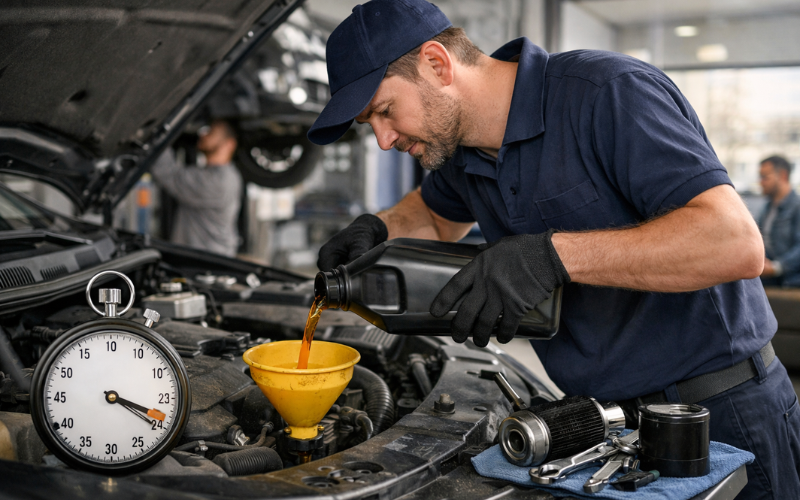
For most drivers today, an oil change usually takes between 15 and 45 minutes once the vehicle is being serviced. In very fast service locations, the job may be done closer to the lower end of that range. In more thorough shops or busy service centers, it can stretch toward the higher end.
Many people assume an oil change should only take a few minutes, but that isn’t realistic. The engine needs time to cool slightly before draining. The old oil must fully drain out, which alone can take several minutes. After that, the filter is replaced, new oil is added, and the system is checked for leaks or issues. Even when technicians work quickly, these steps require time to be done properly.
The total time you spend at the shop may also include waiting for your turn, paperwork, or vehicle checks, so the overall visit often lasts longer than the actual oil replacement itself.
How Service Location Affects Oil Change Time
Quick-lube centers focus on speed and efficiency. Their workflow is designed to move vehicles through quickly, and many drivers are in and out within 15 to 20 minutes. These locations often skip deep inspections and stick to the basics, which is why they can move faster.
Independent auto repair shops usually take more time, often around 30 to 45 minutes. These shops tend to combine oil changes with visual inspections of fluids, brakes, or tires. The extra attention adds value but also adds minutes to the process.
Dealership service departments are typically the slowest option. Even though they use manufacturer-approved parts and trained technicians, the higher customer volume and administrative steps often mean you’ll wait closer to an hour. Dealerships also tend to bundle oil changes with recommended maintenance checks, which increases service time.
What Actually Happens During an Oil Change
First, the technician positions the vehicle and prepares it for service. The drain plug is removed so the old oil can flow out. This step alone takes several minutes, because the oil must drain fully to avoid mixing old residue with fresh oil.
Next, the oil filter is replaced. The filter collects dirt and metal particles, so installing a new one ensures the fresh oil stays clean longer. After that, the technician installs the drain plug again and pours in the new oil.
Finally, the engine is briefly run so the oil circulates. The technician checks for leaks, confirms the oil level is correct, and resets any maintenance indicators on the dashboard. Some shops also inspect other fluids, belts, or tires during this stage.
Factors That Can Make an Oil Change Faster or Slower
Vehicle design is one of the biggest. Larger vehicles like trucks or SUVs may require more time because they hold more oil or need extra lifting. Some modern cars also have protective covers underneath the engine that must be removed before access, which adds a few minutes.
The type of oil matters as well. Synthetic oil changes may take slightly longer in shops that perform additional checks, though the difference is usually small.
Additional maintenance services also extend the visit. If the shop rotates tires, replaces filters, or performs inspections, your oil change appointment naturally becomes longer.
Finally, shop workload can have the biggest impact of all. Even if the actual oil change only takes 20 minutes, a busy service center can turn it into a much longer visit if several vehicles are ahead of you.
How Long a DIY Oil Change Takes at Home
An experienced DIY car owner can finish in about 30 to 60 minutes, especially with proper tools and a prepared workspace. However, beginners often need more time to safely lift the vehicle, locate the drain plug, replace the filter, and dispose of used oil responsibly.
Setup and cleanup are often the longest parts of a home oil change. Gathering tools, waiting for the engine to cool, and transporting old oil to a recycling center all add time that shops handle for you.
Ways to Reduce Your Waiting Time at the Shop
Scheduling an appointment is the most effective step. Walk-ins often wait longer simply because of shop traffic.
Choosing the right location also matters. Quick-service centers prioritize speed, while dealerships and full-service shops focus more on inspections and long-term vehicle care.
If you’re in a hurry, it’s also helpful to skip optional add-on services for that visit. Bundled maintenance can be useful, but it naturally increases the time spent at the shop.
When a Longer Oil Change Time Is Actually a Good Sign
A longer oil change isn’t always a bad thing. In fact, it often means the technician is taking time to do the job carefully.
Proper oil draining, leak checks, and inspections help ensure the engine stays healthy. Rushing through the process can lead to mistakes like incorrect oil levels or loose drain plugs, which may cause engine problems later.
Shops that spend a bit more time often provide added peace of mind. They may catch worn belts, low fluids, or early signs of mechanical issues before they turn into expensive repairs.
So while everyone appreciates fast service, a reasonable amount of time spent on your vehicle usually reflects thorough care rather than delay.
Conclusion
So, how long does an oil change take? For most drivers today, the answer falls somewhere between 15 and 45 minutes, though the total visit may be longer depending on location, vehicle type, and additional services.
Quick-lube centers tend to be the fastest, while dealerships and full-service shops offer more thorough checks that take extra time. DIY oil changes can also take longer, especially for beginners.
Ultimately, the right timing depends on what you value most — speed, convenience, cost savings, or detailed inspection. Knowing what to expect helps you plan your day and keep your vehicle running smoothly without surprises.
FAQs
1. How long does an oil change take at a dealership?
At most dealerships, an oil change takes around 45 to 60 minutes. The extra time often includes inspections and administrative steps.
2. Can an oil change really be done in 15 minutes?
Yes, some quick-lube shops can complete the process in about 15 minutes, but this usually includes only the basic oil replacement with minimal inspection.
3. Why does my oil change sometimes take longer than expected?
Longer wait times often happen due to shop workload, additional maintenance services, or vehicle designs that require extra access steps.
4. Is it safe to drive right after an oil change?
Yes. Once the technician confirms the oil level and checks for leaks, the vehicle is ready to drive normally.